

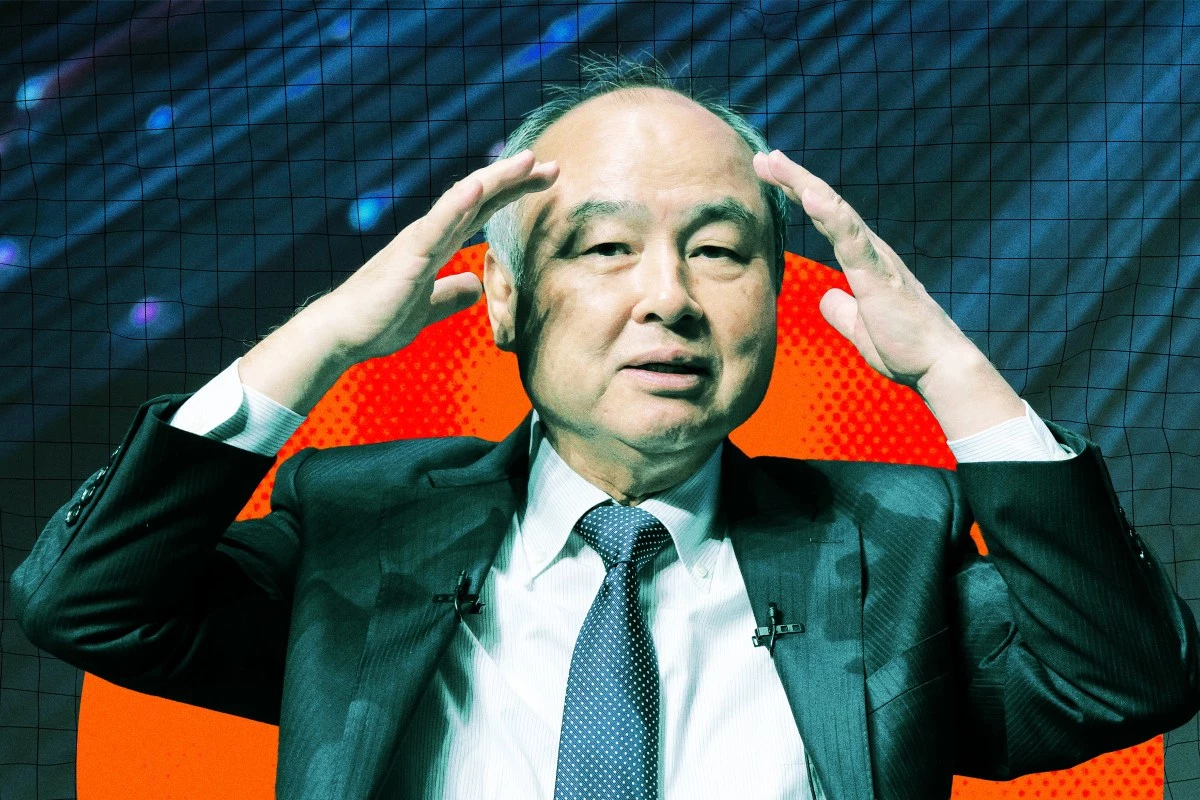

Public skepticism meets SoftBank’s superintelligence thesis
A widening gap is emerging between public sentiment on an “AI bubble” and the capital commitments being made by the world’s most aggressive technology financiers. Recent polling suggests many Americans now see artificial intelligence as overhyped—an echo of past cycles where lofty valuations raced ahead of durable revenue. Yet at SoftBank’s annual conference, CEO Masayoshi Son rejected bubble talk in unusually absolutist terms, calling it “absurd” and even “blasphemous,” while reiterating an ambition to invest at a scale measured not in billions, but in trillions of dollars annually over decades.
This divergence is more than a clash of opinions; it is a live test of how markets price frontier technologies when the path from research breakthroughs to repeatable cash flows remains uncertain. Son’s argument is essentially macroeconomic: if AI becomes foundational infrastructure—powering everything from drug discovery to autonomous logistics—then today’s spending could look trivial against tomorrow’s output. He has floated scenarios where AI revenue could reach 20% of global GDP, framing even an 800 trillion-yen annual investment as rational under that assumption.
At the same time, the timeline for AI superintelligence—Son’s north star—has reportedly slipped from 2035 to 2040, a subtle but meaningful admission that the hardest problems may be less about model scale and more about reliability, governance, energy constraints, and integration into real-world systems. In other words, the debate is not simply “bubble or not,” but whether the market is accurately discounting the time, capital intensity, and friction required to turn frontier AI into broadly monetizable capability.
The financial engineering behind mega-bets—and why ratings agencies care
SoftBank’s posture is not occurring in a vacuum. The company’s reported $65 billion commitment to OpenAI has already triggered a more cautious stance from credit markets: S&P Global shifted SoftBank’s rating outlook from neutral to negative, warning that additional funding could worsen SoftBank’s loan-to-value ratio by nearly four percentage points. That detail matters because it translates AI enthusiasm into a concrete constraint: the cost of capital.
In a higher-rate environment, leverage is less forgiving. Credit analysts are effectively asking whether SoftBank can sustain a multi-decade AI funding agenda without compressing its financial flexibility—especially if private-market valuations reset or if liquidity windows narrow. The tension is structural:
- Concentration risk: A large, concentrated exposure to a single AI champion amplifies both upside and downside, particularly when the asset is difficult to mark-to-market with confidence.
- Duration mismatch: AI infrastructure and foundational model development can require long time horizons, while debt markets and rating frameworks often penalize uncertainty and illiquidity.
- Capital call reflexivity: The more a firm commits, the more it may feel compelled to defend prior investments with follow-on funding—potentially deepening exposure at precisely the wrong point in a cycle.
This is where the “AI bubble” narrative gains traction. Bubbles are not defined by whether a technology is transformative; they are defined by whether prices and capital structures assume a speed and certainty of monetization that reality cannot match. SoftBank’s history underscores the duality: its Vision Fund era produced both category-defining wins and painful write-downs, demonstrating that vision is not a substitute for governance, timing, or unit economics.
From hype cycle to deployment cycle: what must be proven next
The most productive way to interpret the current moment is as a shift from a model-building race to a deployment and monetization race. Many critics are not disputing AI’s potential; they are questioning whether the bulk of value accrues to foundational model providers, cloud and semiconductor infrastructure, or vertical application layers—and how quickly.
Key hurdles that separate frontier optimism from scalable enterprise reality include:
- Algorithmic reliability and safety: Enterprises need predictable behavior, auditability, and robust failure modes—not just benchmark performance.
- Data governance and sovereignty: Regulatory regimes increasingly shape what data can be used, where it can be processed, and how outputs can be explained.
- Energy and compute economics: Training and inference costs, grid constraints, and hardware supply chains can become binding limits on growth.
- Integration costs: The “last mile” of AI—workflow redesign, change management, compliance, and security—often dominates budgets and timelines.
These constraints do not negate the bull case; they refine it. If AI becomes a general-purpose technology, the value creation may be enormous, but it may also be unevenly distributed and slower to realize than early valuation narratives imply. That is precisely why stage-gated investment frameworks are gaining appeal—funding tied not only to R&D milestones, but to measurable deployment indicators such as interoperability standards, energy-efficiency thresholds, and regulatory clearances.
Strategic implications for executives, investors, and policymakers
SoftBank’s stance forces a broader question onto boardrooms: how to pursue AI advantage without importing bubble dynamics into balance sheets. The most resilient strategies are likely to emphasize portfolio construction and governance discipline rather than binary bets.
Pragmatic approaches that align with the current risk landscape include:
- Diversified AI exposure across semiconductors, cloud infrastructure, developer platforms, and vertical AI applications to reduce idiosyncratic risk.
- Milestone-based capital allocation that links funding tranches to deployment readiness, customer retention, and unit economics—not just model capability.
- Board-level AI oversight that treats AI as both a growth engine and a risk vector, incorporating scenario planning for regulation, reputational shocks, and technology-cycle drawdowns.
- Stress-testing and transparency around downside cases where revenue growth lags capital expenditure, especially for highly leveraged or concentrated investors.
Meanwhile, macroeconomic effects will be closely watched. AI-driven productivity gains could be substantial over time, but near-term pressures—compute buildouts, talent wars, and infrastructure bottlenecks—may be inflationary in specific labor and equipment markets. The labor impact is also likely to be bifurcated: premium compensation for scarce AI skills alongside accelerated reskilling demands for the broader workforce.
The AI bubble debate, then, is not a referendum on whether AI matters. It is a referendum on pricing, pacing, and prudence—and on whether the institutions funding the future can remain solvent, flexible, and trusted long enough to reach it.

 By
By
 By
By


 By
By
 By
By
 By
By
 By
By







