

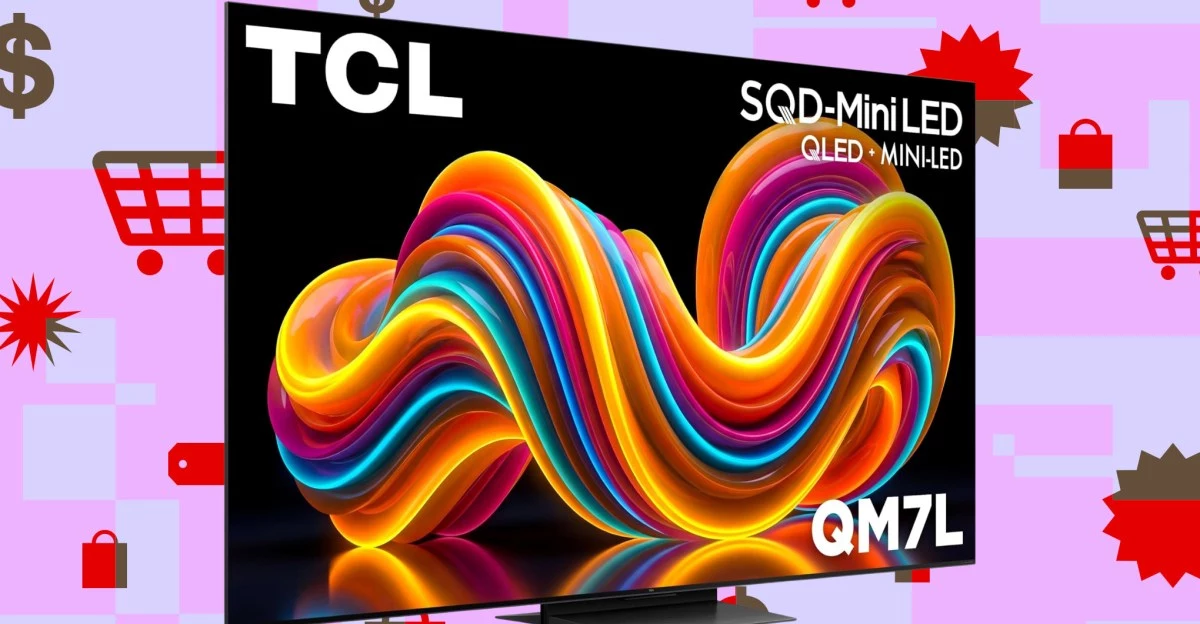

Mini-LED pricing hits an inflection point as TCL’s QM7L moves downmarket
The latest discounts from Amazon and Best Buy on the TCL QM7L mini-LED TV series—highlighted by the 55-inch model at $797.99 (about $200 off)—signal more than a routine promotion. They reflect a structural shift in the display market: premium LCD architectures are becoming accessible at prices that previously defined midrange televisions, while still delivering many of the visual advantages consumers associate with top-tier sets.
At the product level, the QM7L’s value proposition is straightforward but strategically potent. By pairing mini-LED backlighting with Quantum Dots, TCL is leaning into the strengths of modern LCD:
- High peak brightness that performs well in sunlit rooms and mixed lighting
- Improved contrast via local dimming, narrowing the perceived gap with OLED in many real-world scenes
- Strong color volume, particularly in HDR content where brightness and saturation must coexist
This is where the competitive pressure intensifies. OLED remains the benchmark for black levels and pixel-level control, but mini-LED’s accelerating cost curve is reshaping the “good-better-best” ladder. When a sub-$800 television offers premium brightness, modern HDR formats, and gaming-grade refresh rates, the decision calculus changes for mainstream buyers—and for the brands that have relied on OLED price floors to protect margins.
Gaming-first specifications become a mainstream differentiator, not a niche add-on
One of the most consequential aspects of the QM7L positioning is how explicitly it targets gaming households. The set’s 144 Hz native refresh rate and Variable Refresh Rate (VRR) support are no longer framed as enthusiast luxuries; they are becoming table stakes for a growing segment of consumers who treat the living-room TV as a multi-purpose display for console and PC gaming.
From a market perspective, this matters because gaming features are increasingly acting as purchase accelerators in a category where screen size and resolution have commoditized. TCL’s approach suggests a broader industry pivot: performance metrics (Hz, VRR, latency) are replacing generic “4K HDR” messaging as the language of differentiation.
Key QM7L capability signals that resonate with this audience include:
- VRR to reduce tearing and improve smoothness during frame-rate swings
- 144 Hz to support high-frame-rate gaming and responsive motion handling
- HDR10 and Dolby Vision to align with premium streaming and console HDR pipelines
- Google TV for content discovery and app breadth, plus AirPlay 2 for cross-device convenience
The strategic implication is that the midrange TV market is being redefined around hybrid usage: streaming, gaming, and casual productivity. As that happens, brands that can deliver credible gaming performance without premium pricing will continue to siphon demand from both entry-level LCD and aspirational OLED tiers.
Retail discounting reveals inventory discipline and a cautious read on discretionary demand
The pricing activity also offers a window into retailer behavior. Notes of constrained inventory on Amazon alongside broad markdowns across sizes suggest a familiar but telling pattern: retailers are balancing sell-through urgency with inventory risk management, particularly in categories sensitive to consumer sentiment.
In an environment still shaped by inflation fatigue and selective discretionary spending, clearing higher-ticket electronics can be less about aggressive growth and more about protecting forecast flexibility. Promotions timed around seasonal demand cycles often double as a mechanism to:
- Free warehouse capacity for incoming holiday assortments
- Reduce exposure to rapid price erosion in panels and competing models
- Stimulate demand without committing to long-term price resets
The broader promotional mix reinforces this “basket engineering” mindset. Alongside the TCL TV discounts, ancillary deals—such as the Anker MagGo 5,000 mAh wireless/USB-C power bank at $29.99, the Belkin Thunderbolt 3 Dock Pro at $64.99 (stacked with additional code-based savings), and a discounted Star Trek: Picard Legacy Collection Blu-ray set—point to retailers bundling attention across entertainment, mobility, and hybrid-work accessories.
This is not random. It reflects a deliberate ecosystem strategy: pair big-screen upgrades with the peripherals and content that make the purchase feel immediately useful, increasing attachment rates and total order value while consumers remain cautious about large discretionary outlays.
Supply-chain maturity in mini-LED raises the stakes for OLED and next-gen display roadmaps
Underneath the retail headlines sits a more durable story: mini-LED manufacturing is maturing. Better yields, more efficient backlight architectures, and improved local-dimming algorithms are enabling brands like TCL to scale aggressively while keeping prices low. That maturity ripples across the supply chain—from LED driver ICs to backlight modules to quantum dot materials—raising the competitive bar for smaller entrants and compressing the time window in which incumbents can rely on brand gravity alone.
For OLED stakeholders, the pressure is twofold. First, mini-LED’s value proposition is improving precisely where OLED has been vulnerable: brightness in bright rooms and price-per-inch. Second, the midrange consumer who once stretched for OLED may now choose mini-LED and redirect savings into soundbars, consoles, or subscriptions—eroding OLED’s upgrade narrative.
What to watch next across the display market and retail channel:
- Margin compression in midrange LCD and entry-level OLED as mini-LED becomes the default “premium enough” choice
- Feature bundling and software differentiation, including cloud gaming integrations and AI-driven picture optimization, as hardware specs converge
- Accelerated innovation cycles in QD-OLED, micro-LED, and hybrid approaches as incumbents seek new defensible tiers
- Panel cost trajectories and lead times as a potential indicator of broader consumer electronics deflation dynamics
The TCL QM7L discount cycle is ultimately less about a single TV deal and more about a market recalibration: premium display experiences are being democratized, gaming performance is becoming a mainstream requirement, and retailers are using targeted promotions to navigate a demand environment that rewards value, versatility, and immediate utility.


 By
By
 By
By
 By
By

 By
By
 By
By







