
When Your Phone Feels the Burn: The Rise of Empathetic Hardware in the Age of Climate Risk
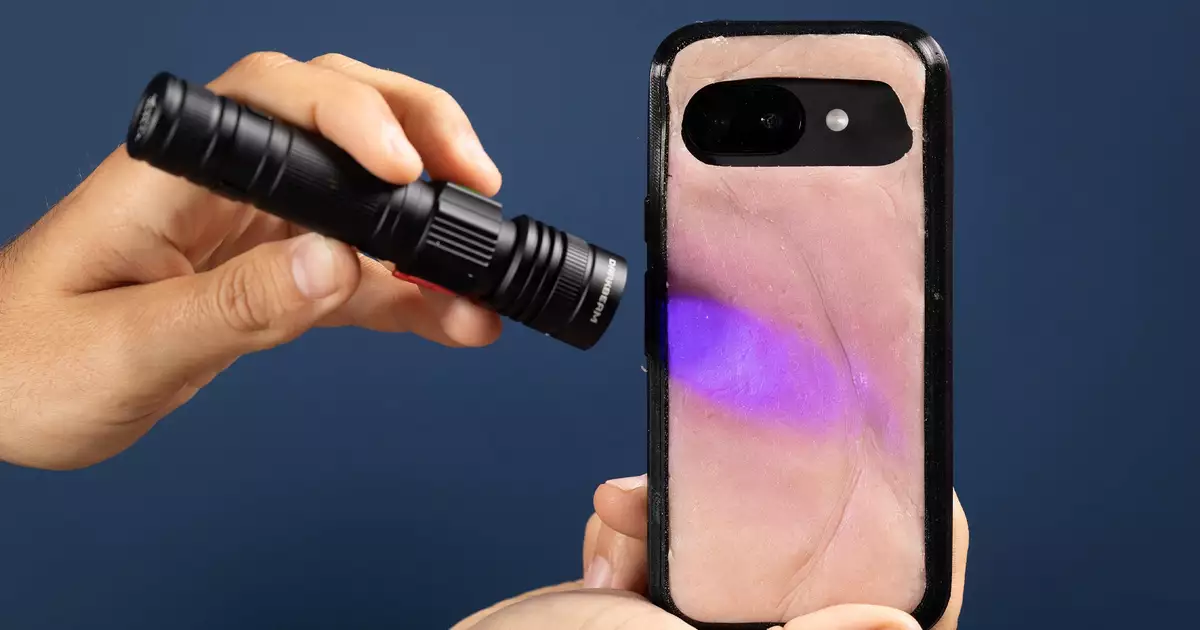
In an era where the boundaries between the digital and physical worlds are dissolving, Marc Teyssier’s “Skincase” emerges as a provocative artifact—a phone case that doesn’t just protect your device, but blushes, reddens, and simulates pain in response to ultraviolet exposure. Developed in collaboration with the British Skin Foundation and telecom giant O2, Skincase is more than a whimsical experiment in biomimicry. It is a harbinger of a new class of consumer hardware: emotionally intelligent, sensor-driven objects that nudge us toward healthier behaviors by making risk uncomfortably tangible.
The Science of Skin, Translated to Silicone
At the heart of Skincase lies a deceptively simple technological alchemy. Silicone composites, layered and pigmented to mimic the blanching and reddening of real skin, are animated by a lattice of inexpensive UVA/UVB photodiodes. As ambient UV levels climb, the case’s color shifts—an irreversible “sunburn” that lingers until reset, powered by a low-draw microcontroller. Unlike most digital health prompts, this feedback is chemical, not virtual: the phone itself becomes a visceral proxy for our own vulnerability.
This anthropomorphic design is no accident. Decades of research into haptic interfaces and affective computing suggest that skin-like textures and lifelike responses can evoke empathy, triggering self-protective instincts through a process akin to mirror neurons. Skincase leverages this psychological quirk, shifting the locus of harm from user to object. The result is a subtle but powerful form of behavior change—one that sidesteps didactic warnings in favor of embodied discomfort.
Reimagining the Smartphone Accessory: Market and Ecosystem Ripples
The implications of Skincase’s approach ripple far beyond its novelty. The global phone case market, a $15 billion behemoth dominated by commodity plastics, is ripe for reinvention. By embedding functional health technology, accessory makers can escape the race to the bottom and command premium pricing, much as Apple’s AirPods transformed the earbud category from afterthought to status symbol.
For telecoms like O2, Skincase signals a strategic pivot toward post-connectivity value. Bundling health-centric hardware into premium plans aligns with the growing emphasis on ESG (Environmental, Social, and Governance) metrics and offers a tantalizing proposition to insurers: devices that proactively reduce claims by encouraging safer sun habits. Yet, this opportunity is not without its thorns. UV-exposure data, classified as health information under GDPR and HIPAA analogues, demands robust consent architectures—a technical and ethical challenge for an industry more accustomed to drop tests than data governance.
Climate Adaptation and the Future of Empathetic Peripherals
Skincase’s debut dovetails with a broader shift in consumer technology, as climate adaptation moves from niche concern to mainstream mandate. Gartner projects a $700 billion spend on adaptation technologies by 2030, encompassing everything from cooling fabrics to wildfire air-quality sensors. In this context, the smartphone—an object we touch hundreds of times a day—becomes an ideal platform for environmental sensing and intervention.
Wearables, once heralded as the vanguard of personal health tech, have plateaued at modest market penetration. Skincase sidesteps the “forgot to wear it” problem by integrating seamlessly into the device we are least likely to leave behind. The potential for expansion is vast: imagine cases that detect air pollution, dehydration, or even ambient noise, each leveraging the same empathetic design language to drive habit change.
Insurers, too, are watching closely. Just as telematics has revolutionized auto coverage, portable UV-exposure logs could inform dynamic health insurance pricing, rewarding users who demonstrate “protected exposure” with discounted premiums. Early pilots, likely sponsored by telcos and dermatology NGOs, will test the waters—tracking not just sunscreen sales, but the social-media resonance of a phone that wears its wounds in public.
The Unsettling Edge: Ethics, Standardization, and the Limits of Persuasion
As Skincase and its successors proliferate, the sector faces a thicket of unresolved questions. If devices can simulate human suffering to modify behavior, where is the line between nudge and manipulation? Regulatory bodies, already grappling with persuasive technology in apps and social media, may soon turn their gaze to hardware that blurs the boundary between tool and companion.
Standardization looms on the horizon. Should Skincase-like sensors become ubiquitous, Apple and Google will be forced to reconcile proprietary sensor stacks with third-party hardware, echoing past battles over USB-C mandates and the Right-to-Repair movement. Meanwhile, the very notion of what constitutes “user experience” is up for renegotiation, as empathy becomes a design parameter as critical as battery life or drop resistance.
In this landscape, the lesson is clear: the accessory is no longer an afterthought. It is the new frontier for persuasive health technology—lower in friction than wearables, richer in emotional resonance than apps. For forward-looking organizations, the challenge is not just to build smarter hardware, but to navigate the complex interplay of ethics, economics, and empathy that will define the next era of climate-adaptive technology.

 By
By
 By
By

 By
By
 By
By


 By
By