

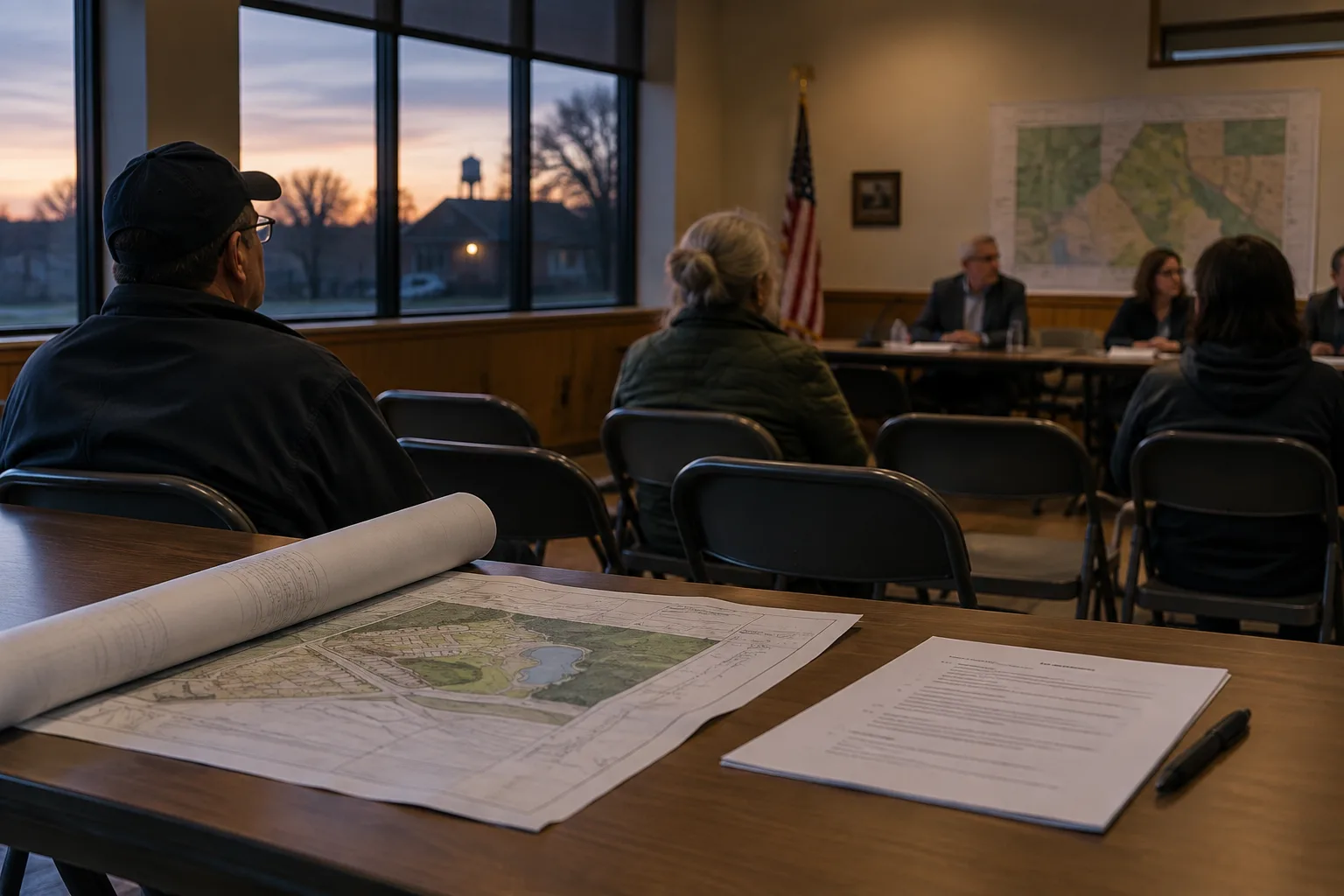

On September 21, nonprofit research group Data & Society published “The AI Factory: Data Centers, Power, and Resistance in Late Industrial Pennsylvania”, the result of 18 months of fieldwork and interviews with 44 Pennsylvanians about data-center development. Its estimate of 137 active or proposed projects across the state would already make the report notable. What turned it into a business story is what happened next: a day later, TechCrunch paired the report with Data Center Watch’s finding that $68 billion of U.S. data-center projects were delayed or blocked by local opponents in the second quarter of 2026. That figure does not mean the money disappeared or that the AI buildout is stopping. It does mean community consent is becoming an execution constraint.
That is the real question for cloud, AI, utility, and infrastructure readers now. Not whether more compute is needed, and not whether every local objection is correct. The question is what a data-center project has to prove to earn support before capital, power, and political will turn into a powered, permitted facility.
Consent has moved onto the build schedule
Data & Society’s report is qualitative, not a poll or a statewide impact ledger. Its value is in showing the mechanism. Residents are not described as broadly anti-technology. They are asking who gets the upside and who carries the downside when a proposed campus brings large power demand, water needs, noise, land use changes, tax policy questions, and development risk to a specific place.
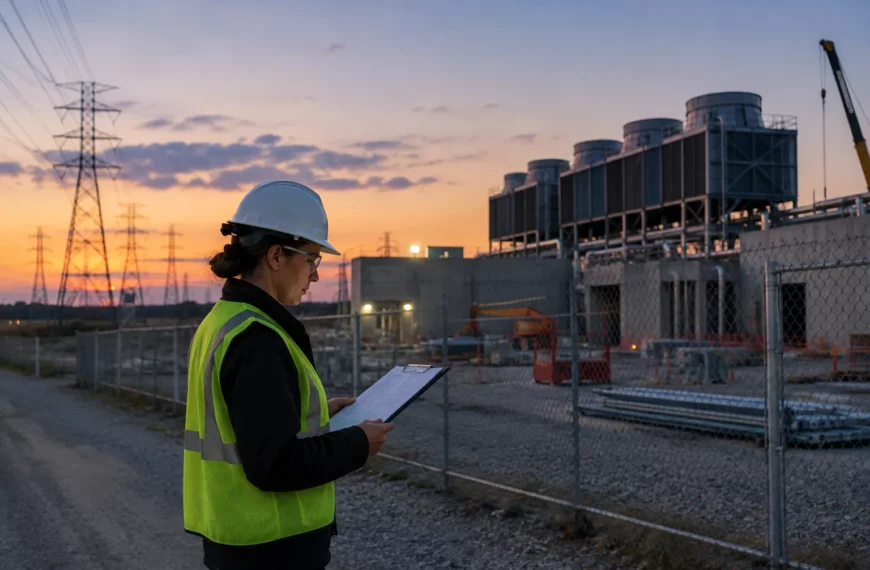
That matters because a data center is not just a capex announcement. It needs a site, a grid connection, a cooling plan, permits, construction labor, equipment, customers, and a workable relationship with the local governments and residents who have to live with it. Any one of those can slow a project. The political version of that risk is becoming harder to wave away as sentiment.
Pennsylvania is a useful case because it compresses two stories at once. It has been marketed as a prime destination for AI infrastructure, and TechCrunch reported that the state celebrated roughly $90 billion in data-center and AI-infrastructure investment at a July 2025 summit. But it is also a place where new industrial promises land on top of older histories of coal, oil, steel, and fracking. Data & Society argues that developers, energy companies, and policymakers often sell an “AI factory” narrative, while local communities hear another round of extractive development and ask for proof that this time the bargain is different.
That tension is no longer staying local. Gov. Josh Shapiro later tightened requirements and removed projects from a regulatory fast-track initiative, a sign that the issue has moved from private site selection into public governance. The practical message for the market is straightforward: a project can have financing and demand and still miss schedule if it cannot answer basic questions in a credible way.
What a credible project has to prove
The most useful way to read the Pennsylvania debate is as a scorecard problem. Big investment headlines are not enough. Communities, utilities, and buyers increasingly need to see the terms.
Start with jobs. Construction unions may back projects because near-term building work can be substantial and can rebuild membership. That is a real benefit, not a talking point. But it is different from long-term permanent employment at the finished facility, which may be much smaller than the investment total implies. A credible project should separate those categories and state them clearly.
Then power. Is the electricity load contracted or still speculative? Who pays for required grid upgrades: the developer, specific customers, or a broader base of ratepayers through regulated utility mechanisms? What happens to timelines if interconnection studies slip? For AI and cloud buyers, those are not local political details. They affect capacity delivery and regional resilience.
Water is the next test. Annual use, cooling method, drought planning, and emergency backup arrangements should not be treated as side notes. Neither should noise controls, diesel or other backup generation, and emergency-response obligations. A project that asks for confidentiality while also asking a town to trust its operating footprint is creating avoidable risk.
The same is true for public finance. If a campus receives tax abatements or other incentives, what is the public return? Are there community payments, local procurement commitments, or remediation obligations that survive ownership changes? Who exactly owns the project entity, and is there an anchor customer or only a speculative marketing process? The public record, as the research packet notes, still lacks a standardized project-by-project comparison for Pennsylvania on jobs, load, water, incentives, and other core terms. That absence makes conflict more likely because it leaves residents to debate abstractions instead of comparable facts.
In that sense, transparency is not a nice-to-have. It is part of the asset.
Why buyers and investors should care
The easiest mistake here is to turn every protest, zoning fight, or skeptical hearing into proof that data centers do not pencil out. The evidence does not support that. Some projects will still win approval, some will be redesigned, and some may move to other jurisdictions. Data Center Watch’s $68 billion “disrupted” figure covers projects its methodology classifies as delayed or blocked, not necessarily permanently canceled.
But the opposite mistake is just as costly: treating social opposition as a public-relations annoyance that sits outside the real economics. For investors and enterprise buyers, it now belongs inside the underwriting. A technically viable AI campus without local trust can miss energization dates, lose incentive support, absorb legal and consulting costs, or face redesigned water and noise requirements that change returns. Repeated backlash can also harden into statewide rules, higher financing and insurance costs, or a preference for smaller and more distributed facilities.
This is where the Pennsylvania report becomes more than a local sociology story. It suggests that transparent permitting and community agreements are becoming execution evidence. Developers that disclose load expectations, cost allocation, water plans, tax treatment, and job commitments may move faster than secretive rivals even if both have access to similar land, chips, and capital. Buyers should care because slower capacity affects deployment schedules. Investors should care because “shovel ready” increasingly needs a second test: socially buildable.
Public sentiment adds pressure without deciding the outcome. TechCrunch cited surveys showing that more than 60% of Americans favor limiting new data centers, especially near their own communities. That does not predict any single permit vote. It does, however, suggest that Pennsylvania is not a one-off anomaly.
The market implication is not “AI or no AI.” It is that the next advantage may go to projects that can show, in advance, how private benefits and public costs are being allocated. In a cycle defined by urgency around compute, the slowest part of the stack may be the town hall.

 By
By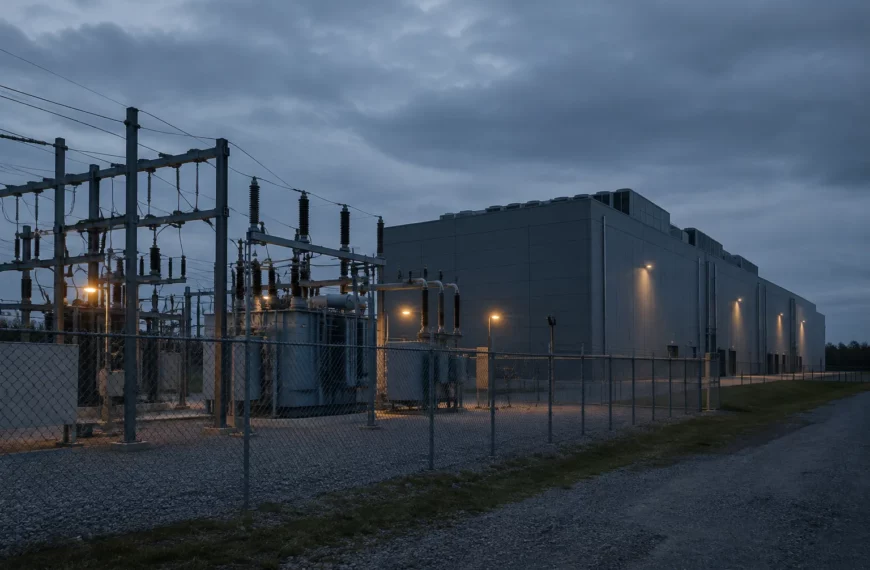
 By
By
 By
By
 By
By

 By
By
 By
By







