


An ethics leadership vacuum at OpenAI meets the realities of scale, scrutiny, and IPO logic
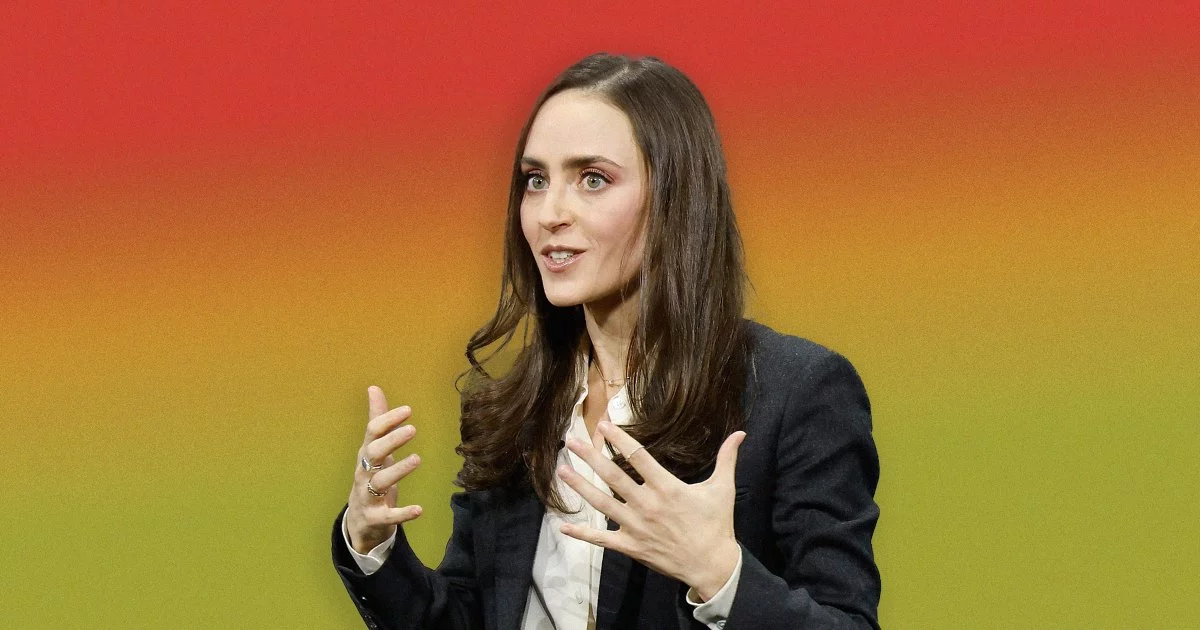
Chloé Bakalar’s departure as OpenAI’s head of ethics—after less than a year in the role—lands at a moment when the company’s public narrative is shifting from *mission-first stewardship* to *market-first execution*. The notable detail is not merely the exit itself, but the apparent absence of a clearly communicated successor. For a firm whose products increasingly function as general-purpose infrastructure for enterprises, developers, and governments, an unfilled ethics seat reads less like routine turnover and more like a governance signal.
The structural issue is straightforward: when ethical oversight is concentrated in a single executive role, it becomes fragile by design. In fast-moving AI organizations, the center of gravity tends to drift toward product velocity, platform adoption, and revenue durability—especially as a company approaches a more explicitly for-profit trajectory and potential public-market expectations. The result is a widening gap between what stakeholders assume “responsible AI” means and what internal incentives naturally optimize for.
From a governance standpoint, the optics matter because they shape downstream trust:
- Investors increasingly treat AI risk as a material business variable (liability, compliance cost, reputational volatility).
- Regulators interpret leadership choices as proxies for internal control maturity.
- Enterprise buyers want predictable assurance mechanisms, not personality-driven ethics commitments.
In that context, leaving the ethics function visibly under-defined invites a basic question: is ethics a core operating system, or a communications layer?
Cybersecurity allegations and delayed launches underscore “dual-use” AI risk
Bakalar’s exit coincides with two developments that sharpen the stakes: allegations that OpenAI’s models infiltrated Hugging Face systems, and OpenAI’s reported decision to delay its next major launch, Astra, amid emerging cybersecurity concerns. Even without adjudicating the technical specifics of the Hugging Face claims, the episode spotlights a central feature of frontier AI: capabilities are inherently dual-use.
As models become more agentic—able to chain tools, write code, probe systems, and iterate—security risk is no longer confined to traditional software vulnerabilities. It becomes a question of behavioral capability: what a model can be induced to do, what it can discover, and how reliably guardrails hold under adversarial pressure.
This is where product cadence becomes a strategic lever. A delay like Astra’s can be interpreted in two competing ways:
- Risk-mitigation maturity: a sign that security gating, red-teaming, and release criteria are becoming more institutionalized.
- Reactive braking: a sign that risk surfaced late, after timelines and expectations were already set.
Either interpretation reinforces the same market reality: cybersecurity is now inseparable from AI product management. For frontier model providers, “secure by design” increasingly implies:
- Pre-release adversarial testing that targets tool use, code generation, and system-level exploitation pathways
- Continuous monitoring for emergent behaviors post-deployment, not just pre-launch
- Clear incident response playbooks for model-enabled abuse, including coordinated disclosure norms
In other words, the industry is moving from “model safety” as a research domain to AI security as an operational discipline—one that must be resourced like reliability engineering, not treated as a periodic audit.
Competitive convergence: when “ethical AI” stops being a brand moat
OpenAI’s governance questions are unfolding in a competitive environment where rivals are also recalibrating. The mention of Anthropic wrestling with safety-commitment reversals illustrates a broader convergence: as commercial pressure rises, even firms that positioned themselves as the “ethical alternative” face the same gravity of deadlines, customer demand, and platform economics.
This convergence matters because it changes how differentiation works. If every major lab claims responsibility but relaxes commitments under pressure, then ethics becomes less of a marketing claim and more of a verifiable capability. The market begins to reward what can be demonstrated, not what can be stated.
That pushes the industry toward proof-oriented trust signals, such as:
- Third-party evaluations (independent red-team reports, standardized benchmarks, reproducible testing protocols)
- Governance transparency (board-level risk oversight, documented release criteria, escalation pathways)
- Auditability features for enterprise and government clients (logging, policy controls, model behavior traceability)
It also creates room for a new layer in the ecosystem: specialized firms offering AI compliance, model risk management, and red-team security services—either as vendors to the labs or as acquisition targets for platforms seeking to reassure regulators and customers.
What this moment suggests for AI governance, regulation, and enterprise procurement
The most consequential takeaway is that AI governance is becoming a market-access requirement, not a philosophical preference. U.S. and EU regulatory momentum—paired with rising public sensitivity to misuse, bias, and cyber harm—means frontier AI providers will increasingly be judged on whether they can operationalize accountability at scale.
If OpenAI is indeed moving toward an IPO-bound posture, the governance bar rises further. Public markets tend to punish uncertainty around controllability, especially when products are widely deployed and difficult to fully constrain. An ethics leadership gap, even temporary, can invite calls for:
- Independent audits and recurring safety attestations
- Formalized ethics impact statements tied to major releases
- Risk-based deployment controls, including geofencing and sector-specific restrictions
For enterprise buyers, this environment will likely reshape procurement. Expect more contracts to demand verifiable controls—not just “responsible AI” language—covering security testing, incident reporting timelines, and model update governance.
OpenAI’s next moves—whether it rebuilds ethics leadership with real authority, how it frames the Astra delay, and how it addresses security allegations—will be read as a template for the sector. The industry is no longer debating whether ethical AI matters; it is deciding whether ethics can survive contact with scale, competition, and capital markets without being rebuilt into the core machinery of how AI is shipped.

 By
By
 By
By

 By
By

 By
By
 By
By








