



New York City’s bid to govern the “invisible” last mile
New York City is moving to formalize oversight of a fast-growing but often opaque corner of the urban economy: last-mile delivery operations run through subcontracted warehouse and driver networks. The proposed Delivery Protection Act, sponsored by City Council Member Tiffany L. Cabán and championed by Mayor Zohran Mamdani, would require companies operating last-mile warehouse facilities—most prominently Amazon’s Delivery Service Partner (DSP) ecosystem—to secure a business license through the NYC Department of Consumer and Worker Protection (DCWP).
At its core, the measure is less about paperwork than power. Licensing would give the city a direct enforcement lever over standards that have historically been mediated through contracts and private compliance programs: safety protocols, training requirements, insurance coverage, and fair work practices. Supporters frame this as regulatory parity—bringing subcontracted delivery labor closer to the protections and accountability expectations associated with traditional carriers. Critics warn it could destabilize a fragile small-business layer that sits between global platforms and local streets.
This debate lands in a city where last-mile infrastructure has expanded rapidly: 18 last-mile sites added between 2017 and 2025, intensifying scrutiny of how gig-economy logistics scales in dense neighborhoods—and who bears the operational risk when it does.
Licensing as labor policy: a municipal route to platform accountability
The Delivery Protection Act signals a broader shift in how governments attempt to regulate platform-mediated work. Rather than relying primarily on litigation over worker classification, New York City is exploring administrative control via licensing, effectively treating subcontracted delivery operations as a public-facing service that must meet baseline standards.
Proponents argue the current model allows large platforms to externalize costs—from workers’ compensation exposure to training investments—onto third-party operators and, ultimately, onto workers themselves. A licensing regime could tighten those gaps by making compliance auditable and enforceable at the city level.
This approach aligns with international and domestic currents that increasingly view platforms as more than neutral intermediaries:
- Europe’s platform work initiatives have pushed toward clearer accountability for algorithmically managed labor.
- California’s AB5-era debates underscored how classification rules can reshape entire service sectors, even when contested and revised.
New York City’s strategy is distinct in its practicality: it targets the operational chokepoints—warehouses, dispatch practices, insurance, training—where standards can be verified. If enacted and enforced, it could become a template for other large municipalities seeking to regulate the last mile without waiting for federal or state-level consensus.
The economics of speed: compliance costs versus operational resilience
For Amazon and similar logistics platforms, last-mile flexibility is not a peripheral feature—it is the engine behind same-day and next-day delivery promises, customer retention, and competitive differentiation. Any policy that adds friction to that engine has strategic consequences.
Opponents, including Amazon and the New York Delivers Coalition (representing roughly 50 small DSPs), argue that heightened regulation could push warehouse activity outside city limits, threatening more than 5,000 local jobs. The warning reflects a familiar urban economic tension: cities want the employment and convenience benefits of logistics hubs, but also want to mitigate the labor and safety risks that accompany high-velocity delivery.
Yet compliance is not purely a cost center. Supporters contend that stronger standards could improve system performance by reducing churn and incidents—two chronic drains on last-mile economics. In a sector known for thin margins and high turnover, the trade-off is not simply “regulation versus growth,” but short-term cost versus long-term stability.
Key economic variables likely to shape outcomes include:
- Administrative and licensing overhead: inspections, documentation, and ongoing reporting requirements.
- Insurance and liability structures: whether new rules increase premiums or clarify coverage in ways that reduce catastrophic risk.
- Workforce retention: improved training and safety may lower turnover, which is expensive in a high-volume delivery model.
- Network design: relocation or consolidation decisions could alter delivery times, congestion patterns, and service reliability.
For New York City, the policy question is whether licensing can raise standards without triggering a geographic arbitrage response—where operations move just beyond the city boundary while still serving city consumers.
Small DSPs, corporate dependence, and the next phase of urban logistics governance
The most politically potent dimension of the debate may be the position of DSPs themselves. Many are small, locally owned operators whose business viability depends heavily—sometimes almost entirely—on Amazon volume. That dependence creates a paradox: DSPs are framed as small businesses, yet their operating reality can resemble a single-client franchise-like relationship, with limited pricing power and little room to absorb new compliance burdens.
If the Act advances, it may accelerate a structural sorting of the DSP ecosystem:
- Some operators may seek diversification—serving grocery, retail, or regional distribution clients to reduce platform dependency.
- Others may pursue shared compliance infrastructure, such as pooled insurance arrangements or joint training programs, to spread costs.
- The most resilient may evolve into tech-enabled logistics providers, investing in route optimization and workforce management tools to maintain margins under tighter rules.
The city’s concurrent focus on deceptive tipping practices in food-delivery apps, including the reported recovery of $104 million in tips for couriers, underscores a broader governing posture: New York is increasingly willing to treat platform design choices—whether tip flows or subcontracting structures—as matters of consumer and worker protection, not merely private business architecture.
What emerges is a larger contest over who sets the rules of urban commerce in the platform era. If New York City succeeds in using licensing to enforce last-mile standards, national operators may face a future defined by municipal regulatory patchworks, where compliance becomes a strategic discipline alongside routing, warehousing, and customer experience. The companies that adapt fastest will be those that treat worker safety, training, and transparency not as reputational add-ons, but as core operating systems for the modern city.

 By
By
 By
By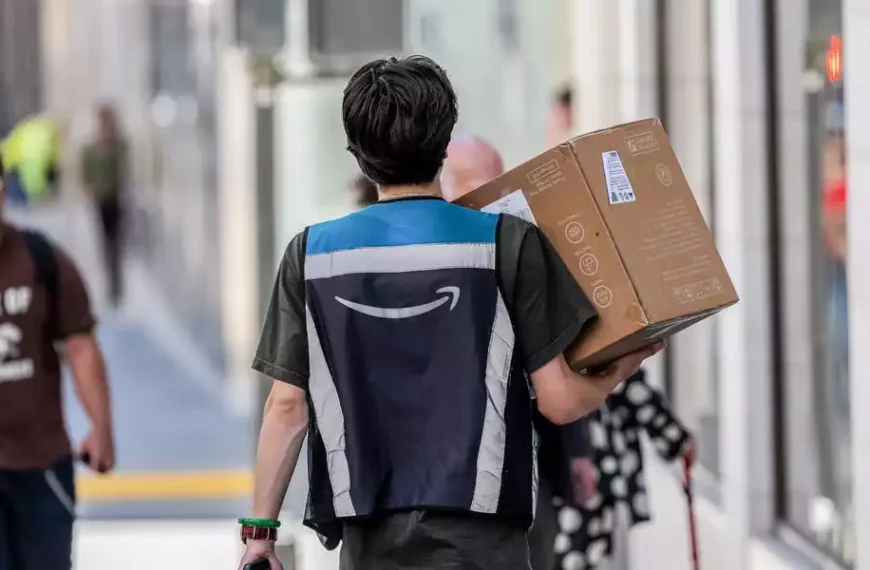
 By
By

 By
By

 By
By








