

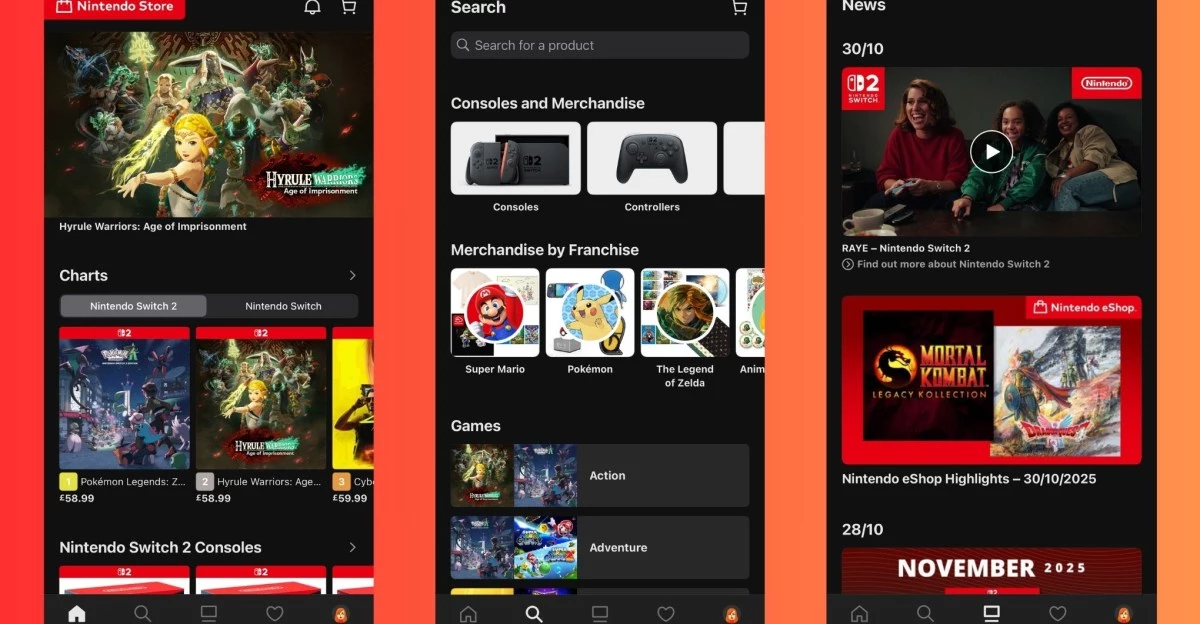

Nintendo’s Mobile Storefront: A Calculated Play for Ecosystem Sovereignty
In the shadowy corridors of digital commerce, Nintendo has made a move both subtle and seismic: the quiet launch of its official Nintendo Store mobile app in Western markets. On the surface, the app’s features—centralized product discovery, gameplay analytics, wish-list notifications, loyalty rewards, and event check-ins—appear as incremental upgrades in user convenience. Yet, beneath this veneer lies a sophisticated recalibration of Nintendo’s approach to platform economics, data ownership, and consumer engagement.
Hybrid Commerce: Sidestepping the Tollbooths of Mobile Platforms
The architecture of Nintendo’s new app is a study in strategic restraint. While the app natively renders product catalogs and personalized account data, it deftly redirects users to the mobile browser for final checkout. This maneuver is not a mere technical quirk—it’s a deliberate circumvention of Apple’s and Google’s in-app purchase commissions, which can siphon off up to 30% of each transaction. By leveraging server-side session persistence, Nintendo ensures that the consumer’s journey from app to browser is seamless, masking the underlying complexity while preserving margin integrity.
This hybrid model mirrors a growing trend among major publishers, who are increasingly wary of platform fees and regulatory flux. As the EU’s Digital Markets Act looms, Nintendo’s architecture is “option-ready”—primed to integrate alternative billing the moment regulations allow. The app, therefore, is not just a storefront but a flexible control layer, capable of rapid adaptation in a shifting legal and technological landscape.
Data as Currency: Unifying Telemetry and Loyalty
Nintendo’s move to consolidate gameplay telemetry across generations of hardware—from Switch to 3DS and Wii U—signals a deeper ambition. By surfacing historical play data directly to adult users, the company is weaving a unified behavioral graph, enriching its first-party data for recommendation engines and targeted promotions. This longitudinal dataset, previously fragmented across parental controls and disparate systems, now forms the backbone of a high-precision retargeting engine.
- Personalized recommendations become sharper, leveraging granular play patterns.
- Push notifications evolve from blunt instruments to surgical tools, driving engagement with accessories and collectibles—categories where attachment rates soar above 40%.
- Loyalty mechanics—from event check-ins to physical store visits—generate a new class of engagement metrics. These can be wielded as bargaining chips in negotiations with mall operators or pop-up partners, transforming foot traffic data into soft power.
The inclusion of legacy device data is more than nostalgia; it’s a hedge against generational churn, subtly reinforcing brand continuity as Gen-Z players mature into higher spending brackets.
Modular Apps and the Western “Unbundling” Playbook
Rather than pursuing the all-in-one “super-app” model that dominates in Asia, Nintendo is assembling a constellation of lightweight, single-purpose apps: the Store, Nintendo Music, Nintendo Today. This distributed approach reduces codebase risk and enables rapid A/B testing across verticals—a strategy reminiscent of WeChat’s mini-programs or Meta’s family of apps. It also positions Nintendo to interlink services under a single sign-on framework if Western consumer behavior shifts toward greater integration.
This modularity is not just technical hygiene; it’s a strategic shield. Each app can iterate independently, respond to regulatory changes with agility, and serve as a testbed for new forms of commerce—real-world/virtual crossovers that luxury brands and sports franchises are already exploring.
Repercussions Across the Value Chain
Nintendo’s direct-to-consumer pivot carries implications far beyond its own balance sheet:
- Platform owners will accelerate experiments with hybrid checkout flows, investing in middleware that can toggle payment gateways without triggering app-store resubmissions.
- Third-party publishers may face rising consumer expectations for transparent, unified gameplay analytics, potentially reshaping the competitive landscape for subscription bundles.
- Retailers will feel the squeeze as direct mobile storefronts erode wholesale volumes, forcing a pivot toward experiential merchandising and exclusive in-store events—areas where Nintendo’s app-based check-ins could become critical traffic drivers.
- Investors should monitor attach-rate metrics closely; any uptick in conversion attributable to the mobile app could materially expand Nintendo’s lifetime value per user ahead of the anticipated Switch 2 launch.
- Regulators will find Nintendo’s browser handoff a compelling case study in the ongoing debate over platform fee frameworks and digital marketplace fairness.
As Nintendo methodically extends its ecosystem beyond the console, it offers a pragmatic blueprint for balancing platform dependency, regulatory uncertainty, and omnichannel brand engagement. The company’s margin-first, data-driven approach is not just a defensive maneuver—it’s a quiet assertion of sovereignty in the increasingly contested terrain of digital commerce. For decision-makers across the gaming and consumer-tech sectors, the lesson is clear: in the age of platform power, control is not seized in a single stroke, but accumulated—one hybrid checkout, one unified data graph, one modular app at a time.


 By
By

 By
By
 By
By
 By
By

 By
By







