


Interstellar Visitors and the New Space Economy: The 3I/ATLAS Signal
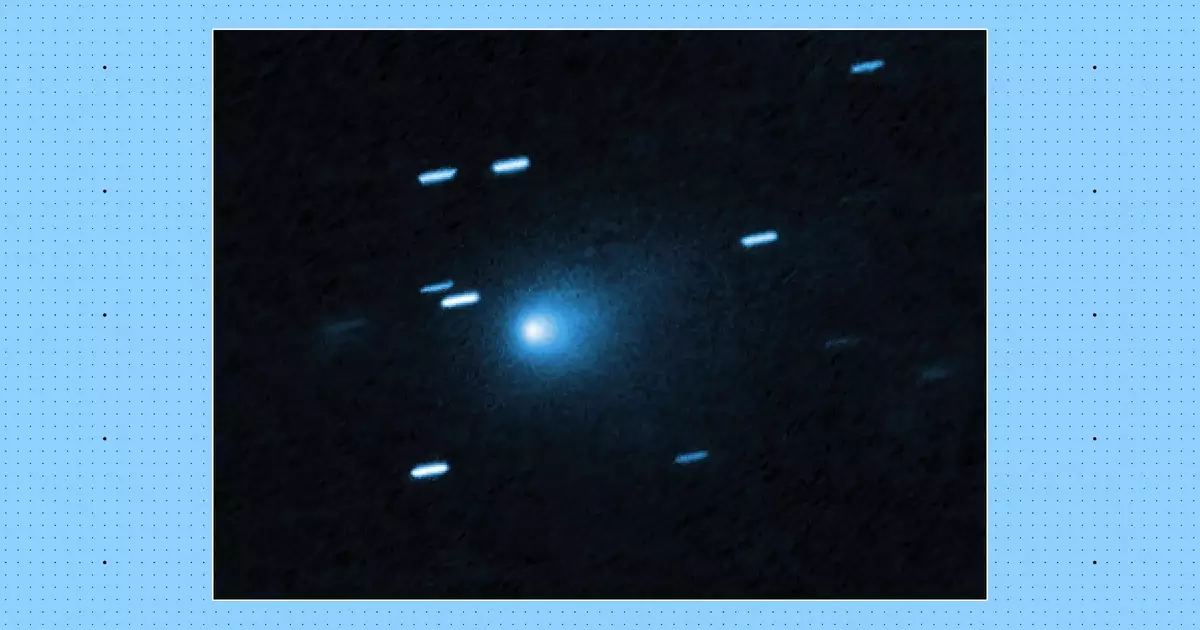
When NASA’s Hubble Space Telescope captured the first high-resolution image of 3I/ATLAS—a mysterious, dust-shrouded traveler from beyond our solar system—it was more than an astronomical milestone. The event, marked by a “teardrop” envelope of cosmic dust and a velocity of 134,000 miles per hour, has become a focal point for the convergence of science, technology, and capital markets. In the wake of this discovery, the global space sector finds itself at a strategic inflection point, where interstellar science becomes a proving ground for next-generation infrastructure, investment, and policy.
From Discovery to Deployment: A New Model for Space Operations
The swift handoff of 3I/ATLAS from ground-based surveys (ATLAS, Pan-STARRS) to Hubble’s orbiting lens is emblematic of a maturing detection pipeline—one that is agile, modular, and increasingly automated. This workflow, once the exclusive domain of planetary scientists, now sets the template for a host of adjacent industries:
- Space-Domain Awareness (SDA): The rapid identification and tracking of interstellar objects (ISOs) mirrors the needs of defense and commercial operators monitoring space debris and potential threats.
- On-Orbit Servicing: Hubble’s enduring performance, three decades after launch, validates the economic logic of modular, serviceable architectures. The telescope’s longevity is a compelling argument for investors and OEMs to prioritize upgradability, not just for scientific satellites but for communications and Earth-observation platforms as well.
- Data Fusion and AI: The Bayesian models used to estimate 3I/ATLAS’s age and velocity are not confined to astrophysics. These same algorithms are now powering advances in climate modeling, autonomous navigation, and risk underwriting—demonstrating a powerful cross-sector transfer of intellectual property.
Strategic Catalysts: Capital, Supply Chains, and Policy
The arrival of 3I/ATLAS is also a catalyst for economic and strategic realignment. As venture and institutional capital continues to flow into space infrastructure, even amid tightening global financial conditions, proof points like Hubble’s extended utility offer a narrative of reduced lifecycle risk. This, in turn, emboldens investment in:
- Optical Relay Networks and Cislunar Communications: Long-duration assets with modular designs are increasingly attractive to capital allocators seeking resilience and flexibility.
- Critical Supply Chains: The demands of interstellar science—ultra-low-scatter optics, cryogenic detectors, radiation-hardened electronics—are intensifying competition among US, EU, and Japanese suppliers. Strategic stockpiling and vertical integration, possibly via mergers and acquisitions, are on the horizon as firms seek to secure access to scarce materials and capabilities.
- Policy and Security: Interstellar objects offer a politically neutral sandbox for developing planetary-defense technologies. Agencies can justify R&D in interceptor propulsion and advanced sensors under a dual-use science and defense framework, sidestepping the sensitivities that often accompany Near-Earth Object mitigation drills.
Industry Parallels and Non-Obvious Opportunities
The implications of 3I/ATLAS ripple far beyond astronomy. The techniques honed for characterizing ancient, pristine materials echo the methods of rare-earth mineral prospecting, providing a technological bridge to asteroid mining ventures targeting water and platinum group metals. Meanwhile, the study of hyper-velocity dust environments informs high-pressure material synthesis and pharmaceutical research, where shock-induced chemistry can yield novel compounds and polymorphs.
Equally significant is the modeling infrastructure underpinning interstellar object tracking. The mathematical kinship between galactic perturbation models and long-horizon climate risk analytics is not lost on forward-thinking investors. NASA’s transparent, open-data approach sets a precedent for climate-asset disclosure, offering a template for the next wave of climate finance products.
Navigating the Next Frontier: Imperatives for Decision-Makers
For executives and policymakers, the lessons of 3I/ATLAS are clear:
- Surveillance Convergence: The boundaries between astronomical observatories, planetary-defense networks, and commercial SDA platforms are dissolving. Early adopters of integrated “Space Situational Analytics” can unlock diversified revenue streams across civil, defense, and insurance sectors.
- Modular Upgrades: The Hubble case strengthens the business case for open-architecture satellite platforms. Demanding modular payload bays and mid-life upgrade paths is now a strategic imperative.
- Interstellar Mission Readiness: The renewed interest in interstellar precursor missions—solar sails, nuclear-electric propulsion—signals opportunity for firms with advanced propulsion or heat-shield IP.
- Supply Chain Resilience: As demand for high-purity optics and coatings intensifies, proactive dual-sourcing and long-term offtake agreements will be critical to avoid bottlenecks.
- Interoperable Data Standards: The seamless data handoff that enabled Hubble’s observation of 3I/ATLAS highlights the value of industry-wide, API-level protocols for sensor interoperability.
The observation of 3I/ATLAS is not merely a scientific curiosity—it is a live demonstration of how cosmic events can accelerate technological innovation, reshape investment theses, and redefine strategic priorities. For those attuned to the signals, the message is unmistakable: in a universe where the next competitive advantage may quite literally arrive from another star system, agility, modularity, and data-driven partnerships are the keys to thriving in the new space economy.

 By
By
 By
By


 By
By

 By
By
 By
By







