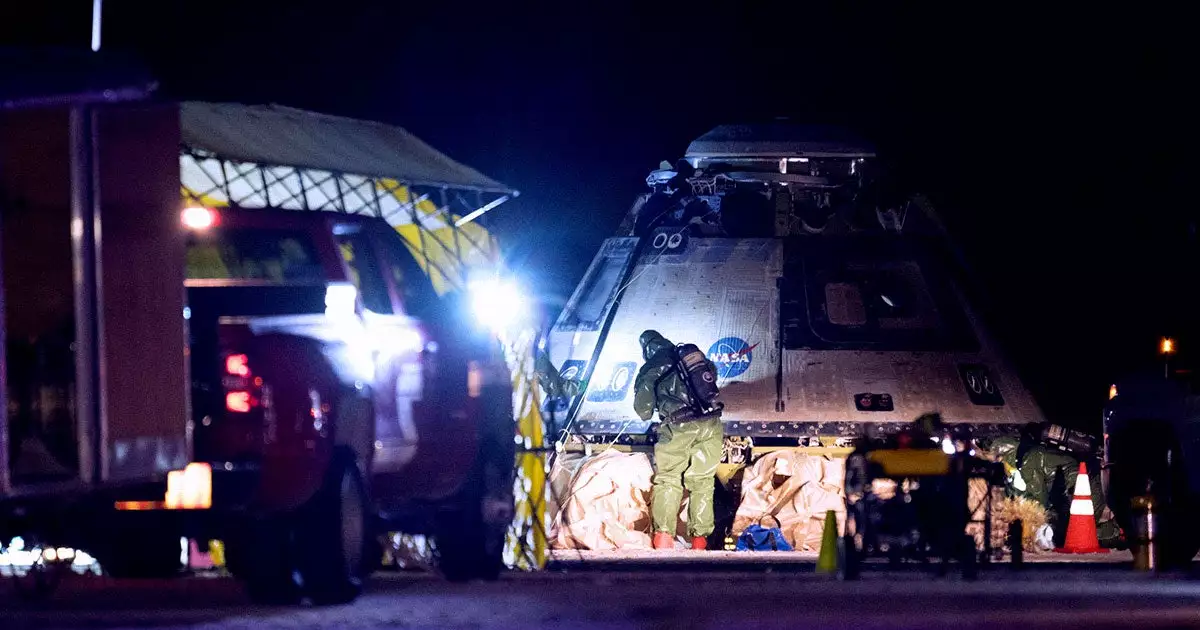

Starliner’s Odyssey: Navigating Setbacks, Redundancy, and the New Economics of Human Spaceflight
The Starliner program, NASA and Boeing’s ambitious answer to American crewed access to low Earth orbit, stands at a crossroads defined by adversity and adaptation. With cost overruns eclipsing $2 billion, a schedule now trailing original projections by over a decade, and a nine-month crew stranding incident that lingers in institutional memory, Starliner is both a cautionary tale and a case study in the evolving calculus of space enterprise. Yet, despite these formidable headwinds, both NASA and Boeing are pressing forward—driven by motives that transcend mere operational necessity.
Anatomy of a Recovery: Engineering Lessons and Digital Transformation
Starliner’s technical tribulations—ranging from reaction-control thruster degradation to software-integration lapses and parachute deployment anomalies—have illuminated not just isolated flaws but a deeper challenge of systemic integration. Boeing’s remediation plan is notable for its pragmatic borrowing from adjacent defense technologies:
- Hardware Upgrades: The shift to high-temperature-tolerant seals and streamlined plumbing for thrusters, inspired by missile-defense systems, signals a reliance on proven, TRL-9 components. Such cross-pollination could expedite qualification, but also underscores the reactive nature of the fixes.
- Parachute Redesign: Drawing on Department of Defense cargo drop innovations, Boeing is accelerating cordage improvements, compressing timelines but raising the stakes for flawless execution.
Perhaps most transformative is Boeing’s late-stage migration to a model-based engineering stack—an enterprise-wide digital twin approach that promises to reduce regression testing cycles by up to 30%. This digital leap, long standard in defense but underutilized in commercial space, could be a force multiplier, provided initial data-model alignment risks are deftly managed.
The Economics of Redundancy: Starliner in SpaceX’s Shadow
Starliner’s strategic rationale is rooted in redundancy—a bulwark against the vulnerabilities exposed by the Shuttle retirement gap and a hedge against geopolitical or technical shocks. Yet, the economic logic underpinning this redundancy is eroding:
- Unit Cost Disparity: With projected life-cycle costs of $90–100 million per seat, Starliner sits at a 70% premium over SpaceX’s Crew Dragon, which has already established a $55 million per-seat benchmark through 11 successful ISS missions.
- Diminishing Market Horizon: The impending retirement of the ISS in 2030 caps Starliner’s addressable market at roughly 20 crew-rotation flights. Unless the vehicle pivots to servicing private LEO stations, its internal rate of return may struggle to clear Boeing’s cost of capital.
- Budgetary Pressures: Prospective federal budget tightening looms, with NASA’s human spaceflight directorate at risk of 8–10% cuts. Programs lacking direct Artemis synergies—Starliner chief among them—are particularly exposed.
These vectors converge to challenge the sustainability of Starliner as a standalone crew vehicle. The program’s continued existence is as much a function of risk management and supply-chain sovereignty as of economic rationale.
Strategic Ripples: Certification, Insurance, and Talent in the New Space Economy
Beneath the surface, Starliner’s trajectory is shaping the broader industry in subtle but consequential ways:
- Certification Precedents: The corrective actions and heightened scrutiny applied to Starliner are likely to set new benchmarks for human-rating protocols, directly influencing the design and cost structures of Artemis-era vehicles and future cislunar logistics modules.
- Capital Markets and Insurance: A successful Starliner return-to-flight could recalibrate insurance premiums for human-rated spacecraft, lowering the cost of capital for private station developers and nudging the commercial LEO ecosystem toward greater financial viability.
- Talent Dynamics: Prolonged delays have already begun to drive propulsion and guidance engineers toward agile, well-funded new-space startups. Boeing’s formation of a rapid-innovation SWAT team around Starliner is as much about stemming this talent exodus as it is about engineering redemption.
Strategic Choices Ahead: Navigating Uncertainty and Opportunity
For NASA, the imperative is to maintain robust contingency planning—potentially modeling a Dragon-only crew architecture post-2026, supplemented by Soyuz barter seats, to safeguard Artemis mission timelines. Realigning incentives, perhaps by tying payments to operational milestones rather than development gates, could better synchronize contractor motivation with mission outcomes.
Boeing, meanwhile, faces a moment of portfolio reckoning. Exploring dual-use pathways—such as adapting Starliner for autonomous cargo or free-flyer servicing—could extend its relevance beyond the ISS era. Early engagement with private-station developers may position Starliner as an “airline-class” module, offering a differentiated value proposition in a market increasingly defined by SpaceX’s high-utilization, low-cost model.
For investors and executives, the lesson is clear: diversify exposure, favor redundancy, and time capital allocation to critical program milestones—especially the pivotal uncrewed test flight slated for 2024.
The coming 18 months will reveal whether Starliner can transform from a costly detour into a strategic asset, or whether it will cement SpaceX’s ascendancy in human spaceflight—a verdict with lasting implications for technology roadmaps, industry capital flows, and the geopolitical architecture of the new space age.

 By
By
 By
By
 By
By


 By
By