


Breaking the 11-Mile Barrier: Joby’s eVTOL Flight and the Dawning Era of Urban Air Mobility
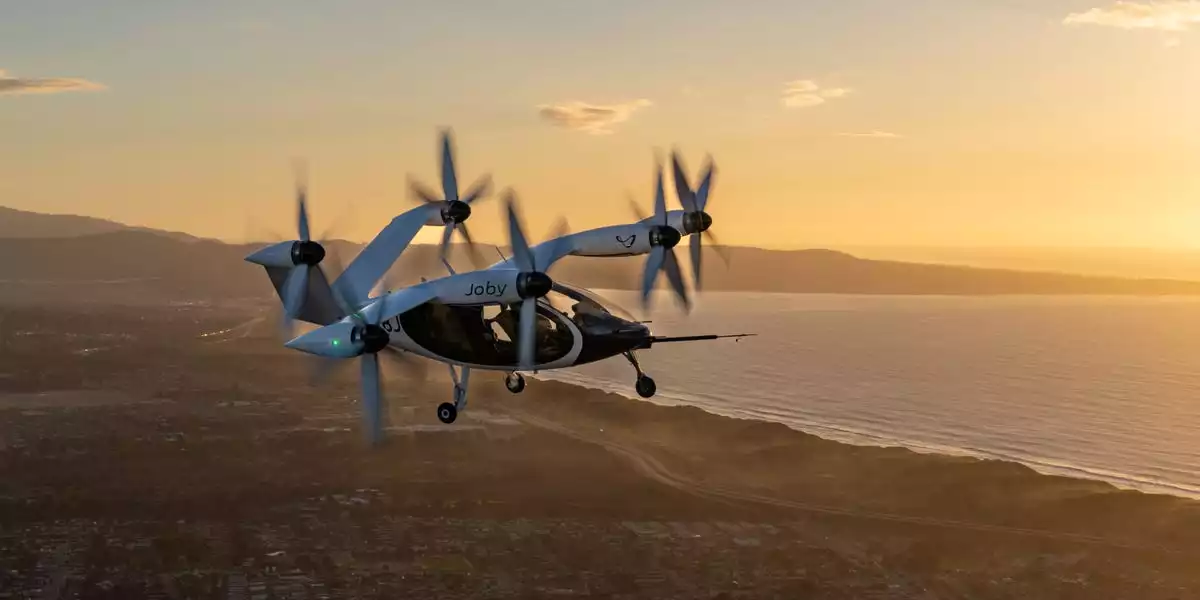
Joby Aviation’s recent 12-minute, 11.5-mile eVTOL flight between Marina Municipal and Monterey Regional airports is more than a headline—it is a harbinger. For the first time, a piloted electric vertical takeoff and landing aircraft traversed controlled U.S. airspace, integrating seamlessly with commercial airline traffic and holding for a scheduled arrival. This moment, at once understated and revolutionary, signals the beginning of a new chapter in advanced air mobility (AAM), where the boundaries between ground and sky, infrastructure and innovation, begin to blur.
The Technology Frontier: Batteries, Airspace, and the Sound of Silence
At the heart of eVTOL’s promise lies a delicate technological equation. Battery-specific energy remains the sector’s crucible: Joby’s flight consumed roughly a quarter of its pack’s capacity, underscoring the operational sweet spot for early deployments—micro-shuttles under 25 miles, not full city-pair replacements. This constraint, while limiting, also sharpens the focus for executives and planners: initial AAM routes will be short, frequent, and highly targeted, designed for the most time-sensitive and value-rich segments.
Perhaps more quietly transformative was the aircraft’s integration into Class C airspace. By holding five minutes for a commercial arrival, Joby demonstrated that eVTOLs can participate as full citizens in the air traffic control system, without the need for bespoke corridors or regulatory carve-outs. This is a subtle but profound shift, one that moves the challenge from regulatory approval to digital scalability. The next frontier is not just in the air, but in the cloud—where real-time telemetry, predictive maintenance, and AI-assisted airspace management will become the nervous system of urban aviation. Telecom and cloud providers, long the backbone of terrestrial mobility, now find themselves at the threshold of a new, airborne adjacency.
Noise, too, becomes a strategic asset. Joby’s aircraft reportedly registers less than 65 dBA at 500 feet—half the acoustic footprint of legacy helicopters. In a world where ESG metrics and community acceptance are prerequisites for infrastructure investment, decibel reduction is political capital. It transforms NIMBY resistance into stakeholder buy-in, unlocking public-private partnerships for vertiport development atop rooftops and brownfield sites.
The Competitive Chessboard: Capital, Cannibalization, and the Middle East’s Fast Lane
The economic landscape of AAM is taking shape in patterns reminiscent of early telecom build-outs. Manufacturers like Joby, Archer, and Vertical Aerospace are vertically integrating vehicle and network design, while airlines such as Delta and Virgin Atlantic serve as demand aggregators, brand amplifiers, and—crucially—risk buffers. This tight coupling is necessary to navigate the regulatory gauntlet and secure FAA Part 135 operational authority, but the future will likely see a divergence akin to the Airbus-easyJet split: OEMs on one side, operators on the other.
Pricing will define the sector’s trajectory. At $6–9 per seat-mile, the initial market is narrow—executives, medical logistics, high-end tourism. But as battery costs fall and charging speeds rise, price elasticity will unlock broader adoption. The tipping point: per-seat costs approaching $3–4, a threshold that will only be crossed when battery chemistry and supply chains mature. Until then, dynamic pooling algorithms and seamless integration with airline loyalty programs will be essential to fill seats and balance the books.
Geographically, the Middle East emerges as a proving ground. The UAE’s regulatory agility, deep capital reserves, and appetite for innovation make it an ideal launchpad. Success in Abu Dhabi or Dubai will generate the operational data and investor confidence needed to convince more cautious Western regulators and infrastructure funds—a replay of how 4G networks leapfrogged from nimble nations to global ubiquity.
Infrastructure, Ecosystem, and the New Urban Sky
The regulatory and infrastructural canvas is complex, but the outlines are becoming clear. FAA certification—both for airworthiness and operations—remains the sector’s critical path, with every milestone or delay rippling through capital markets and boardrooms. Grid resiliency and distributed charging are the new bottlenecks: a single five-gate vertiport could consume as much power as a midsize data center, inviting utilities and real estate funds into the AAM ecosystem. Here, renewable over-generation and stationary storage become not just environmental imperatives, but economic enablers.
The digital backbone is equally vital. Real-time data flows, predictive analytics, and ultra-low-latency communications will underpin both safety and scalability. Telecom operators, with their expertise in network slicing and service-level agreements, are poised to monetize the new demands of airborne mobility.
Strategically, regional airports within a 50-mile radius of major cities—often overlooked, underutilized, and cash-strapped—are poised to become the logistics hubs of the AAM era. Private equity, sensing the opportunity, may bundle these assets into a new class of “aero-logistics” real estate, echoing the rise of industrial warehouses during the e-commerce boom.
The Unfolding Opportunity: From Sandbox to Scalable Reality
Joby’s inter-airport flight is less a demonstration of distance than of possibility. It is a quiet unlocking of regulatory, technological, and economic doors. As advanced air mobility transitions from concept to constrained commercial reality, the leaders who treat this moment as a live sandbox—experimenting, partnering, and investing—will be best positioned to shape the contours of low-carbon urban aviation. The sky, once the limit, is fast becoming the next competitive frontier.

 By
By
 By
By
 By
By
 By
By


 By
By








