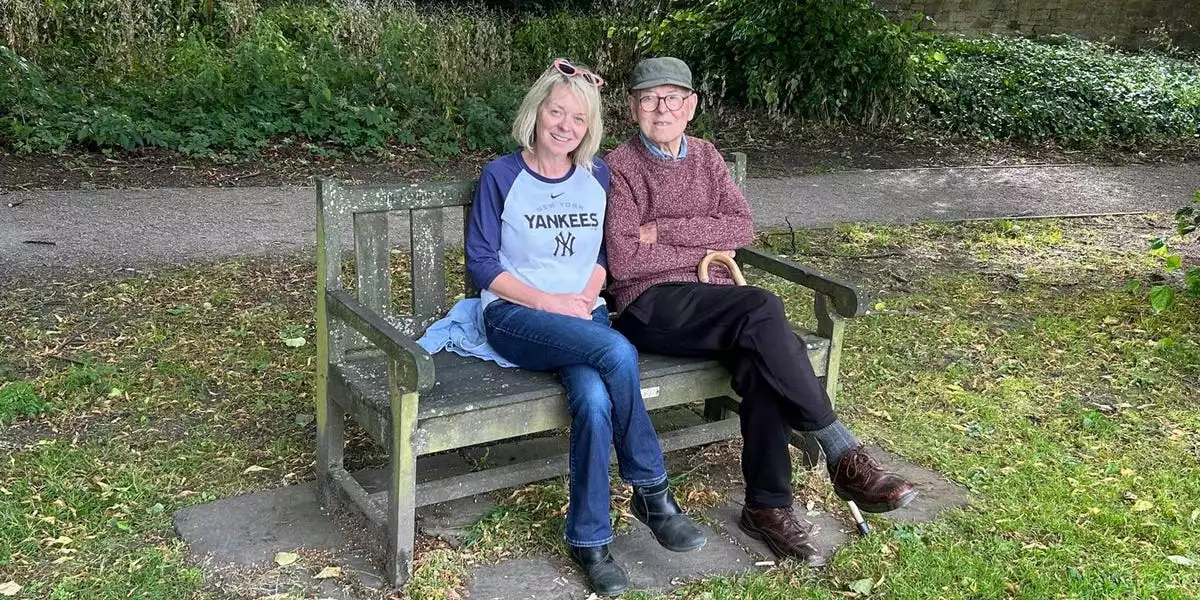

A rural family’s eldercare turning point—and what it signals for the home-care economy
A 90-year-old patriarch’s heart attack is, on its face, a deeply personal event: a sudden medical rupture that changes the geometry of a household overnight. Yet the downstream effects—reduced mobility, heightened fall risk, and the daily logistics of bathing, transfers, and medication routines—quickly become a systems problem. In rural settings especially, where provider density is thinner and family networks often serve as the default safety net, advanced aging can expose the limits of informal care.
In this case, the family had meaningful internal capacity: a sister who was a retired nurse, and relatives willing to help. But willingness is not the same as sustainability. As physical demands rise, caregiving becomes a second full-time job—one that competes with employment, health, and the emotional bandwidth required to preserve a loved one’s dignity. The parents’ preference for aging in place—remaining at home rather than moving into residential care—added urgency to finding a model that could scale beyond family labor.
The pivotal development was the rapid engagement of a professional in-home eldercare agency with no waiting list, placing two male caregivers, Jonathan and Junior. Over eight weeks, their presence did more than stabilize daily routines. It reduced caregiver strain, protected the parents’ autonomy, and—through an unexpected shared love of 1930s–40s jazz—converted “care” into companionship. That detail matters: it reframes home care from a checklist of tasks into a relationship-centered service with measurable implications for health, adherence, and quality of life.
The rise of on-demand eldercare platforms: logistics, matching, and the quiet role of data
The absence of a waiting list is not merely a customer-service win; it is a strategic signal. It suggests a care-delivery model increasingly shaped by platform economics—the same operational logic that powers ride-hailing and last-mile delivery—now applied to one of society’s most intimate services: personal care.
Several technology vectors are implied by this kind of rapid placement:
- Digital on-demand scheduling and workforce orchestration
Real-time matching of caregiver availability to client needs requires dynamic scheduling, route optimization, and contingency planning. Agencies that can do this reliably reduce idle time, improve utilization, and respond faster to acute changes—such as post-heart-attack mobility decline.
- Remote monitoring and telehealth adjacency (even when invisible)
While not explicitly described, fast-start home-care models increasingly pair human visits with remote vital-sign monitoring, medication reminders, and telehealth escalation pathways. The operational benefit is straightforward: routine check-ins can be partially digitized, reserving human time for high-touch support and psychosocial engagement.
- Preference profiling and AI-enabled compatibility scoring
The jazz connection between caregiver and client reads like serendipity, but it also exposes an underused lever: data-driven personalization. Matching on language, hobbies, cultural context, and communication style can improve rapport, reduce churn, and raise satisfaction—outcomes that ultimately affect retention on both sides of the marketplace.
For business leaders, the key insight is that eldercare is becoming a hybrid product: part logistics platform, part clinical-adjacent support, part human relationship. The competitive edge will not come from technology alone, but from how technology is used to elevate the human experience rather than flatten it.
Labor, pricing, and the monetization of “soft value” in senior care
Home-care demand is rising alongside global aging trends, but supply is constrained by chronic understaffing, burnout, and wage pressure. This story highlights a less-discussed dimension of the labor market: workforce diversification, including the presence of male caregivers in a field where they remain underrepresented. That matters for capacity, but also for client fit—some households may prefer male caregivers for certain mobility tasks, schedules, or interpersonal dynamics.
Economically, the case underscores why in-home care continues to expand:
- Cost positioning versus residential long-term care
In-home support often runs 30–50% less than institutional alternatives, especially when families can blend paid hours with informal support. Agencies that improve placement efficiency can compress overhead and widen access for middle-income households.
- The business value of non-clinical services
Companionship, cultural affinity, and social engagement—here, jazz listening and singing—are not “extras.” They can influence mood, reduce isolation, and improve cooperation with care routines. Agencies that explicitly package these outcomes can justify premium tiers, differentiate their brand, and build stronger referral flywheels.
- Quality control in a gig-ifying market
As platform-like models expand, the sector faces a central tension: flexibility versus standards. The winners will be those that preserve reliability through training, supervision, and continuity of care—without eroding the scheduling agility that makes on-demand models attractive.
For investors and operators, the unit economics of home care increasingly hinge on retention: retaining caregivers through better scheduling and support, and retaining clients through trust, continuity, and relationship quality.
Where eldercare is heading: integrated ecosystems, reimbursement shifts, and the limits of automation
The forward trajectory points toward integrated care ecosystems—home-care agencies partnering with telehealth providers, health systems, and device manufacturers to offer end-to-end aging-in-place solutions. This is not just vertical integration for its own sake; it is a response to payer and provider incentives to reduce readmissions, prevent falls, and manage chronic conditions earlier and cheaper.
Three strategic themes stand out:
- Partnerships with health systems and payers
If companionship and consistent in-home support can be tied to measurable outcomes—fewer falls, better medication adherence, improved mental health—then reimbursement models may follow. Expect pilots where public programs and insurers fund home care contingent on outcome reporting.
- Human-centric differentiation as the durable moat
Training in empathy, cultural literacy, and activity-based engagement is not a “nice to have.” It is the brand. Technology can schedule a visit; it cannot replicate the trust built when a caregiver becomes a welcomed presence rather than a rotating contractor.
- AI and robotics as augmentation, not replacement
AI avatars, smart speakers, and robotic aides may take on routine monitoring and cognitive exercises. But the core value proposition—human companionship that restores dignity and reduces fear—remains stubbornly non-substitutable. The jazz sessions are not incidental; they are the product’s emotional center.
This episode, rooted in one family’s urgent adjustment, captures a broader market truth: the future of eldercare will be won by organizations that combine platform efficiency with deeply human service design, proving that scale and compassion can coexist in the same operating model.

 By
By
 By
By
 By
By

 By
By


 By
By