


A singular life, a familiar diagnosis—and the business case for dignity-first care
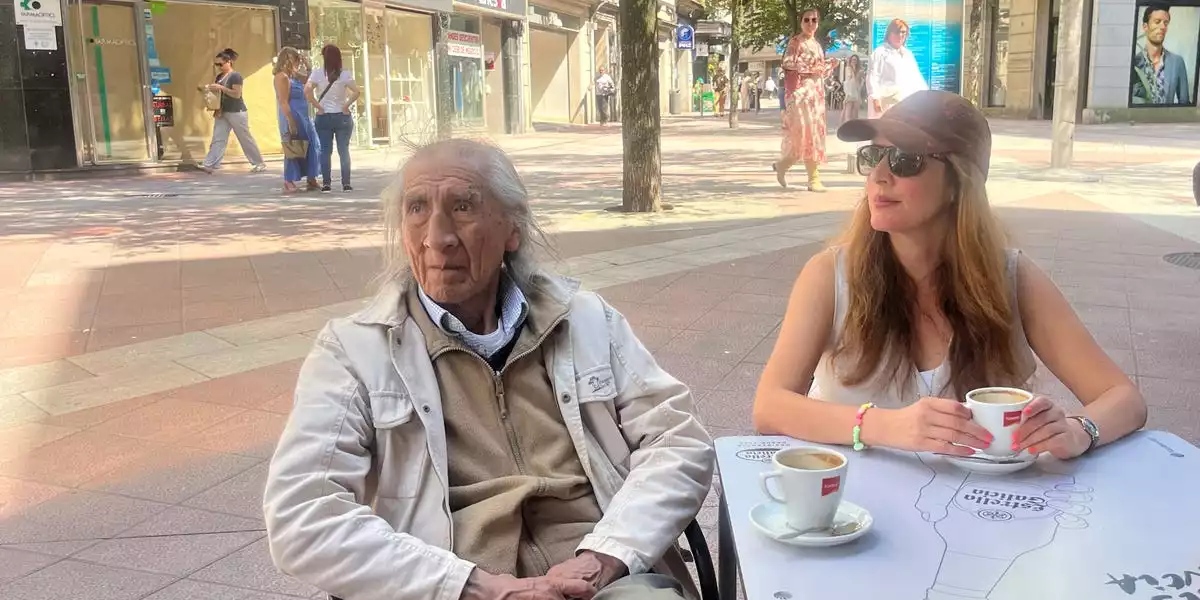
Freddy’s story unfolds in Pontevedra, Spain, with the quiet force of a case study that feels intensely personal yet broadly instructive. Once a celebrated poet, musician, and chess champion, he is now 77 and living with Alzheimer’s disease after a diagnosis at 71. The arc is not one of sudden disappearance, but of uneven cognitive erosion: short-term memory fails, suspicion flares, orientation slips—yet flashes of his former brilliance persist in math puzzles, chess positions, and philosophical sparring.
For business and technology leaders, the most consequential detail is not the diagnosis itself, but the family’s strategic response. After a distressing hospital experience that effectively disqualified institutional care in their eyes, Freddy’s family chose a model centered on autonomy, familiarity, and continuity. His wife orchestrates routines and safeguards daily stability, while Freddy retains self-paced walks, meals out, and intellectual stimulation—an approach that reframes “care” as a system design problem rather than a purely clinical intervention.
This is where the narrative becomes economically and technologically legible: Alzheimer’s care is increasingly shifting from facilities to homes and neighborhoods, and the winners in the next decade will be those who can scale support without stripping agency.
The emerging Alzheimer’s tech stack: from passive sensing to adaptive cognition support
Freddy’s day-to-day realities—wandering risk, misplaced objects, intermittent agitation, and moments of lucidity—map cleanly onto the fastest-growing segments of the AgeTech market. The opportunity is not a single device, but a coordinated stack that blends unobtrusive monitoring with meaningful engagement.
Key technology categories implied by Freddy’s experience include:
- Non-invasive safety and location support
– Smart-home motion sensors, door sensors, and geofencing wearables can reduce risk without creating a prison-like environment.
– AI-driven fall detection and anomaly alerts can shift response from reactive to preventive—especially valuable when families avoid hospitals unless absolutely necessary.
- Adaptive digital therapeutics for cognitive engagement
– Freddy’s continued interest in puzzles, music, and chess suggests demand for dynamic difficulty adjustment—apps that tailor challenges in real time to match evolving abilities.
– The differentiator here is not “brain training” marketing, but clinically grounded personalization that preserves confidence and reduces frustration.
- Telemedicine and remote neuro-care
– Virtual neuro-consultations and tele-rehabilitation platforms align with families seeking to minimize stressful institutional encounters.
– The next frontier is integrated dashboards that combine sensor streams, caregiver notes, and activity patterns to surface early warning signals—sleep disruption, reduced mobility, or rising agitation—before they become emergencies.
- Robotics and human-robot interaction (HRI)
– Companion robots remain controversial, but Freddy’s intermittent loneliness and agitation highlight a real market demand: predictable, low-pressure interaction that can supplement human presence.
– Modular assistive devices—automated pill dispensers, smart prompts, simple motor aids—can support daily function while respecting residual independence.
The strategic insight: Alzheimer’s technology succeeds when it behaves less like surveillance and more like invisible scaffolding—supportive, adjustable, and easy to ignore when not needed.
Europe’s aging curve meets value-based care: why home-centered models are becoming investable
Spain’s demographic trajectory is not unique; it is emblematic of Europe’s accelerating aging curve. As Alzheimer’s prevalence rises, so will the fiscal strain on public systems and the labor strain on formal caregiving workforces. Freddy’s family-led model—high-touch, coordinated, home-based—foreshadows the direction of travel: decentralized care with technology as the multiplier.
This shift has three immediate economic consequences:
- Healthcare spending will increasingly reward outcomes, not encounters
Payers and providers are moving toward value-based models that favor measurable improvements: fewer unscheduled hospital visits, delayed institutionalization, and stabilized caregiver burden. Technologies that can demonstrate these outcomes will be positioned for reimbursement and procurement.
- Venture capital and corporate investment will follow the “care infrastructure” thesis
The most investable Alzheimer’s solutions are not novelty gadgets; they are platforms that integrate:
– remote monitoring,
– telehealth access,
– caregiver coordination tools,
– and evidence-backed cognitive support.
- Public–private partnerships will become a scaling mechanism
Governments facing budget constraints may increasingly subsidize home-care innovation—especially where it reduces institutional load. This can accelerate regulatory pathways, but it also raises the bar for privacy, consent, and interoperability.
Freddy’s setting matters here. Pontevedra’s walkable urban design implicitly supports “aging in place,” suggesting that the Alzheimer’s economy is not only about devices and apps—it is also about cities, mobility, and community design as enabling infrastructure.
What business leaders should take from Freddy’s family: interoperability, ethics, and caregiver enablement
Freddy’s family is effectively operating as a micro-enterprise: managing risk, scheduling, emotional volatility, and quality of life with limited external support. That reality points to where product strategy often fails—designing for clinicians or institutions rather than for the informal caregiver workforce that carries much of dementia care.
Three strategic imperatives stand out:
- Build interoperable ecosystems, not isolated products
The market is crowded with point solutions—wearables, sensors, telehealth portals, medication tools. The durable advantage will come from standards-based integration so these tools can operate as one coherent system, with privacy-preserving data sharing and clear accountability.
- Design for dignity as a functional requirement
Freddy’s family rejected institutional care after a negative experience; trust, once lost, is hard to regain. Products must be co-designed with patients and caregivers to avoid infantilization, excessive alerts, or opaque “AI recommendations” that undermine autonomy.
- Treat caregiver upskilling as a core feature, not an add-on
Training modules, decision-support tools, and scenario-based guidance can reduce burnout and improve outcomes. In business terms, caregiver enablement increases retention, reduces churn, and strengthens clinical validity by improving adherence.
Freddy’s remaining sparks—his chess instincts, his musical memory, his appetite for ideas—underscore a truth that technology companies and health systems sometimes miss: Alzheimer’s care is not only about preventing decline. It is about protecting personhood while managing risk, and the organizations that can operationalize that balance—through humane design, measurable outcomes, and scalable home-based models—will define the next era of the dementia care economy.

 By
By
 By
By
 By
By
 By
By
 By
By


 By
By







