
Turbulence at 37,000 Feet: The New Frontline in Aviation Risk
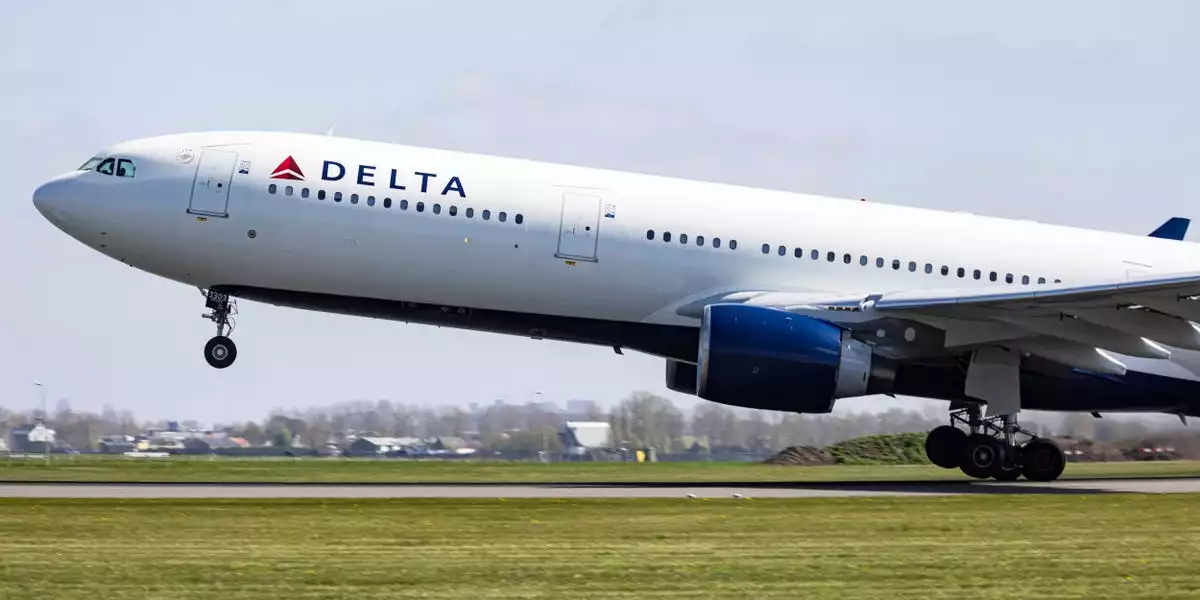
Delta Air Lines Flight 56’s abrupt diversion to Minneapolis, following a harrowing encounter with clear-air turbulence over the North Atlantic, is more than a headline-grabbing incident. It is a symptom of a deeper, climate-driven transformation in the operational and strategic calculus of global aviation. As twenty-five passengers and crew nursed injuries, the industry was forced to confront a stark reality: turbulence intensity over the North Atlantic has surged by 55% since 1979, a trend that data increasingly links to shifting jet-stream dynamics in a warming world.
This episode, while dramatic, is not isolated. It signals a new era where turbulence is no longer an episodic hazard but a persistent, intensifying risk—one that demands a reimagining of technology, economics, and regulatory frameworks across the aviation ecosystem.
The Technology Race: Predict, Prevent, and Protect
Current Limitations and Emerging Solutions
- Meteorological Blind Spots: Today’s onboard weather radar excels at detecting convective storms but is largely blind to the invisible menace of clear-air turbulence (CAT). Airlines rely on numerical weather prediction models updated every 6–12 hours, yet turbulence cells can materialize in less than an hour—leaving a critical gap in situational awareness.
- Machine Learning and Real-Time Data: The solution space is rapidly evolving. Machine-learning ensembles now fuse satellite infrared imagery, aircraft-borne eddy-dissipation-rate telemetry, and high-altitude LIDAR, promising minute-level turbulence probability fields. These advances are not theoretical; they are being prototyped and, in select cases, piloted on commercial routes.
- Cabin Safety Engineering: Despite regulatory mandates, real-world seat-belt compliance during cruise hovers below 60%. IoT-enabled seat-belt sensors, integrated with cabin lighting and crew alerts, are technically viable and already prototyped. Yet, widespread adoption stalls on questions of return on investment and operational disruption.
- Flight Operations Automation: Proactive altitude-selection algorithms, capable of ingesting real-time turbulence data, are under FAA trial in collaboration with NASA and major carriers. The vision: dynamically reroute around shear zones without costly diversions, leveraging performance-based navigation to maintain efficiency and safety.
Economic and Strategic Repercussions: Beyond the Cabin
The Cost of Turbulence
- Direct Financial Impact: Severe turbulence events impose a heavy toll—medical liabilities and aircraft inspections alone average $750,000 per incident. Add in diversion-related costs, passenger reaccommodation, regulatory compensation, and network ripple effects, and the bill for a single transatlantic event can exceed $1.5 million.
- Insurance and Capital Markets: Insurers are recalibrating their models, treating “climate-intensified turbulence” as a distinct risk factor. Premiums are poised to diverge based on carriers’ adoption of advanced turbulence-mitigation technologies, echoing trends seen in auto insurance telematics. Investors, meanwhile, are pressing for climate-resilience metrics in ESG disclosures, with turbulence-mitigation investments increasingly viewed as adaptation spend under emerging global standards.
- Operational Policy Evolution: International carriers are experimenting with earlier suspension of cabin service and continuous seat-belt illumination in high-risk corridors. Regulators on both sides of the Atlantic are weighing mandates for real-time turbulence data-sharing, a move reminiscent of the push for ADS-B equipage.
Fleet and Decarbonization Paradox
- Legacy Aircraft Challenge: While next-generation widebodies boast advanced gust-load alleviation, the retrofit market for older A330s, 777s, and 767s is underexploited—a potential $2 billion opportunity for aftermarket innovators.
- Sustainable Aviation Fuel (SAF) and Altitude: The drive for decarbonization, pushing aircraft to higher, more efficient cruise altitudes, may inadvertently increase exposure to turbulence-prone layers, intertwining climate adaptation and mitigation in unexpected ways.
Convergence and Competitive Opportunity
The turbulence dilemma is not confined to aviation. Autonomous maritime shipping and high-altitude UAV logistics are grappling with similar jet-stream variability, opening the door to cross-modal data exchange—potentially orchestrated by satellite-constellation operators monetizing atmospheric analytics. Even the hospitality sector is tuning in, tracking turbulence indices as a leading indicator for travel sentiment and premium-cabin bookings.
For airlines, the strategic imperative is clear:
- Invest in Continuous Turbulence Intelligence: Partnerships with weather-tech startups and academia can deliver sub-five-minute refresh rates for turbulence forecasts, integrated directly into flight-deck and dispatch tools.
- Monetize Safety as a Service: Differentiated safety features—continuous belt monitoring, dynamic route avoidance—can become premium marketing levers, much as in-flight Wi-Fi evolved from a cost center to a product differentiator.
- Shape Regulatory Pathways: Proactive industry standards on real-time data-sharing may preempt prescriptive mandates and foster favorable certification for predictive systems.
- Align Risk and Climate Strategy: Boards must recognize turbulence as a climate-amplified operational risk, integrating mitigation into broader adaptation strategies and signaling sophistication to increasingly climate-savvy investors.
The Delta Flight 56 incident is a clarion call. Turbulence is no longer an unpredictable aberration but a structurally intensifying hazard. The carriers and manufacturers that treat predictive turbulence management as a core capability—on par with fuel efficiency and network optimization—will not only reduce liability and protect brand equity but also carve out a new competitive frontier in an industry where safety perception and operational resilience are fast becoming the ultimate differentiators.

 By
By
 By
By
 By
By
 By
By



 By
By