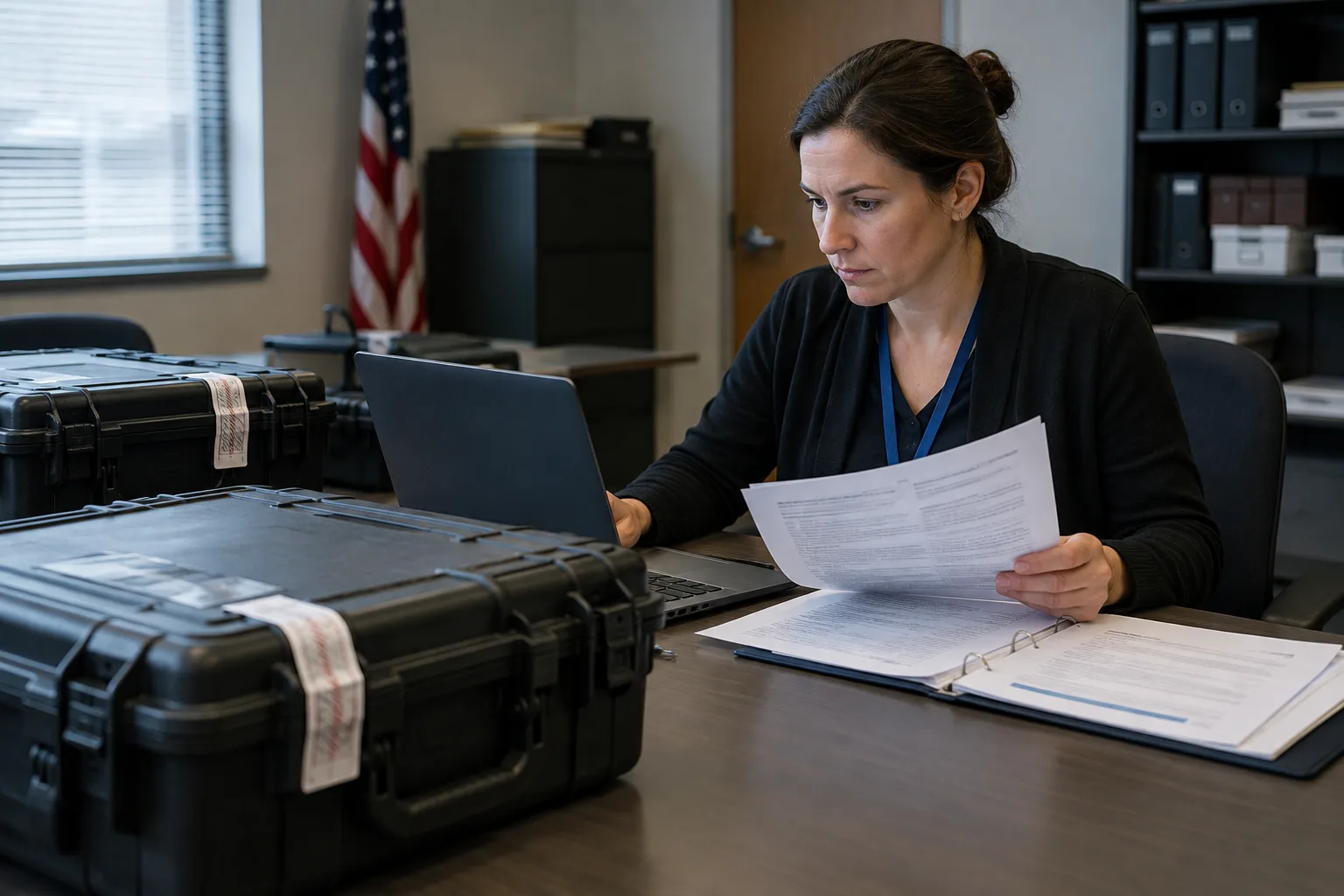

On Sept. 24, CISA released its 13-page 2026 Election Infrastructure Security Plan: Securing the Next 250, roughly 40 days before the U.S. midterms and after Homeland Security Secretary Markwayne Mullin had earlier promised it by mid-August. The plan offers no-cost, voluntary cyber and physical security services to state, local, tribal, and territorial election officials. It matters because election security is not settled in Washington. It is proved in county offices, vendor relationships, and polling places that still have time to act on a warning—or not.
The practical question for officials, vendors, and businesses that depend on trusted election outcomes is straightforward: can this plan still raise resilience before November, or does it mostly reassert a federal role after some states already paid to replace missing support? CISA and DHS say the services are available and will be implemented in full. The harder answer depends on execution: who gets the alert, who runs the scan, who owns the patch, and whether any of that happens before ballots are cast.
What CISA is offering now
The plan treats election infrastructure broadly, covering voter-registration databases, systems used to manage and report results, voting systems, storage facilities for voting equipment, and polling places. It describes a threat environment that ranges from software vulnerabilities and attempted compromise of registration systems to insider threats, physical attacks or threats against election offices, and foreign influence or misinformation.
CISA’s remedy is support, not regulation. The document does not create a federal cybersecurity standard for elections. Instead, it offers voluntary services: threat information sharing, access to technical expertise, vulnerability scanning, risk assessments, tabletop exercises, penetration testing, and physical-security support. It also reiterates baseline safeguards that many election security professionals already treat as essential, including paper ballots, post-election audits, access controls, logging, multi-factor authentication, and continuity planning.
One operational change is the use of CISA’s 10 regional directors as election security advisers. The plan also describes a free information-sharing platform linking election officials, state intelligence hubs, and federal partners. In theory, that creates a chain from federal warning to local action: a threat indicator moves through CISA and fusion centers, a regional adviser connects an office to a service, a technical assessment identifies an exposed system, and the local jurisdiction or vendor applies and verifies the fix.
That chain is why the plan is potentially useful even this late. A shared playbook and a named regional contact can speed decisions when time is short. But the chain is also where plans fail. CISA can flag an exposed public-facing system. It cannot, by itself, patch a vendor-controlled application, reopen a closed certification window, or supply local incident response staff on demand.
Why the late timing matters
The U.S. election system is a distributed operational environment with more than 9,000 local jurisdictions, plus state offices, vendors, polling places, and federal partners operating under different budgets, contracts, staffing levels, and network conditions. That complexity is always the backdrop. Forty days before a midterm, it becomes the story.
By late September, many jurisdictions may already have locked down election software, narrowed change windows, or signed outside contracts for work they did not want to leave unresolved. Associated Press reporting adds weight to that concern. AP reported that CISA had about 1,000 employees cut under the administration and that $10 million was removed from two cybersecurity initiatives, including one that supported state and local election officials. AP also reported that several state officials said CISA services they had previously relied on, including tabletop exercises and penetration tests, had not been available in the run-up to the 2026 midterms. Minnesota’s secretary of state told AP the state expected to spend about $250,000 on private penetration-testing vendors.
That does not prove the new plan cannot help. It does show why the release is being judged as a capacity test rather than a statement of intent. Once a state has hired private testers, frozen critical systems, or built workarounds, the value of federal support shifts. It may still improve situational awareness, incident communications, or physical-security planning, but it is less likely to substitute cleanly for months of missed technical work.
The unresolved implementation questions
The most consequential gaps are not in the threat list. They are in delivery details. As Nextgov/FCW reported, the plan does not specify staffing levels, identify dedicated funding, or explain how its commitments fit with a proposed fiscal 2027 budget that would eliminate CISA’s election-security program. Those proposed budget changes still require congressional approval, but the tension matters now because local officials are being asked to rely on a support model whose future capacity is not clearly explained.
The public plan also does not say how quickly jurisdictions can enroll in the information-sharing platform, what service-level commitments apply, or what technical support is available in each region. It offers no state-by-state readiness score, no current inventory of vulnerable systems, and no proof that the listed services will be completed before November. For readers outside election administration, that is the main distinction to keep in view: a published plan is not the same thing as a completed penetration test, a fixed internet-facing service, or an incident drill that exposed and corrected a communications gap.
The business consequences reach beyond government. If federal assistance is uneven or delayed, demand shifts toward voting-system vendors, managed-security providers, and state or local procurement. That can help close gaps, but it also fragments visibility. A county office may know a private scan was completed while neighboring jurisdictions do not, leaving states with uneven assurance and the public with little way to tell whether “support available” became “control tested.”
What officials can verify before November
The useful test now is concrete and local. Election offices should know their regional CISA contact, confirm where threat alerts will arrive, and verify who inside the jurisdiction has authority to act on them. Public-facing systems and voter-registration access deserve immediate attention because they can often be checked without redesigning election equipment. Logs need to be preserved. Paper-ballot and audit procedures should be verified, not just documented. Incident communications should be rehearsed before Election Day rather than during it. Vendor responsibilities for patching and escalation should be written down in one place. And jurisdictions should record which CISA services were actually requested, scheduled, and delivered.
That will not settle the politics around election security, and it will not erase the constraints of a late federal rollout. It does match the real promise of CISA’s plan. If the agency can rapidly connect officials to threat information, scanning, exercises, and recovery-oriented controls such as paper records and audits, the plan can still improve resilience at the margin before the midterms. If those connections remain aspirational, then “Securing the Next 250” will read less like an operational turning point than a reminder that voluntary coordination only matters when it reaches local systems in time.

 By
By
 By
By
 By
By
 By
By

 By
By
 By
By