
The Quiet Revolution: Apple’s Additive Titanium and the Future of Manufacturing
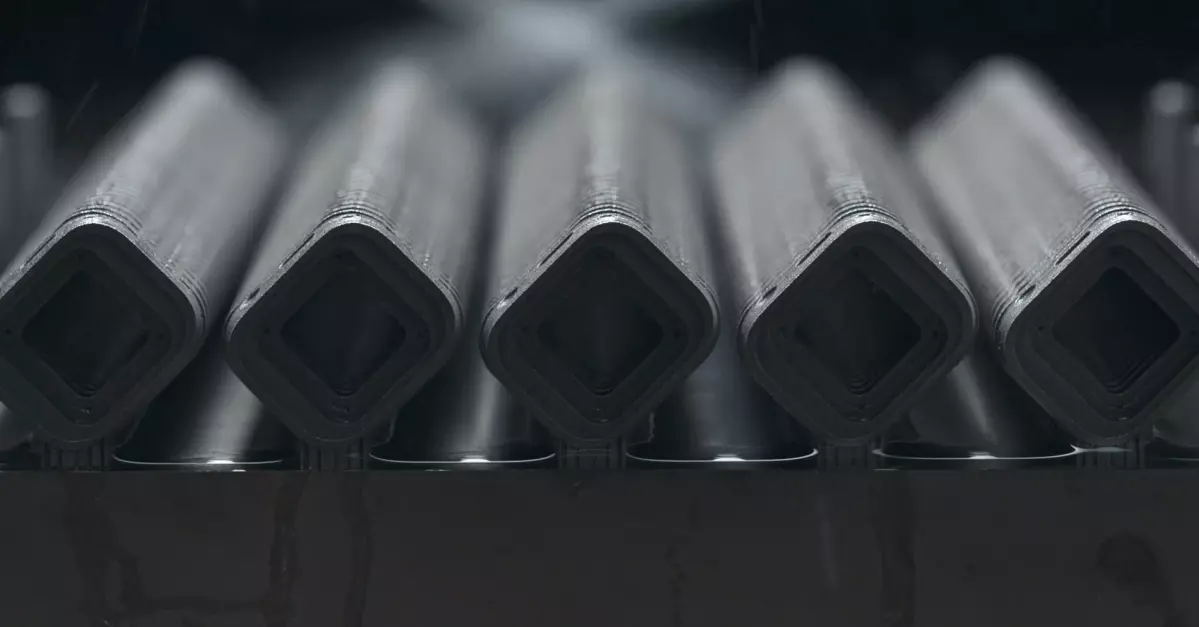
Apple’s latest manufacturing milestone, quietly embedded in the Apple Watch Ultra 3, signals a profound shift in the industrial landscape. The company’s transition to fully-recycled titanium powder—sintered layer by layer via industrial 3-D printing—marks not merely a sustainability gesture but a foundational reimagining of how consumer electronics are conceived, built, and brought to market. This is not the stuff of boutique experiments; it is the first node in a lower-carbon production stack that Apple intends to extend across its hardware portfolio.
The Additive Frontier: Precision, Speed, and Proprietary Edge
At the heart of this transformation is a technical feat that marries aerospace-grade precision with consumer-scale throughput. Apple’s additive process runs more than 900 layers per build at a striking 60-micron resolution, a level of detail once reserved for experimental aerospace components. Now, it is the backbone of mass-market devices.
- Metallurgical Mastery: The refinement of titanium powder to sub-0.13% oxygen content is a subtle but critical achievement. This mitigates the risk of spontaneous oxidation during laser sintering—a proprietary barrier that will slow would-be imitators.
- Digital Thread Advantage: By translating hardware geometry into software IP, Apple can iterate watch designs in hours instead of weeks. This digital agility compresses product cycles and unlocks the tantalizing possibility of mass customization, from ergonomic tailoring to medical-grade sensor housings.
The implications are profound: the hardware becomes as malleable as software, and the pace of innovation accelerates accordingly.
Supply Chain Rewired: Economics, Risk, and the New Vendor Hierarchy
The ripple effects of Apple’s additive leap extend well beyond Cupertino. As titanium prices surge—up roughly 25% since 2022, driven by aerospace and electric vehicle demand—Apple’s halving of virgin metal usage cushions the company against commodity volatility and hedges geopolitical risk, especially given that Russia and China control over 60% of global titanium sponge output.
- Capex Realignment: Additive plants require 30-40% less tooling than traditional CNC machining lines. This shift reallocates capital expenditure from fixed dies to digital workflows and service-based maintenance, a margin-friendly move in today’s high-interest-rate environment.
- Vendor Shake-Out: Contract manufacturers are now compelled to develop expertise in powder-bed fusion and closed-loop recycling. Those lacking metallurgical depth may find themselves squeezed out, echoing the supplier consolidations seen during the rise of surface-mount technology in the 1990s.
This is not merely a supply chain adjustment—it is a structural rewiring that privileges digital fluency and materials science prowess over brute manufacturing scale.
Regulatory Tides, ESG Leverage, and the Competitive Clock
Apple’s move is as much about regulatory foresight as it is about operational efficiency. With Scope 3 emissions reporting intensifying in both the EU and California, additive manufacturing’s ability to trim embodied emissions becomes a compliance asset and a potent marketing differentiator.
- Competitive Signaling: By scaling titanium printing first, Apple sets a new benchmark for rivals whose wearables remain tethered to subtractive machining. This early adoption could yield 12–18 months of cost and design flexibility advantage—a significant head start in a hyper-competitive sector.
- Policy Synergy: The initiative aligns with U.S. CHIPS+Science incentives for advanced manufacturing, positioning Apple as a leading candidate for future federal grants tied to sustainable production.
In this context, Apple’s additive titanium line is not just about greener products; it is about converting ESG ambition into tangible operating leverage and regulatory insulation.
Ecosystem Reverberations: From Scrap Loops to Secure Digital Twins
The transition to recycled titanium powder is poised to invert materials markets, stimulating secondary pricing mechanisms and new scrap-collection networks—much as Apple’s aluminum loop did a decade ago. The digitalization of hardware geometry also raises novel cybersecurity challenges: as each component’s “digital twin” becomes valuable IP, the need for encrypted build files and secure enclaves extends from devices to the manufacturing chain itself.
Perhaps most intriguing is the med-tech horizon. Titanium’s biocompatibility, combined with additive precision, hints at a future where Apple’s manufacturing prowess could enable FDA-cleared accessories—implants, sensor mounts, and beyond—nudging the company deeper into regulated healthcare territory.
As the additive wave gathers momentum, decision-makers across hardware, materials, and investment domains face a new calculus. Those who still view 3-D printing as a niche risk mispricing both the threats and the opportunities. The technology has crossed the threshold from prototyping to strategic production at global scale—a shift that will reverberate far beyond Apple’s own supply chain, shaping the next era of digital manufacturing.

 By
By
 By
By

 By
By
 By
By

 By
By
 By
By