

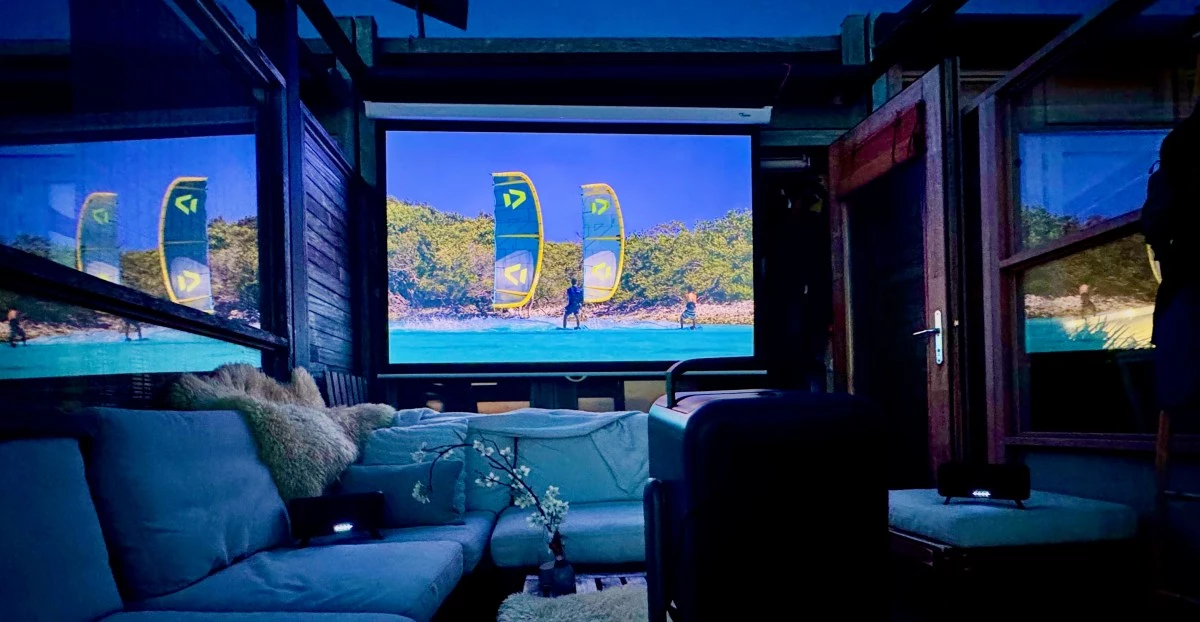

The Nebula X1: A New Chapter in Portable Projection and Connected Experiences
Few product launches encapsulate the shifting tides of the consumer electronics landscape quite like Anker’s Nebula X1. This compact, 4K-capable projector is not merely a feat of miniaturization—it is a harbinger of a broader convergence, where high-fidelity visuals, robust audio, and the promise of untethered connectivity coalesce into a single, nomadic device. The X1’s emergence signals a pivotal moment: the transformation of portable projection from a niche curiosity into a cornerstone of the experience economy, fueled by the relentless advance of satellite broadband and the evolving appetites of post-pandemic consumers.
Engineering Ingenuity: From Micro-Displays to Whisper-Quiet Operation
At the heart of the Nebula X1 lies a technological story that is as much about market readiness as it is about innovation. The device’s native 4K output, powered by the latest generation of 0.47-inch DLP and LCoS micro-displays, reflects a crucial inflection point in component economics. The falling cost of high-resolution micro-DLP chips—projected to decline by another 15–20% in the coming year—has unlocked the possibility of premium visuals in a device that weighs less than two pounds.
But visual acuity is only part of the equation. Anker’s deft handling of thermal management—through a dual-channel heat sink and advanced LED phosphor light sources—addresses a perennial pain point for portable projectors: intrusive fan noise. By achieving near-silent operation, the X1 invites users to bring cinematic experiences into intimate, close-range settings, from tabletop gaming marathons to impromptu hybrid work presentations.
The audio landscape, too, has been reimagined. High-excursion, side-firing neodymium drivers render external speakers obsolete, consolidating performance and portability. This vertical integration not only enhances user convenience but also fortifies Anker’s competitive moat, discouraging white-label imitators and defending margins in a market where accessories can quickly erode differentiation.
Satellite Broadband and the Rise of the “Anywhere Content Node”
The Nebula X1’s true disruptive potential emerges when it is paired with next-generation connectivity. The integration of Starlink’s low-Earth-orbit (LEO) broadband transforms the projector from a mere display accessory into a fully realized “content node,” capable of streaming high-definition media in environments previously off-limits to terrestrial ISPs. This decoupling of content quality from location-based bandwidth constraints is more than a technical feat—it is a strategic recalibration. Projector OEMs are now compelled to future-proof devices with Wi-Fi 6E, eSIM, and satellite-ready configurations, anticipating a world where bandwidth ubiquity is not a luxury, but an expectation.
This evolution is mirrored in shifting market dynamics:
- Experience Economy Resurgence: As consumers pivot from goods to experiences, portable projectors become facilitators of shared moments—outdoor screenings, vanlife adventures, transient gaming setups.
- TV Market Saturation: With LCD TV prices in decline, manufacturers are seeking new frontiers where mobility and ecosystem integration drive value.
- Battery Innovation: The falling cost of energy-dense LiFePO4 batteries extends untethered projection to new use-cases, from hospitality to education.
- LEO Infrastructure: The normalization of satellite broadband redefines the design baseline for edge devices, positioning hardware like the X1 at the vanguard of this shift.
Strategic Horizons: Stakeholder Impacts and Emerging Opportunities
The Nebula X1’s arrival reverberates across the value chain, prompting a re-evaluation of roadmaps and business models:
- Consumer Electronics OEMs must now prioritize portability and performance, investing in battery optimization, modular optics, and seamless app-layer integrations.
- Connectivity Providers are poised to experiment with bundled offerings—imagine a “Starlink × Nebula” subscription, echoing the mobile carrier model and deepening customer lock-in.
- Content Platforms can leverage new viewing contexts, piloting event-based micro-licensing and rethinking DRM for satellite-delivered media.
- Retailers have an opportunity to curate “tech-tainment” bundles, reviving margin structures reminiscent of the DSLR era.
Non-obvious vectors add further intrigue. The X1’s energy efficiency presents a compelling ESG narrative, consuming a fraction of the power of traditional OLED TVs—an angle likely to resonate with sustainability-minded millennials. Meanwhile, the device’s role as a “public display companion” for AR/VR demonstrations and hybrid work scenarios hints at a future where spatial computing and mobile projection are deeply intertwined.
As the competitive landscape heats up—with rivals like XGIMI, ViewSonic, and LG preparing their own 4K portables—early entrants like Anker secure a fleeting but critical advantage. The true contest, however, will be waged not just on hardware specs, but on the ability to orchestrate ecosystems that marry projection, connectivity, and content into seamless, subscription-driven experiences.
The Nebula X1 is more than a technological curiosity; it is a bellwether for an industry in flux, where the boundaries between hardware, connectivity, and experience are dissolving. For decision-makers across the sector, the imperative is clear: embrace the convergence, or risk obsolescence in a world where the screen is wherever you choose to set it down.

 By
By
 By
By

 By
By


 By
By
 By
By







