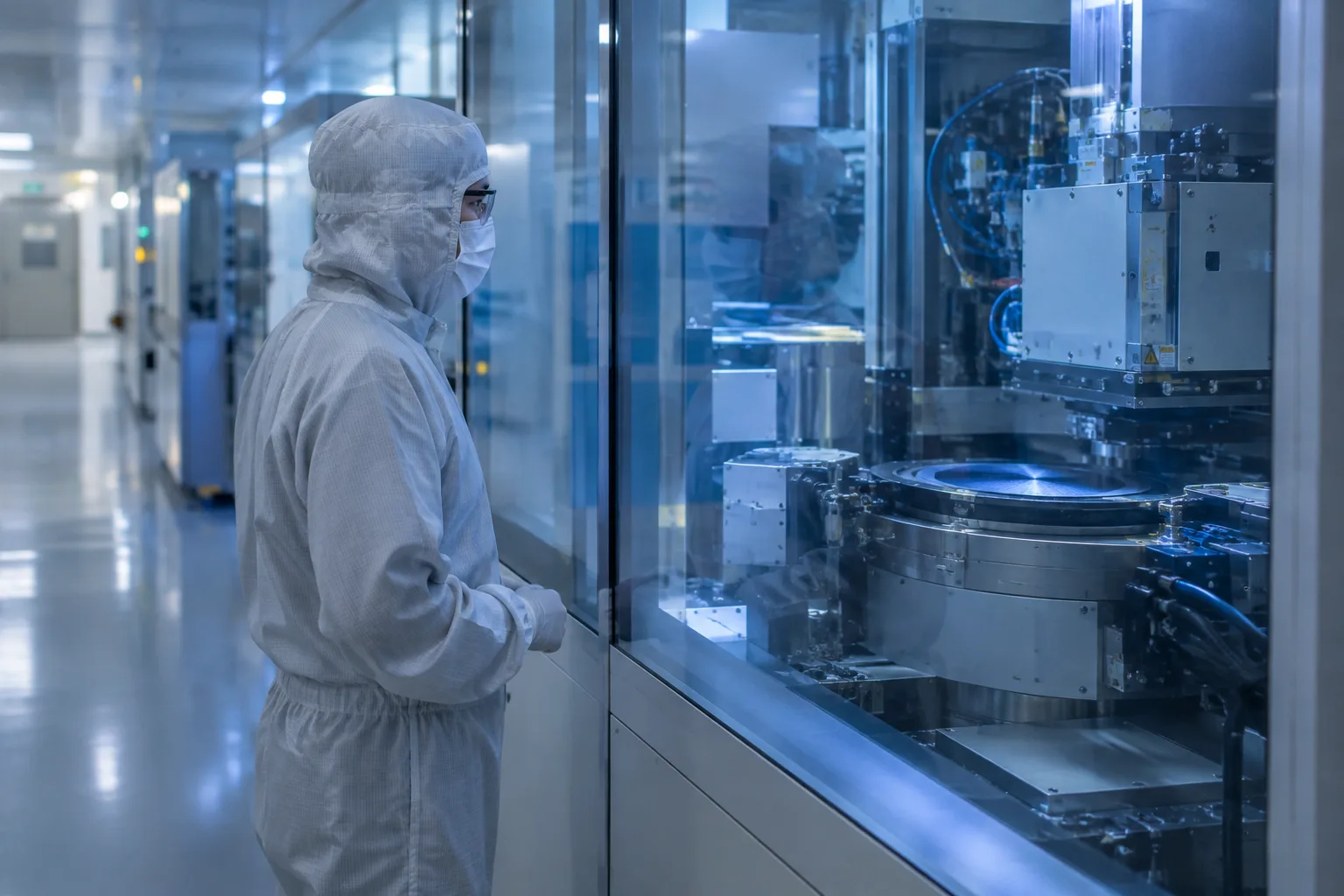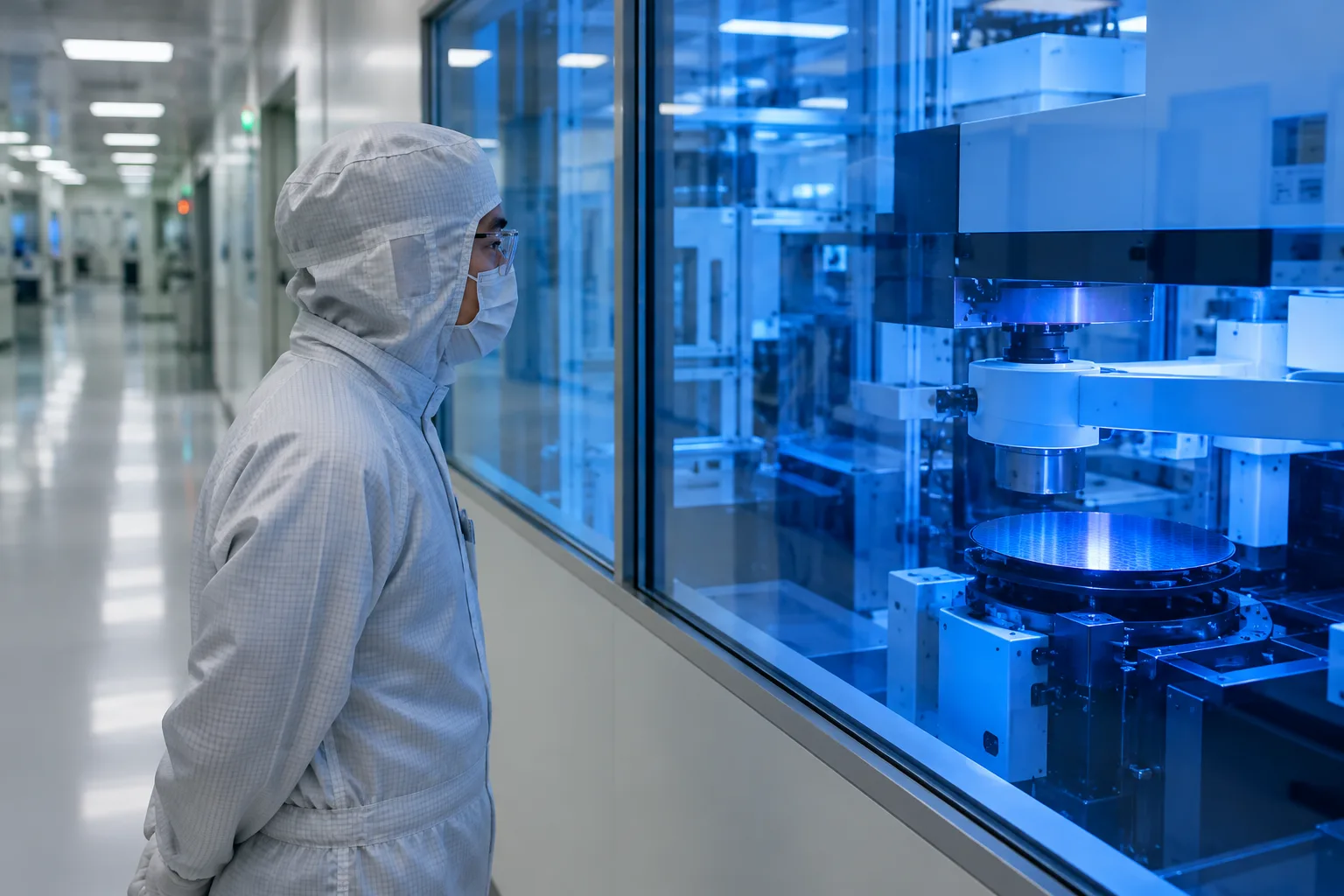

Taiwan Semiconductor Manufacturing Co. reported another record quarter on October 15, with NT$763.06 billion in net income on NT$1.494 trillion in revenue, and then told investors to expect even more in the fourth quarter. That matters because TSMC is where AI demand stops being a market story and becomes physical production: leading-edge wafers, advanced packaging, and delivered chips.
The question readers actually need answered is narrower than the headlines. Do these results show durable end demand for AI hardware, or mostly show customers racing to secure scarce leading-edge capacity while financing costs, supply concentration, and downstream AI return concerns rise? TSMC’s quarter strongly supports the first point in the near term. It does not settle the second.
The factory-floor signal
On TSMC’s quarterly results page, the company listed third-quarter revenue of US$46.72 billion on its exchange-rate basis, gross margin of 66.4%, and operating margin of 58.7%. The SEC-filed release gives revenue of NT$1,494.24 billion, net income of NT$763.06 billion, and diluted EPS of NT$29.43, or US$4.60 per ADR unit, for the quarter ended September 30. TSMC said strong demand for leading-edge process technologies supported the quarter.
Those are not abstract numbers for the AI trade. TSMC is a contract foundry, so its results sit closer to the physical conversion layer than most of the industry’s promises do. Chip designers can announce products, cloud providers can outline capital-spending plans, and governments can subsidize fabs, but chips still need usable wafer capacity, acceptable yields, packaging throughput, and delivery windows. TSMC’s quarter says those inputs remain under real demand.
That reading is reinforced by the outlook. TSMC guided fourth-quarter revenue to US$52.3 billion to US$54.3 billion, with gross margin of 65.0% to 67.0% and operating margin of 56.5% to 58.5%. A guide above an already record quarter suggests that customers are still lining up for advanced manufacturing in the current period, not merely talking about future deployments.
Reuters reported that net income rose roughly 69% year over year to a record, beating market forecasts and marking a sixth consecutive quarter of record profit. The Financial Times likewise reported revenue up about 51% from a year earlier and net income up nearly 69%. For anyone trying to judge whether AI-chip demand is still moving through the system, that is powerful evidence.
Strong supplier economics, unresolved AI economics
What makes the quarter more useful is the context around it. The results arrived during a sharp selloff in technology stocks tied to higher borrowing costs and worries about debt-funded AI infrastructure. That tension is the story. The physical bottleneck is reporting excellent earnings while the market is repricing the cost of financing, the risks of concentration, and the possibility that not every AI deployment will earn an attractive return.
TSMC’s numbers argue against the idea that the AI buildout is only a speculative narrative with little operating substance. Customers are plainly reserving and paying for advanced manufacturing. If they were not, TSMC would not be delivering this level of revenue, profitability, and forward guidance. But supplier strength is not the same thing as proof that every buyer farther down the chain is making wise economic choices.
A foundry can have record margins while some of its customers overorder, fight for limited packaging slots, or invest ahead of proven end-market demand. Record supplier results can also coexist with weak shareholder returns for companies spending heavily on AI hardware if financing costs rise or if utilization of that hardware disappoints. That is why the selloff and TSMC’s quarter are not contradictory; they are measuring different parts of the same buildout.
The public materials also leave important blind spots. TSMC does not disclose how much of third-quarter revenue or profit came specifically from AI accelerators, how concentrated that demand is among a few large customers, or the precise mix of technologies behind the quarter. The same is true for the fourth-quarter range: it shows strong near-term demand, but not how much reflects firm multi-quarter visibility versus inventory timing or rush ordering for scarce capacity.
What the next quarter could change
The practical consequences start with access. A higher fourth-quarter guide can mean harder competition for advanced wafers and packaging. A cloud company or device maker without secured capacity may face launch delays or pay more for priority. A chip designer may have to absorb higher engineering and packaging costs just to stay on schedule. The value of long-term supply commitments rises when the bottleneck supplier keeps printing record quarters.
For governments, the result is both validating and uncomfortable. It validates the push to support semiconductor manufacturing because the demand is plainly real at the leading edge. It is uncomfortable because one strong quarter does not remove dependence on a tight web of tools, materials, packaging capability, power, water, labor, and geopolitical stability. Expanding fab footprints can diversify some risk, but it does not instantly create a geographically resilient supply chain.
For investors, the monitoring list is more important than the headline beat. First is gross-margin durability: TSMC’s third-quarter 66.4% gross margin and its 65.0% to 67.0% fourth-quarter range suggest that pricing power and mix remain strong even as the company expands. Second is order visibility: the fourth-quarter revenue range is an encouraging signal, but only one quarter of it. Third is packaging throughput and node-transition execution, including how quickly advanced packaging constraints ease and how smoothly newer nodes ramp. Fourth is capital discipline: record foundry profits can justify more industry spending, but more spending is not automatically better if it clusters around a narrow set of AI workloads. Fifth is end-market sell-through: eventually, the industry has to show that all this hardware is being used productively enough to support the bill.
So the cleanest reading of TSMC’s quarter is neither triumphalism nor dismissal. The company has provided one of the strongest available same-day signals that AI-chip demand is still converting into real manufacturing volume and healthy supplier economics. What it has not provided is proof that the wider AI infrastructure cycle is balanced, diversified, or permanently profitable. The next few quarters will matter less for confirming that demand exists than for showing how durable, concentrated, and economically sound that demand really is.

 By
By
 By
By
 By
By
 By
By
 By
By

 By
By
 By
By