
On October 14, ASML’s Q3 release reported record third-quarter results, lifted the low end of its 2026 sales outlook, and delivered a more consequential message for the broader tech economy: the company’s currently planned supply will not fully satisfy customer demand in 2027 and 2028. ASML also said some customers are already expressing interest in orders for 2029 and 2030.
That matters because ASML’s lithography systems sit near the start of the physical process that turns AI enthusiasm into actual computing capacity. The real question for investors, cloud buyers and chip customers is not whether demand for AI exists. It is whether the industry is now committing enough long-lead capital to make the buildout durable — or simply extending a spending cycle whose downstream returns remain unproven. ASML’s update does not settle that debate, but it is one of the clearest signs yet that AI spending is moving beyond market narrative and into multiyear factory planning.
What ASML actually reported
The quarter itself was unusually strong. ASML posted €11.662 billion in total net sales, €6.700 billion in gross profit, a 57.5% gross margin and €4.960 billion in net income. Basic earnings per share rose to €12.95 from €7.59 in the second quarter. Installed Base Management sales reached €3.289 billion.
Shipment volumes also moved sharply higher. ASML sold 113 new lithography systems and eight used systems in the third quarter, up from 86 new and five used systems in Q2. For the fourth quarter, the company guided to sales of €14.2 billion to €15.2 billion with gross margin around 57%, along with roughly €1.2 billion in R&D and €0.4 billion in SG&A. For full-year 2026, it now expects sales of €44 billion to €45 billion with gross margin around 56%. ASML also said it bought back around €4.1 billion of shares in Q3 under its 2026–2028 repurchase program.
Markets treated the report as a welcome counterweight to the previous day’s semiconductor anxiety. According to Reuters, ASML shares rose about 2.4% in morning trading, the STOXX 600 technology sector gained 1.2%, and European equities recovered after a global chip sell-off tied partly to questions about Chinese memory competition and the durability of AI spending.
Why ASML is a better reality check than AI hype alone
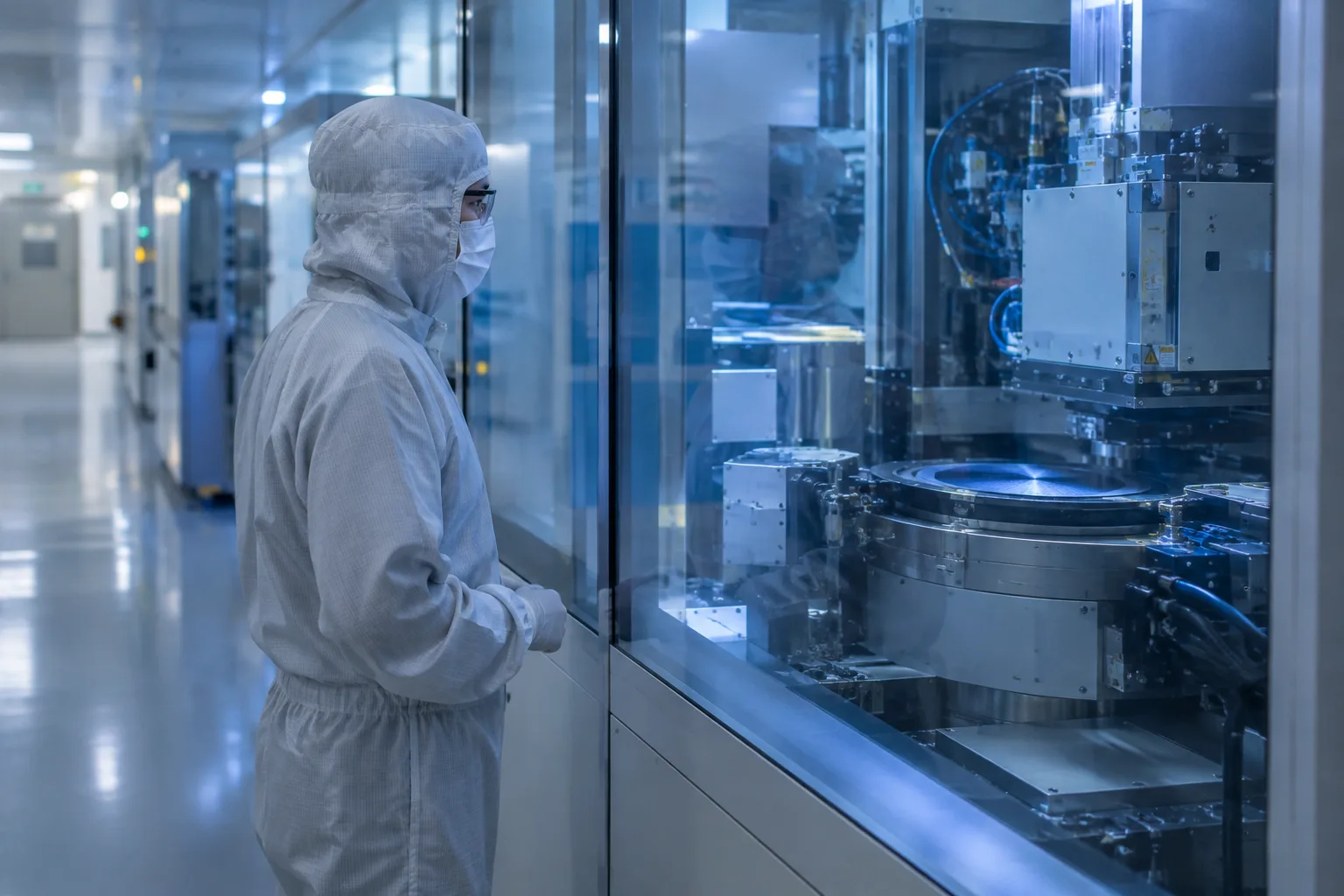
ASML sits upstream of nearly every advanced-chip expansion plan. A model developer or hyperscaler can announce a new system, a data-center buildout or a larger capital budget, but leading-edge wafer output still depends on lithography tools, fab construction, process qualification and long lead times. That makes ASML a useful physical reality check. Its sales reflect tools delivered now. Its customer conversations reflect capital planning several years ahead.
That is why the company’s warning on 2027 and 2028 carries more weight than another optimistic demand forecast from further downstream. If planned ASML supply will not meet expected demand, then at least some foundries, memory makers and logic manufacturers appear to be reserving future capacity in earnest. The mechanism matters: stronger AI demand encourages chipmakers to expand; expansion plans support ASML’s backlog and pricing power; limited tool supply can delay chip output and keep AI infrastructure expensive for everyone else.
The timing sharpened the message. Just a day earlier, chip stocks had fallen as investors weighed reports of progress by China’s CXMT and questioned how long exceptional AI-related chip margins could last. ASML’s results do not answer those profitability concerns. They do, however, suggest that the equipment-order phase of the AI buildout remains robust.
The three signals investors should keep separate
The easiest mistake in coverage like this is to blur together three different kinds of information.
First, there is confirmed performance: ASML delivered a record quarter, sold more systems, expanded earnings and raised the low end of its full-year outlook. Those are reported results.
Second, there is the capacity warning: management said current plans will not fully satisfy 2027 and 2028 demand, and the company is investigating ways to expand 2028 capacity beyond the 30% increase it had previously communicated. That is more than cheerleading, because it implies a mismatch between planned output and customer forecasts. But it is still a forecast about future demand and planned supply, not proof that every interested customer has signed a binding order or that every lithography segment will be tight.
Third, there is customer interest in 2029 and 2030. That is the earliest and softest signal of the three. It says customers are looking further out, likely because they expect AI-related investment to be larger and longer-lasting than previously assumed. It does not amount to recognized revenue, full backlog visibility or guaranteed utilization years from now.
ASML did not disclose which customers or product categories are driving the shortfall, how much of the demand discussion reflects firm commitments versus forecasting, or full financial guidance for 2027 and 2028. It also did not suggest that every region or chip category faces the same constraint.
What matters next for the AI buildout
The next phase of this story is less about slogans than about conversion. Do customer reservations turn into installed and utilized capacity? Can ASML expand output further without eroding margins? Do foundries and memory makers report sustained wafer demand rather than just capacity reservation? And can cloud providers and other large buyers translate AI capital spending into revenue, productivity or defensible market share?
Those questions matter well beyond semiconductor investors. Persistent tool shortages can raise capital costs, slow deployment schedules and keep advanced chips expensive for server makers, device companies and businesses trying to budget AI infrastructure. Scarcity can strengthen the ecosystem for suppliers, but it can also encourage customers to overbook capacity in order to secure a place in line. If end demand later proves weaker than expected, the same visibility that looks reassuring today can amplify a future correction.
For now, ASML’s quarter argues that the AI boom is not only a stock-market story. It has reached the stage where physical bottlenecks in specialized equipment may shape how fast capacity can be built. What it still does not tell us is whether the industry’s rush to secure that capacity will ultimately produce durable returns across the rest of the chain.

 By
By
 By
By
 By
By
 By
By

 By
By
 By
By