
When the Sun Rewrites the Rules of Positioning and Connectivity
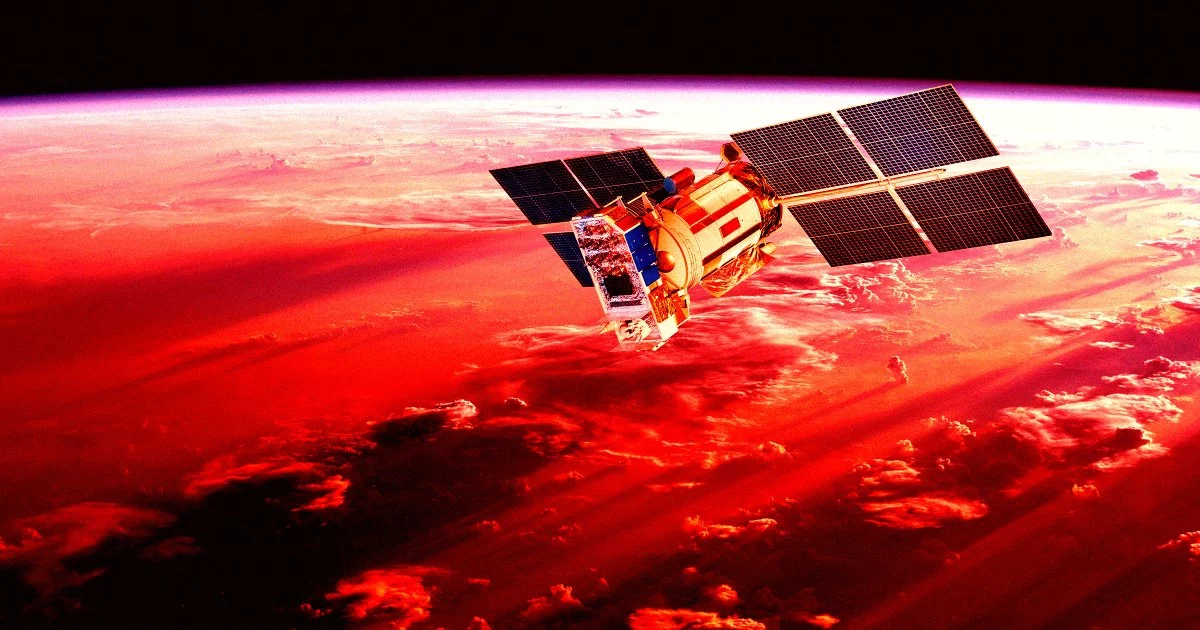
Last November’s geomagnetic superstorm—described as the most intense in more than two decades—offered a vivid reminder that space weather is not a niche scientific concern but a material operational risk. The public-facing spectacle was unmistakable: auroras pushed into mid-latitudes, turning skies into an atmospheric light show. The less visible impact, however, landed where modern economies are most sensitive—radio-frequency reliability and satellite-based navigation.
The disruptions were not theoretical. Communications and navigation services experienced measurable degradation, including a NASA launch postponement for a Mars-bound mission. More striking for everyday commerce, GPS positioning errors across the continental United States exceeded 33 feet, a threshold that can turn “precision” systems into blunt instruments. For industries that have quietly built workflows around sub-meter accuracy—agriculture, surveying, logistics, and emerging autonomy—this is the difference between optimization and operational ambiguity.
A new study in *Geophysical Research Letters* adds an important layer of causality: the storm drove an equatorward shift of the auroral oval, producing steep atmospheric density gradients. Those gradients, in turn, created signal-propagation delays that degraded GPS accuracy. The takeaway is sobering for planners: the vulnerability is not only about satellite hardware or receiver quality; it is rooted in dynamic, storm-driven changes in the upper atmosphere that can rapidly reshape the error landscape.
The Hidden Mechanics: Auroral Oval Shifts and GNSS Error Cascades
The research focus on atmospheric density gradients matters because it reframes how organizations should think about Global Navigation Satellite Systems (GNSS). In severe geomagnetic conditions, the ionosphere and thermosphere become more turbulent and structured, altering how radio signals travel. That can manifest as:
- Timing and ranging errors that propagate directly into position solutions
- Localized degradation where some regions experience far worse performance than others
- Rapid onset and variability, complicating operational decision-making and automated systems
- Cross-sector coupling, where navigation issues coincide with broader radio-frequency disruptions
This is precisely why the November event reads like a stress test for the digital economy. GNSS is not merely a consumer convenience; it is a foundational layer for positioning, navigation, and timing (PNT). Timing, in particular, underpins synchronization in telecommunications and certain financial and industrial systems. When GNSS integrity falters, the impact can be nonlinear: small timing errors can ripple into network coordination problems, while moderate location errors can invalidate automation assumptions.
The timing of the storm also shaped its economic footprint. Coming after harvest, it largely spared precision agriculture from peak-season damage. Yet the subsequent May 2024 “superstorm” reportedly drove roughly $500 million in agricultural losses, illustrating how the same class of event can swing from manageable disruption to major economic shock depending on the calendar. For commodity markets and food supply chains, that seasonality is not a footnote—it is a risk multiplier.
Business Exposure: From Precision Agriculture to Autonomous Logistics and 5G/6G
The strategic message for executives is that geomagnetic storms are becoming a board-level resilience topic as solar activity approaches cycle peak. The exposure is broad, but several domains stand out.
Precision farming depends on repeatable, high-confidence positioning for planting, fertilization, irrigation, and harvesting. When GPS errors jump to tens of feet, the consequences can include misapplied inputs, inefficient field paths, and yield impacts. Beyond the farm gate, disruptions can cascade into:
- Commodity price volatility for staples such as corn and soy
- Supply-chain scheduling shocks for processors and distributors
- Inflationary pressure in food categories sensitive to yield and logistics variability
Autonomous trucks, drones, and robotics-enabled delivery systems typically require centimeter-level confidence, often achieved through GNSS augmentation and sensor fusion. A severe storm can force systems to degrade gracefully—or fail operational thresholds entirely. The commercial risk is not only downtime; it is regulatory and reputational. A high-profile disruption during a pilot program could lead to paused deployments or tightened safety requirements, slowing commercialization timelines.
Radio-frequency disruptions observed during the storm underscore that next-generation networks—especially those reliant on tight synchronization—must treat space weather as an engineering constraint. Practical resilience measures increasingly look like:
- Dynamic frequency planning and adaptive link management
- Real-time monitoring of ionospheric conditions and link quality
- Automated failover protocols and diversified timing sources
The Emerging Space-Weather Economy: Forecasting, Redundant PNT, and Risk Transfer
The study’s call for enhanced coordinated observations and physics-based space-weather modeling points to a market opportunity as much as a scientific need. Better forecasting is not simply about earlier warnings; it is about actionable, location-specific confidence intervals that allow operators to switch modes, reroute assets, or pause high-precision tasks.
Three investment and policy vectors are crystallizing:
- Redundant and hybrid PNT architectures: The fragility of single-constellation GPS under extreme conditions strengthens the case for multi-constellation GNSS, inertial measurement units, terrestrial beacons, and emerging RF-agnostic quantum sensors.
- Space-weather forecasting as a data science frontier: Integrating real-time solar observations (ground magnetometers, low-Earth-orbit satellites, CubeSats) with plasma-physics simulators and machine learning could create a robust commercial forecasting layer—akin to how meteorology matured into an indispensable economic utility.
- Financial and insurance instruments: The reported May 2024 agricultural losses hint at a growing exposure class. Expect experimentation with geomagnetic-risk insurance, specialty reinsurance structures, and potentially index-linked contracts tied to solar storm severity measures.
What makes this moment distinctive is the convergence of dependence and capability: economies have never been more reliant on precise PNT and synchronized networks, yet the tools to model, observe, and operationalize space-weather intelligence are improving rapidly. The organizations that treat geomagnetic resilience as a design requirement—rather than an edge case—will be best positioned to protect uptime, preserve safety margins, and compete in what is quickly becoming a consequential space-weather services market.
 By
By
 By
By
 By
By


 By
By