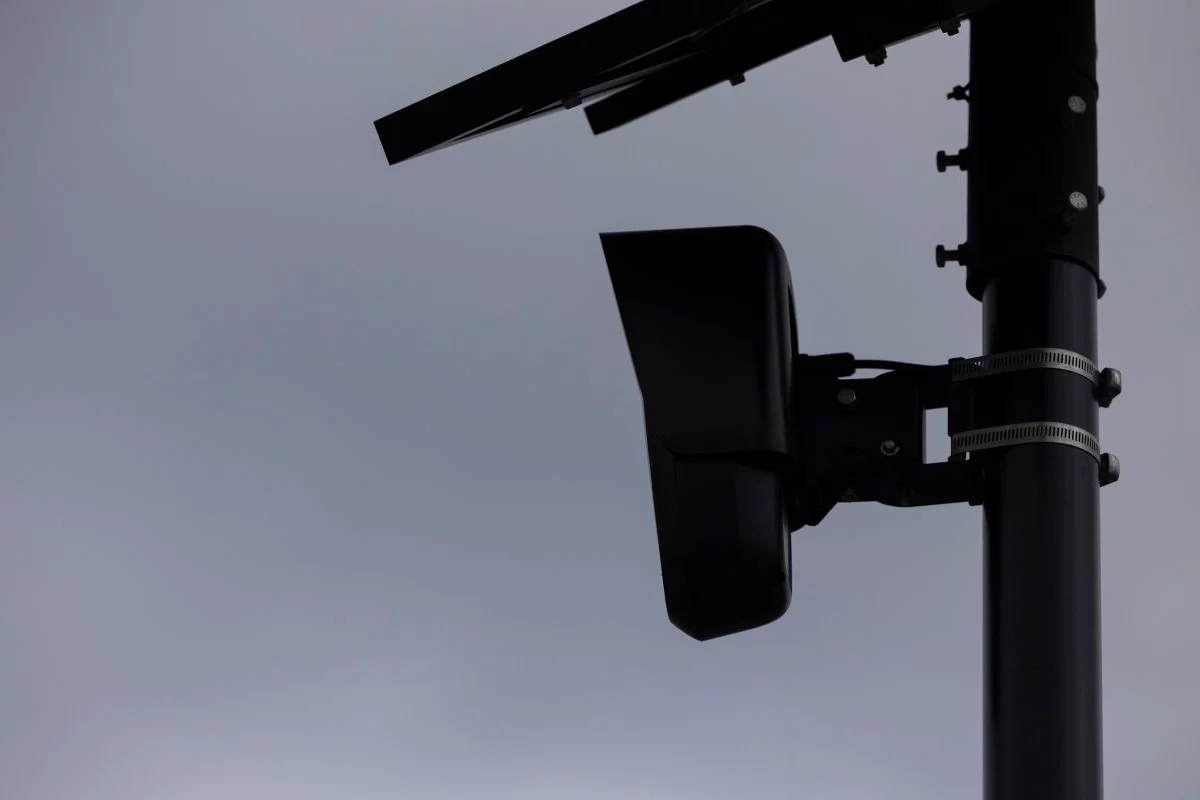

A Georgia ALPR arson case that exposes the new fault line in public-safety technology
The arrest of Colby Williams, a 25-year-old Georgia resident, for allegedly destroying three automatic license plate readers (ALPRs) operated by surveillance-technology firm Flock is more than a local crime story. It is an unusually vivid snapshot of the tensions now surrounding networked policing infrastructure—where sensors, subscriptions, and public legitimacy intersect.
According to the allegations, the devices were attacked with incendiary means; one unit was reportedly found “completely melted” and marked with a “DeFlock” sticker. The symbolism matters: this was not random vandalism, but an apparent act of anti-surveillance protest aimed at a specific vendor and a specific model of modern policing—always-on, distributed sensing rented to law enforcement under a hardware-as-a-service (HaaS) subscription.
The irony is as consequential as the act itself. Investigators say video captured by the same ALPR network helped identify and apprehend the suspect. That feedback loop—surveillance systems generating evidence about attacks on surveillance systems—underscores why ALPR deployments are so operationally attractive to agencies. It also clarifies why critics view them as uniquely difficult to contest through traditional channels: the infrastructure is persistent, automated, and increasingly normalized.
Beyond the courtroom, the episode has drawn social-media support for the accused, a signal that public unease over pervasive surveillance is not confined to policy circles. For business leaders, municipal decision-makers, and technology strategists, the incident highlights a growing reality: physical resistance is becoming part of the threat model for civic IoT.
Edge-device security moves from weatherproofing to adversarial resilience
ALPRs sit at the edge of the network—mounted on poles, roadways, and intersections—where they must survive rain, heat, and time. What this case suggests is that environmental durability is no longer the primary design constraint. Vendors may now need to engineer for deliberate, adversarial interference, including arson.
Key technical implications emerging from the incident include:
- Tamper and fire resistance as baseline requirements
Many enclosures are optimized for weather and vandalism of the low-effort variety (spray paint, blunt force). Fire introduces a different class of risk, pushing vendors toward fire-retardant materials, hardened housings, and installation practices that reduce ignition opportunities.
- Real-time tamper detection and autonomous response
HaaS deployments often prioritize uptime, data throughput, and centralized management. The next step is likely embedded sensors (heat, vibration, enclosure breach) that trigger immediate alerts, preserve forensic logs, and potentially initiate fail-safe shutdown or data-path rerouting when a node is compromised.
- On-device intelligence for anomaly recognition
As edge AI becomes cheaper, ALPR systems may incorporate local anomaly detection—not merely reading plates, but recognizing suspicious proximity, repeated loitering near a unit, or patterns consistent with tampering. This reduces the time between interference and response, a critical gap when physical destruction can be rapid.
Attribution is the other side of the technical coin. The fact that footage from the ALPR network allegedly contributed to the arrest demonstrates the system’s capacity for self-policing. Yet that same capability intensifies civil-liberties concerns: if the network can identify a suspect after an attack, it can also enable broad, continuous vehicle tracking under less dramatic circumstances. The technology’s strength—persistent visibility—remains inseparable from its controversy.
The business model under pressure: HaaS economics, insurance, and municipal procurement risk
Flock’s model—like much of the modern public-safety technology stack—relies on subscription revenue, rapid deployment, and long-term renewals with municipalities and state agencies. High-profile sabotage introduces a set of economic questions that go beyond replacement hardware.
Several strategic and financial dynamics stand out:
- Subscription stability depends on perceived legitimacy, not just performance
A HaaS model scales when procurement is repeatable and politically defensible. If vandalism becomes frequent—or if public sympathy for attackers grows—agencies may face pressure to pause deployments, renegotiate terms, or demand stronger oversight. That can translate into renewal friction, slower expansion, and higher customer-acquisition costs.
- Insurance and indemnification may reshape contract margins
As physical attacks on civic IoT rise, insurers may respond with higher premiums, narrower coverage, or stricter underwriting tied to device hardening and incident response. Costs can flow back to vendors, municipalities, or both, changing the total cost of ownership that originally made HaaS attractive.
- Liability and governance clauses become competitive differentiators
Municipal buyers increasingly evaluate not just hardware specs, but data retention, auditability, access controls, and compliance posture. Vendors that can offer privacy-by-design features and transparent governance may reduce political risk for customers—an advantage that can matter as much as detection accuracy.
This is where the “social license” to operate becomes a measurable business variable. Public backlash is not merely reputational; it can become operational, affecting deployments, maintenance costs, and procurement timelines. In that sense, the Georgia incident is a reminder that community acceptance is infrastructure—and when it erodes, the system becomes more expensive to run and harder to defend.
Where the market may go next: privacy-first governance and hardened civic IoT
The Williams case lands amid broader trends: the proliferation of networked sensors, fiscal constraints that make subscription models appealing to law enforcement, and a regulatory environment increasingly attentive to surveillance technologies such as ALPR and facial recognition.
Forward-looking implications likely to shape the ALPR market include:
- Resilient-by-design deployments
Expect more emphasis on modular hardware, fire-resistant composites, and embedded tamper telemetry—paired with operational playbooks that treat physical interference as a routine incident class, not an exception.
- Privacy-first contracting as a procurement norm
Agencies may face growing demands for data minimization, shorter retention periods, clearer access policies, and independent audits. Vendors that standardize these features—rather than treating them as bespoke concessions—may find it easier to expand in politically cautious jurisdictions.
- Stakeholder engagement becomes part of risk management
Some providers may seek structured engagement with civil-liberties groups and community stakeholders to define acceptable use, oversight mechanisms, and transparency reporting. Whether such partnerships can bridge trust gaps remains uncertain, but the incentive is clear: reducing the likelihood that opposition turns destructive.
The deeper takeaway is that ALPR networks are no longer just a technical deployment; they are a public-facing institution. When a sensor on a street corner becomes a symbol of contested power, the winners will be those who can deliver security outcomes while credibly answering the governance question: who watches, under what rules, and with what limits.

 By
By
 By
By
 By
By
 By
By

 By
By
 By
By