


A founder’s summer experiment reframes what “workplace design” can mean in fintech startups
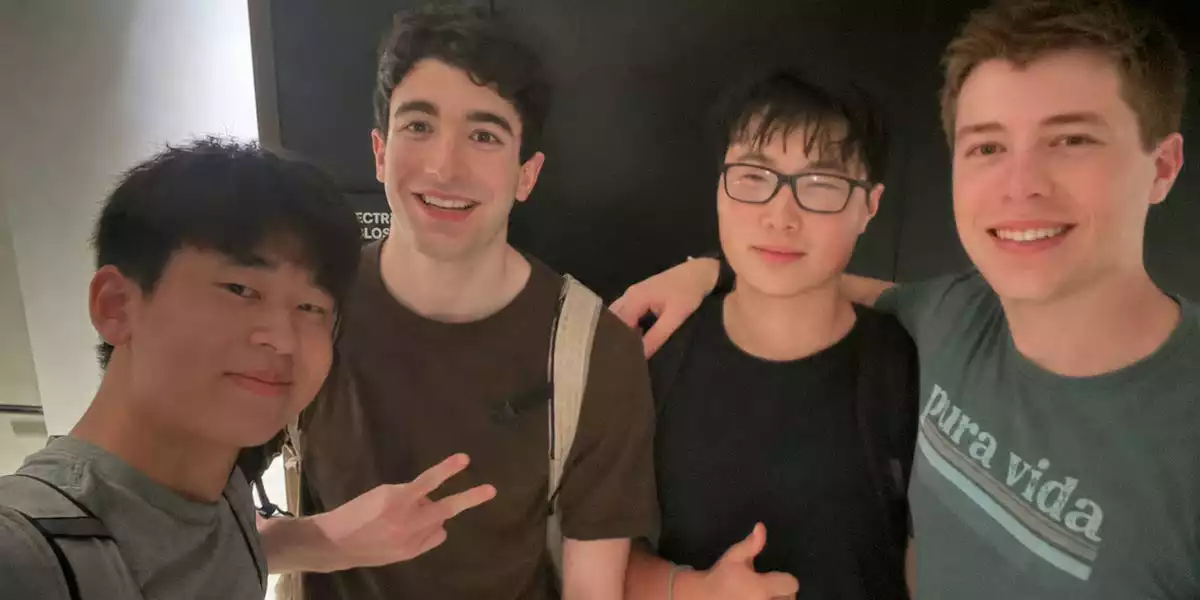
When Bryan Reed, a 24-year-old founder of the New York City trading app Freeport Markets, brought on three Gen Z interns for marketing support, the headline might have been familiar: lean startup, early-career talent, fast-moving growth goals. The differentiator was architectural as much as managerial. Reed placed the interns in a shared apartment next to the workplace, creating a co-living/co-working micro-community that blurred the boundary between scheduled collaboration and the informal social fabric where many creative breakthroughs actually form.
The reported daily rhythm—phone-free shared meals, group workouts, late-night reading sessions, and weekend events—reads less like a conventional internship and more like an accelerator “hack house,” but with an explicit emphasis on mental wellness and sustained attention. Reed’s own takeaway is telling: the arrangement didn’t merely increase output; it reduced founder burnout and improved the team’s collective problem-solving capacity. In an era where hybrid work is often framed as a trade-off between flexibility and cohesion, this model suggests a third path: intentional proximity for fixed sprints, designed to produce both belonging and velocity.
For business leaders and technology executives, the deeper story is not about perks or novelty housing. It is about treating social connection as an operational input—something that can be designed, tested, and iterated like a product feature.
Gen Z marketing fluency meets rapid feedback loops in the attention economy
Freeport Markets’ internship structure also highlights a practical innovation dynamic: Gen Z interns are not simply junior labor; they can be a high-signal sensor network for cultural relevance. In marketing—especially for consumer-facing fintech, where trust and clarity are hard-won—message-market fit is often constrained by how quickly a team can test creative hypotheses and interpret feedback.
Co-location accelerates that loop. When brainstorming, content creation, and post-mortems happen continuously—over meals, during walks, between tasks—ideas travel faster from concept to experiment. The result is a kind of high-velocity iteration environment that many startups try to approximate with Slack channels and dashboards, but rarely replicate in full.
Several mechanisms stand out as especially relevant to technology and innovation leaders:
- Fresh platform intuition as a competitive edge: Gen Z interns tend to be fluent in emerging formats, creator ecosystems, and community norms. That fluency can translate into more authentic channel strategy and fewer tone-deaf campaigns—critical in fintech, where credibility is fragile.
- Serendipity as a system, not an accident: The apartment-adjacent setup increases the odds of spontaneous critique and refinement—turning “quick thoughts” into testable marketing assets within hours, not weeks.
- Attention protection as productivity infrastructure: Phone-free meals and structured offline time function as a counterweight to the attention fragmentation that undermines creative work. In practice, this can improve message coherence, brand consistency, and decision quality.
This is not a rejection of digital collaboration tools; it’s a reminder that physical design and social rituals can still outperform software when the goal is deep focus and fast learning.
Social capital as a measurable economic variable, not a soft benefit
The economic implications are easy to underestimate because they sit at the intersection of culture and performance—an area many organizations struggle to quantify. Yet Reed’s experience points to a pragmatic thesis: burnout and isolation are not just personal issues; they are balance-sheet risks. Reduced engagement, slower execution, and higher turnover all carry real costs, particularly for early-stage companies where a small team’s throughput determines survival.
In a tight talent market—especially for ambitious early-career hires—this model also reframes how startups can compete. Compensation matters, but for many Gen Z workers, belonging, growth, and purpose are not secondary. They are part of the job’s value proposition.
From a workforce strategy perspective, the Freeport Markets approach implies:
- Internships as strategic talent pipelines: Treating interns as collaborators—supported with housing, structured learning, and genuine inclusion—can yield higher creative contribution now and stronger retention later.
- Culture as a recruiting signal: A community-centric environment becomes part of the employer brand, communicating psychological safety and development opportunities more credibly than a careers page ever could.
- Well-being as operational resilience: If social connection reduces founder burnout, it also stabilizes leadership decision-making—an under-discussed driver of startup execution quality.
The key is to avoid romanticizing intensity. Co-living can amplify cohesion, but it can also blur boundaries. The business lesson is not “everyone should live together,” but that social architecture can be designed with the same intentionality as product architecture.
What leaders can borrow: modular proximity, learning rituals, and reverse mentorship
Reed’s commitment to repeat the model suggests he sees it as more than a one-off summer story. For executives evaluating hybrid work, startup culture, or innovation performance, the transferable insight is the concept of modular, time-boxed community—small cohorts brought into proximity for defined sprints, with explicit rituals that protect attention and encourage learning.
Several practices appear especially portable across industries:
- Institutionalize learning-for-pleasure: The thrice-weekly 90-minute reading sessions convert downtime into a lightweight “knowledge accelerator,” enabling cross-pollination between marketing, product thinking, and customer empathy.
- Formalize unplugged rituals: Phone-free meals and shared activities are not nostalgia; they are attention management protocols that can improve creativity and reduce digital fatigue.
- Build reverse and peer mentorship into the operating system: Gen Z interns can mentor founders on platform culture while founders mentor on strategy—creating a two-way transfer that speeds up organizational learning.
If the last decade taught companies to optimize for scale through software, this story is a reminder that the next edge may come from optimizing for human throughput—the trust, focus, and shared context that turn small teams into disproportionately effective ones. Reed’s summer at Freeport Markets positions community not as a byproduct of work, but as a deliberate engine for innovation, retention, and sustainable performance.

 By
By

 By
By
 By
By

 By
By
 By
By
 By
By







