


A quiet recalibration of “success” in the post-pandemic education economy
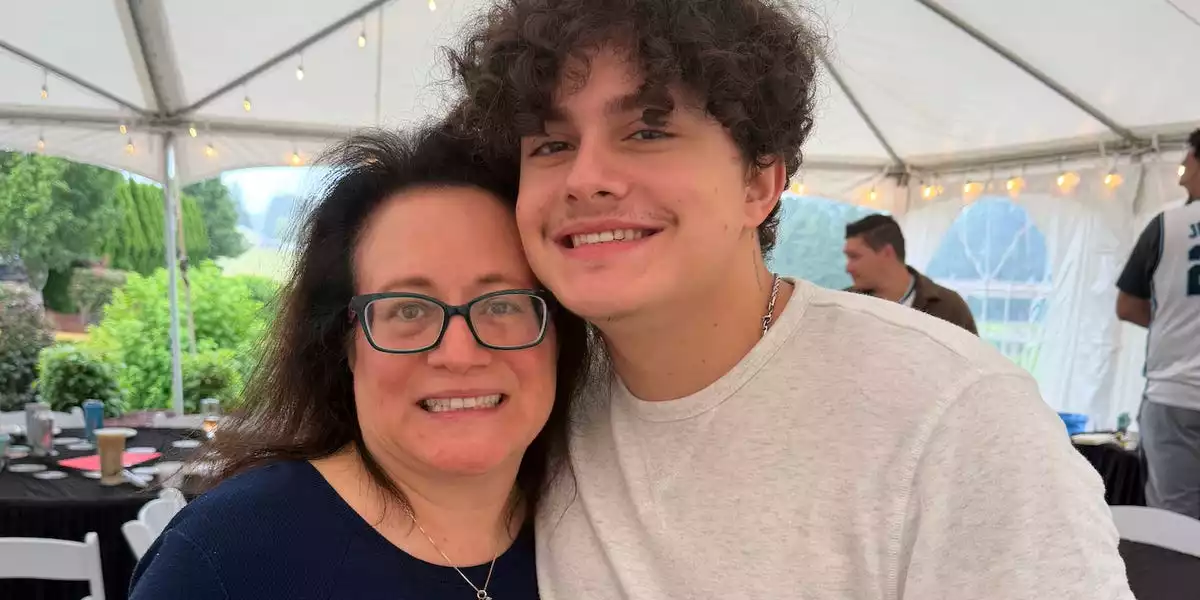
A small family story—one child thriving outside the traditional academic track, another leaning into an arts degree despite familiar warnings—captures a broader shift underway in the education-to-employment pipeline. For decades, the dominant template for upward mobility in many households was linear and prescriptive: finish high school, earn a four-year degree, secure stable corporate work. What emerges here is not a rejection of education, but a redefinition of what education is *for*—and how directly it should translate into agency, employability, and personal fit.
The son’s trajectory is especially telling. Disengaged by conventional schooling, he finds momentum in a restaurant environment where learning is tactile, immediate, and socially reinforced. When the pandemic pushes schooling online, the disruption becomes an accelerant: he compresses the timeline to graduation, enters a community college culinary program by choice, and transitions into independent adulthood in Arizona. The daughter, observing that self-directed path, chooses a prestigious university theater program—accepting uncertainty, but doing so with clearer ownership of the decision.
The connective tissue is the evolving parental role: from enforcing a single “safe” route to cultivating self-confidence, adaptability, and decision-making capacity. That mindset shift mirrors what employers and institutions are now confronting at scale: the old conveyor belt from classroom to career is fragmenting into multiple viable pathways, each with distinct risk profiles, time horizons, and measures of return.
—
Remote learning as an accelerant: what EdTech revealed about time, pacing, and credentials
The pandemic-era pivot to digital learning did more than keep classes running; it exposed how much of education’s structure is governed by tradition rather than necessity. The son’s ability to accelerate high school completion highlights a key technological implication: remote and modular learning can compress timelines for students who are motivated by outcomes rather than seat time.
For education providers and EdTech firms, the value proposition becomes clearer when viewed through this lens:
- Modular, stackable coursework can serve learners who want faster progression or targeted skills without committing to a four-year arc.
- Community college partnerships can bridge theory and practice, especially in fields where competence is demonstrated through performance, not exams alone.
- Personalized pacing—supported by adaptive learning systems—can better match students who thrive with autonomy, reducing disengagement and dropout risk.
This is not a blanket endorsement of online learning. Many students need in-person structure, social reinforcement, and hands-on instruction. But the narrative underscores an important market reality: the future of education is less about a single delivery mode and more about flexible architectures that allow learners to assemble credentials around their goals, constraints, and readiness.
For employers, this modularity has a direct talent implication. When learning can be accelerated and aligned to job-ready competencies, education becomes less of a gatekeeping signal and more of a dynamic talent pipeline—one that can be replenished continuously rather than once per graduation cycle.
—
The ROI debate intensifies: tuition pressure, labor shortages, and the rise of skills-first pathways
Economically, the story lands in the center of a widening national conversation: what is the return on investment (ROI) of a four-year degree, and who bears the risk when costs rise faster than wages? The culinary pathway offers a different calculus—one measured in near-term employability, earlier wage earning, and lower debt exposure. In a labor market still marked by post-pandemic volatility, that immediacy matters.
At the same time, the daughter’s decision to pursue theater at a prestigious university reflects another reality: not all value is captured in first-job salary. The arts can yield durable skills—communication, collaboration, resilience, creative problem-solving—yet the financial risk is often concentrated on the student. What’s changing is not that risk disappears, but that families and students are increasingly willing to name it explicitly and proceed with eyes open, rather than defaulting to “safe” choices that may not fit.
Labor-market conditions amplify these dynamics. Hospitality and service sectors have faced persistent staffing challenges and turnover. In that context, vocational and community college programs can function as time-to-productivity engines, especially when employers engage directly in training design and placement.
For business leaders, the strategic takeaway is pragmatic: the talent market is no longer organized around prestige alone. It is increasingly organized around proof of skill, speed of readiness, and alignment with real work.
—
What leaders can do now: building resilient talent pipelines across multiple educational routes
Organizations that treat this moment as a temporary anomaly may miss a structural shift. The more durable opportunity is to design hiring and development systems that welcome both linear and non-linear journeys—without romanticizing either.
Several moves stand out as high-leverage:
- Forge education–industry alliances with community colleges and vocational programs to co-design curricula, apprenticeships, and paid placements tied to operational needs.
- Adopt skills-based assessment in recruiting and promotion—portfolios, work simulations, microcredentials, and demonstrated learning velocity—reducing overreliance on pedigree signals.
- Support continuous learning cultures that mirror the autonomy many Gen Z and millennial workers expect: clear outcomes, flexible pathways, and visible internal mobility.
- Demand transparency in outcomes from education partners—employment rates, wage trajectories, and progression data—so students and employers can make decisions grounded in evidence, not marketing.
Policymakers, too, have a role in making these pathways portable and credible. Standardizing microcredential frameworks and rebalancing funding incentives between four-year institutions and community colleges would reduce friction for learners who move between work and study across state lines and life stages.
What this family narrative ultimately illustrates is not a culture war between college and trades, or passion and practicality. It is a recognition that modern careers are built less like ladders and more like portfolios—assembled through timely learning, real-world practice, and the confidence to choose a path that fits, even when it diverges from the script.

 By
By

 By
By
 By
By
 By
By


 By
By







