

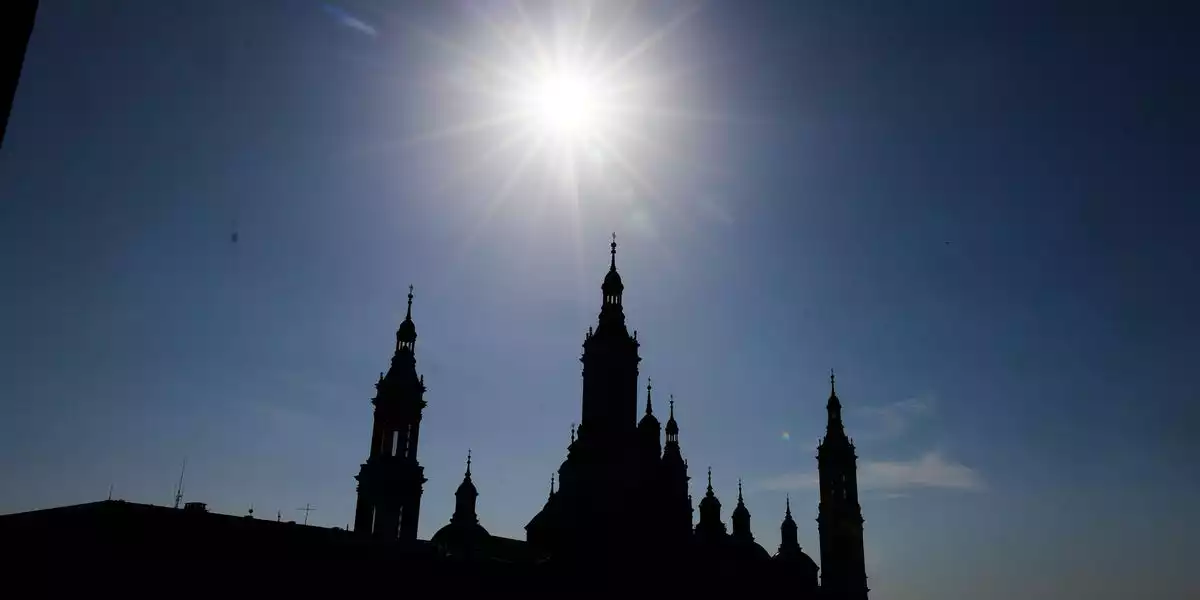

A celestial event that doubled as a real-time stress test for Europe’s experience economy
The total solar eclipse that swept across parts of Europe—touching Iceland, Greenland, Spain, and Portugal, and delivering dramatic partial coverage to major cities like Paris and Stockholm—was not merely an astronomical milestone. As the first total eclipse visible from mainland Europe since 1999, it became a live demonstration of how modern markets behave when scarcity, emotion, and global attention converge.
Totality lasted up to 2 minutes and 18 seconds, yet the economic and operational footprint stretched across weeks of planning and days of concentrated demand. Nowhere was this more visible than in Reykjavik, where hotel prices reportedly surged 212%, with some rates topping $1,000 per night. The eclipse effectively functioned as a “scheduled shock,” compressing peak-season dynamics into a narrow window and rewarding operators who could price, staff, and allocate inventory with precision.
What emerged was a clear signal: the premium experience economy is no longer a niche. It is increasingly the default mode of discretionary spending—especially when an event carries the psychological weight of rarity, social proof, and once-in-a-generation timing.
—
Dynamic pricing, luxury mobility, and the monetization of rarity
The eclipse offered a textbook case of algorithmic revenue management operating at full intensity. Hospitality providers leaned on cloud-based pricing systems that can recalibrate in near real time, responding to booking velocity, search traffic, and local capacity constraints. Reykjavik’s spike is not simply a story of opportunism; it is evidence that dynamic pricing infrastructure has matured into a strategic capability—one that can be redeployed for any episodic demand surge, from major sports tournaments to global tech conferences.
At the same time, the eclipse reinforced how quickly consumers will climb the price ladder when the value proposition is exclusivity and certainty. Consider the premium tiers that formed around the event:
- Luxury eclipse cruises reportedly sold for up to $10,000 per passenger, converting a scientific phenomenon into a high-margin hospitality product.
- Eclipse flights—with some fares cited around $1,200—highlighted the rise of “experience mobility”, where transportation is not a utility but the core of the product.
- A five-day science and music festival in Iceland, featuring artist Imogen Heap and astronaut Sian Proctor, illustrated a potent hybrid model: combining education, entertainment, and destination branding into a single narrative-driven package.
For business leaders, the strategic takeaway is that scarcity is now routinely monetized through bundling and tiering: premium access, curated programming, expert-led experiences, and guaranteed viewing conditions. This is the same playbook used in VIP sports hospitality and high-end product launches—now applied to the sky.
—
Science in the field: eclipse instrumentation with spillover benefits for industry
Beyond tourism, the eclipse created a rare natural laboratory for solar physics. Ground and airborne scientific teams used the brief window to study the sun’s corona and probe the magnetic field—areas that remain central to understanding space weather and its downstream effects on satellites, communications, and power grids.
What deserves attention from a business-and-technology lens is the instrumentation ecosystem that mobilizes around such events. Eclipse campaigns accelerate the deployment and validation of tools that have broader commercial relevance, including:
- High-sensitivity coronagraphs and hyperspectral imagers, which refine optical precision and signal processing techniques applicable to remote sensing and industrial inspection.
- Drone-borne magnetometers and rapid telemetry workflows, which push miniaturization, endurance, and real-time data handling—capabilities that translate to sectors like environmental monitoring and infrastructure surveying.
- Field-tested coordination models that blend academia, private suppliers, and logistics providers, effectively acting as a high-pressure rehearsal for other time-critical scientific and industrial operations.
In other words, eclipses are not only public spectacles; they are also innovation forcing functions. They compress R&D timelines, harden equipment in unpredictable conditions, and generate datasets that can seed new analytical methods—particularly when paired with modern AI pipelines for image enhancement, anomaly detection, and pattern recognition.
—
Supply-chain fragility in plain sight: the eclipse glasses shortage as a manufacturing signal
One of the most revealing subplots was the reported scarcity of certified eclipse viewing glasses, which pushed some consumers toward improvised solutions such as welder’s masks. While the immediate concern is safety and standards compliance, the broader implication is industrial: niche demand spikes can expose fragile supply chains even in advanced economies.
Specialty eyewear depends on constrained inputs—coatings, polarized or filtered lens materials, certification processes, and distribution channels that are not designed for sudden mass demand. The episode points to a structural opportunity:
- Distributed manufacturing for specialty optics, including localized production and faster certification workflows.
- Exploration of additive manufacturing and smart polymer approaches that could reduce dependence on single-source suppliers.
- Better demand forecasting and pre-positioning strategies for “scheduled volatility” events, where the date is known years in advance but demand elasticity is hard to model.
For executives, the lesson is not limited to eclipse glasses. The same dynamics apply to other specialized, compliance-heavy products—wearables, sensors, medical accessories, and protective equipment—where demand can surge faster than traditional procurement cycles can respond.
The eclipse ultimately revealed a modern paradox: even as markets become more digital and predictive, they remain vulnerable to physical bottlenecks. Companies that pair AI-driven forecasting with resilient, localized production will be best positioned to profit when the next rare moment arrives—and to deliver it safely, credibly, and at scale.

 By
By

 By
By
 By
By
 By
By

 By
By
 By
By







