
Google’s homepage experiment signals a redefinition of “search” as an AI workspace
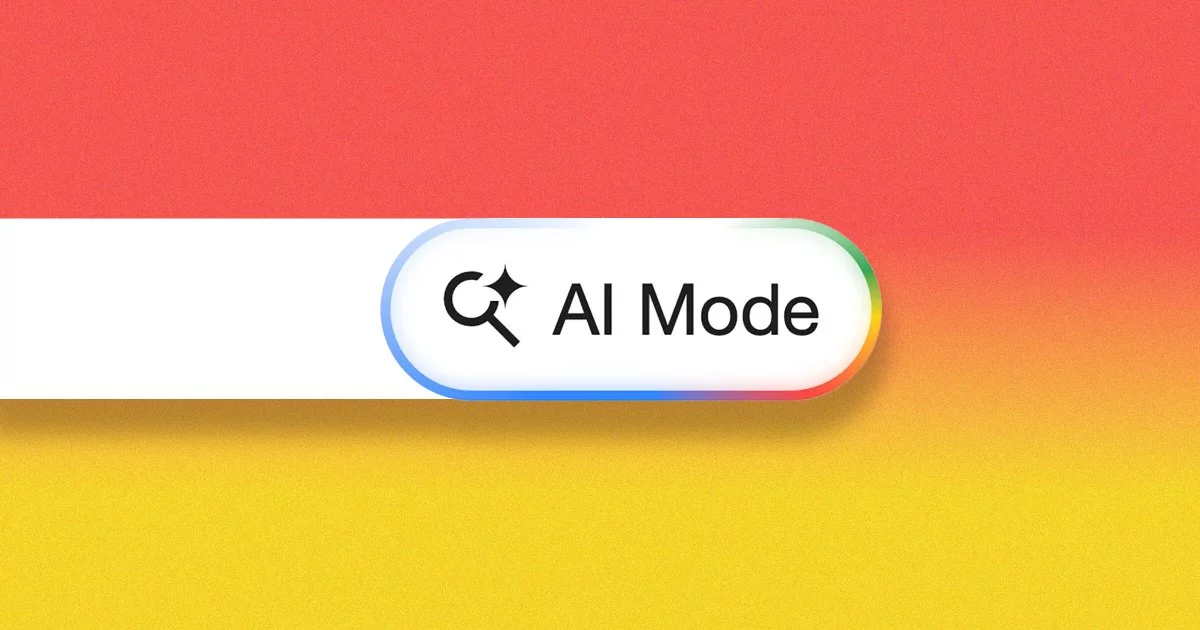
Google’s decision to quietly swap its iconic central “Search” button for three AI-forward actions—“Create images,” “Ask about files,” and “Brainstorm”—is a small interface change with outsized strategic meaning. The classic keyword query is still there (users can press Enter), and the nostalgic “I’m feeling lucky” remains, but the homepage now reads less like a portal to the web and more like a launchpad into generative AI tasks. The presence of an “AI Mode” toggle inside the search bar reinforces that this is not a side feature; it is increasingly the product’s organizing principle.
This shift reflects a broader industry pattern: search is moving away from being primarily a navigation tool—a system that points users outward via ranked links—toward being an answer engine and, increasingly, an agentic interface that completes work on the user’s behalf. Google’s earlier previews of an “intelligent” search box that can morph into a chatbot, offer advanced autocompletion, and summon AI agents for multi-step retrieval suggest the company is testing not just new UI labels, but a new default mental model: search as conversation, search as creation, search as delegation.
For users, the promise is convenience—fewer clicks, faster synthesis, more direct outcomes. For the web ecosystem that has grown around Google’s link economy, the implications are more complex and potentially disruptive.
From “ten blue links” to conversational synthesis: the technology shift underneath the UI
At a technical level, the homepage buttons are a visible hint of a deeper architectural transition: from indexing-and-ranking toward language-mediated interaction. Traditional search excels at pointing to sources; generative AI excels at summarizing, recombining, and contextualizing. When these capabilities become the default, the user journey changes from “find and read” to “ask and receive.”
Two technological trajectories stand out:
- Language as the primary interface layer
Google’s direction mirrors changes seen across the sector, including Microsoft’s Bing integrations and the rise of standalone AI assistants. The common thread is that users increasingly expect systems to handle ambiguity, follow-ups, and intent refinement—capabilities that feel natural in dialogue but awkward in keyword strings.
- Agentification: search that executes, not just answers
The notion of AI agents that can perform multi-step tasks—cross-referencing documents, summarizing long reports, comparing datasets, or orchestrating workflows—pushes search into the territory of automation platforms. If Google operationalizes this at scale, it could create an ecosystem where developers build:
– agent “skills” and integrations
– workflow connectors to enterprise tools and cloud services
– domain-specific retrieval and reasoning layers
– new forms of structured data optimized for AI consumption
In effect, the search box becomes a command line for the internet—only expressed in natural language, with the system doing the translation into actions.
The open web faces a new form of disintermediation—and advertisers are already adapting
The economic tension is straightforward: if Google provides synthesized answers and completed tasks inside its own interface, fewer users will click through to external sites. That threatens the traffic-to-revenue pipeline that funds much of the open web, particularly for publishers dependent on advertising, affiliate links, and high-volume SEO.
Key business implications include:
- Declining click-through rates and weakened publisher leverage
When the platform becomes the destination, publishers risk being treated as upstream inputs rather than endpoints. Even if attribution is present, the value capture shifts toward the interface that controls the user relationship.
- A “winner-takes-most” dynamic intensifies
AI-mediated discovery can concentrate attention among a smaller set of sources deemed “summarizable,” “authoritative,” or simply easiest to ingest. Smaller publishers may find it harder to compete if visibility depends less on ranking and more on whether content is incorporated into AI responses.
- Advertising pressure moves from pages to prompts
Marketers are already experimenting with bot-targeted creative—content and messaging designed to surface inside AI-generated responses rather than on destination pages. This accelerates a transition from:
– banner and display economics
– to context-aware, conversational ad units and sponsored placements embedded in AI interactions
For brands, the opportunity is precision and intent-rich engagement. For the broader ecosystem, the risk is that monetization becomes increasingly platform-mediated, reducing diversity in business models across the web.
Strategy, regulation, and the next competitive battleground for discovery
For organizations that have relied on SEO as a primary growth engine, Google’s experiment reads like an early warning: distribution is being renegotiated. The strategic response is likely to be multi-pronged:
- Shift from pure SEO to “AI discoverability”
Companies will need to measure performance beyond pageviews, tracking signals such as AI-driven impressions, conversational referrals, and downstream conversions. Investments in structured data, semantic markup, and clean APIs become more than technical hygiene—they become distribution strategy.
- Build direct relationships to reduce platform dependency
Newsletters, memberships, first-party data programs, community platforms, and proprietary apps regain importance when search becomes less of a traffic faucet and more of an answer layer.
- Prepare for regulatory and licensing scrutiny
As AI-generated responses become a primary interface to information, questions sharpen around market power, transparency, and remuneration:
– How are sources selected and weighted?
– What constitutes adequate attribution?
– Should there be standardized AI labeling or auditability?
– Will revenue-sharing models emerge for content that trains or feeds AI systems?
Regulators in the US and EU are already attentive to how dominant platforms can use AI to reinforce control. Google’s redesign—subtle as it appears—may become a focal point in debates about competition, publisher rights, and the future structure of digital markets.
What looks like three new buttons is better understood as a directional marker: Google is testing whether users want a homepage that doesn’t merely help them *find* information, but helps them *produce outcomes*. If that becomes the default expectation, the next era of search will be defined less by who ranks first—and more by who gets synthesized, cited, and acted upon inside the AI layer that sits between people and the web.

 By
By


 By
By
 By
By
 By
By
 By
By
 By
By