

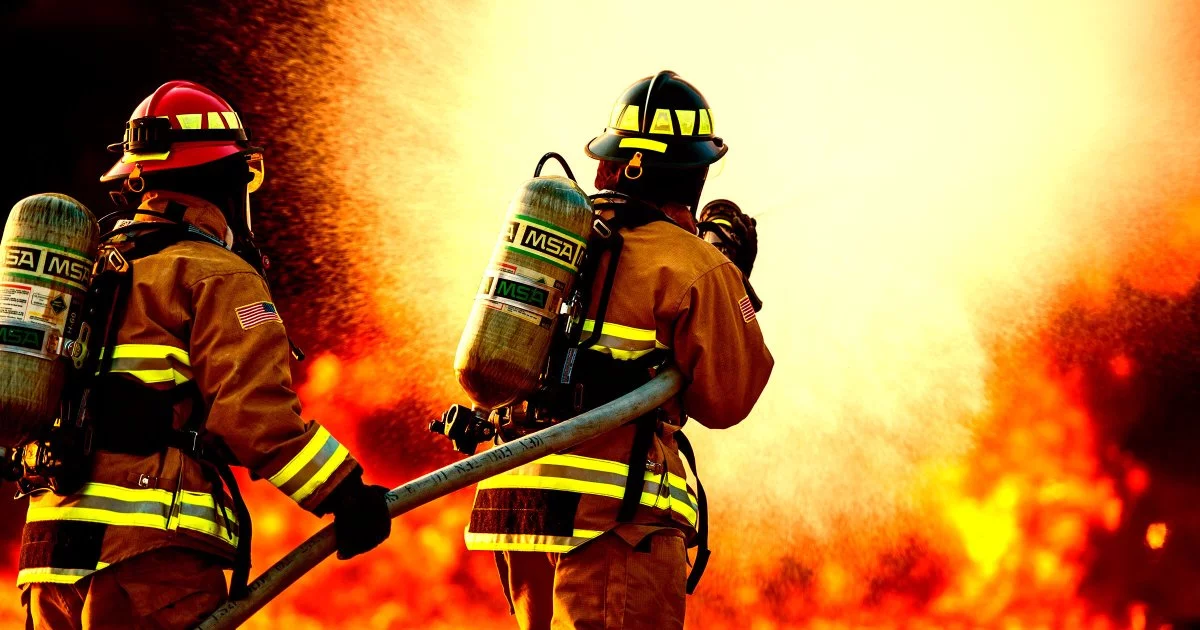

A residential Tesla garage explosion reframes the EV safety conversation at home
The two-alarm fire in Auburn, Washington—sparked by a Tesla that exploded while parked in a residential garage—lands at the intersection of consumer technology, home infrastructure, and public safety. While investigators have not yet confirmed whether the ignition source was the vehicle’s lithium-ion battery pack or another element in the garage, responders have already indicated the explosion sharply intensified the blaze, destroying the home and injuring two firefighters with non-life-threatening wounds.
For the electric-vehicle (EV) industry, incidents like this carry disproportionate weight. EV adoption is accelerating under decarbonization policies and market momentum, and the garage is increasingly becoming an extension of the energy system: a place where high-voltage batteries, charging equipment, household wiring, and enclosed spaces converge. That convergence raises a practical question for regulators, insurers, automakers, and homeowners alike: how should residential environments evolve to safely accommodate EVs at scale—especially when rare failures can be catastrophic?
Thermal runaway, battery management, and why “rare” still matters
Lithium-ion batteries deliver exceptional energy density, which is precisely why they power modern EVs. That same density, however, concentrates risk. When a cell breaches critical temperature thresholds—through mechanical damage, internal defects, or abnormal charging conditions—it can enter thermal runaway, a self-propagating chain reaction that releases heat, gas, and potentially flame. Even when the initiating event is localized, the pack architecture can allow heat to spread across modules, turning a contained failure into a high-energy fire.
Battery-management systems (BMS) and pack engineering have improved significantly, with layered safeguards such as active cooling, voltage monitoring, and isolation mechanisms. Yet the Auburn case underscores a key reality: mitigation is not elimination. The long tail of edge cases—manufacturing variability, aging effects, undetected damage, or environmental factors—still exists. And in a residential garage, the consequences can be amplified by proximity to structural materials, stored household goods, and limited ventilation.
From a technology strategy standpoint, this is why next-generation chemistries continue to attract attention. Solid-state and lithium-metal designs promise improved safety margins in theory, while alternatives like sodium-ion and other emerging storage approaches aim to reduce reliance on the most failure-sensitive configurations. But most of these are still early in commercialization, meaning the near-term safety agenda remains focused on improving today’s lithium-ion systems—pack segmentation, thermal barriers, venting pathways, and more robust fault detection.
Key technical factors now under sharper scrutiny include:
- Cell-to-pack propagation resistance (how effectively a pack prevents one failing cell from igniting neighbors)
- Charging ecosystem integrity, including EVSE installation quality, circuit protection, and thermal monitoring
- Post-event behavior, particularly the risk of reignition hours after initial suppression
Firefighting realities: when conventional suppression meets high-voltage energy storage
EV battery fires challenge traditional firefighting playbooks. They can require sustained water application for cooling, specialized procedures to manage toxic runoff, and careful scene control because battery packs may reheat or reignite. In Auburn, firefighters reportedly needed hours to contain the blaze—an operational detail that matters not only for public safety, but for municipal resource planning and environmental management.
This is where the conversation shifts from “vehicle safety” to system safety. A residential EV fire is not just an automotive incident; it is a building fire, a hazardous materials event, and a potential utility issue. Fire departments must weigh:
- Responder exposure to heat, smoke, and chemical byproducts
- Water usage and runoff containment, especially where local limits or environmental sensitivities apply
- Information gaps at dispatch—whether responders know the vehicle type, battery state, or charging status before arrival
A practical pathway gaining attention is better integration of real-time diagnostics into emergency response. If EV telematics and garage-mounted sensors (thermal detectors, smoke detection tuned for battery events, or charger-side fault alerts) can feed into 911 workflows, responders could arrive with more precise expectations—pre-staging cooling resources, isolating hazards faster, and reducing time-to-control.
Insurance, building codes, and the emerging “safe garage” economy
The Auburn fire also highlights a market dynamic that tends to follow high-profile incidents: risk repricing. Residential insurers may reassess underwriting assumptions for homes with EVs, particularly those with installed chargers or frequent overnight charging. The cost profile is different when a garage fire escalates into full structural loss and requires prolonged suppression efforts.
At the same time, liability questions can expand quickly depending on investigative findings. If a root cause points to a manufacturing defect, charging equipment failure, or installation error, the ecosystem of potential responsibility widens to include:
- Automakers (OEMs) and battery suppliers
- Charging-station manufacturers and installers
- Electrical contractors and, in some cases, property owners
Regulators and municipalities are likely to respond through building and electrical code updates. The direction of travel is increasingly clear: garages are becoming energy spaces, and energy spaces get engineered. Potential code and design adaptations include:
- Enhanced requirements for garage wiring, breaker capacity, and load management
- Guidance on ventilation and separation between charging equipment and living areas
- Incentives or mandates for fire-resistant materials, sprinkler integration, or dedicated charging bays in new construction
This is also a strategic opening for industry consortia to define standards for “safe-garage” installations—combining architecture, electrical engineering, and IoT monitoring into a certifiable package that insurers and municipalities can recognize.
What automakers and policymakers do next will shape consumer trust
For automakers, the reputational stakes are high because EV adoption is still partially perception-driven. A single dramatic garage explosion can overshadow millions of uneventful charging cycles, especially in a media environment that rewards vivid anomalies. The most credible response is not marketing—it is measurable engineering progress paired with transparent communication.
That means accelerating R&D in:
- Thermal containment and pack-level fire mitigation
- Automated shutdown and isolation protocols, including post-crash and stationary scenarios
- Potential “garage-aware” safety modes using geofencing or home-network integration to reduce high-voltage activation risk in enclosed spaces
For policymakers and civic leaders, the opportunity is to avoid reactive overreach while still modernizing standards. EVs are central to decarbonization plans, but electrification at scale requires that homes, codes, and emergency services evolve in parallel. The Auburn incident is a reminder that the future of mobility is also a future of infrastructure—and that public confidence will ultimately be earned not by promises of innovation, but by the quiet reliability of systems designed to fail safely when the unexpected occurs.

 By
By
 By
By

 By
By


 By
By
 By
By







