
A peer‑reviewed warning from the Red Sea: when “just a little light” becomes a biological stressor
A new peer‑reviewed study in *Current Biology* adds hard evidence to a growing concern in marine ecology and coastal development: low‑level artificial light at night (ALAN)—the glow from ports, promenades, marinas, and shoreline infrastructure—can meaningfully disrupt reef life even when illumination appears modest by human standards.
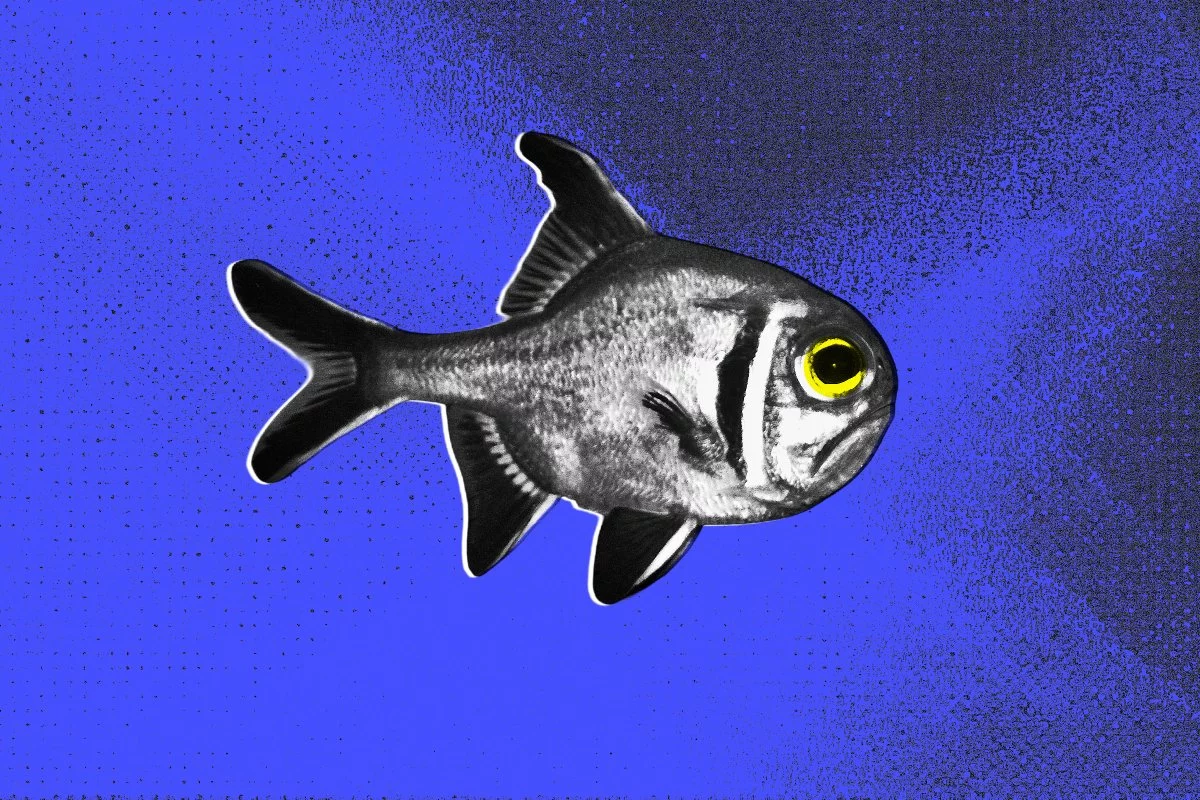
The research focuses on damselfish, a ubiquitous reef resident whose daily rhythms are tightly synchronized with natural light cycles. The study reports that nighttime light intrusion disrupts sleep‑like cycles and circadian timing, producing behavioral changes that resemble sleep deprivation in terrestrial animals. The observed outcomes—heightened aggression, erratic feeding, and clear stress markers—are not merely curiosities of fish behavior. They are early indicators of a broader systems problem: when foundational species lose their temporal “operating system,” reef stability can erode in ways that are difficult to reverse.
For business and technology leaders, the significance is twofold. First, the findings sharpen the causal link between coastal lighting and ecological harm, strengthening the case for regulatory action. Second, they illuminate a practical opportunity: lighting is one of the most tractable environmental variables to redesign, often with immediate operational and energy benefits.
Damselfish as reef infrastructure: why disrupted sleep can ripple into coral health
Damselfish are not just inhabitants of coral reefs; they are active participants in reef maintenance. Their roles in algal grazing, biofilm management, and territorial interactions influence the balance between coral and algae—an equilibrium that can determine whether a reef remains resilient or slides toward degradation.
The study’s core implication is that circadian disruption changes how fish allocate time and energy. When fish become more aggressive or feed at atypical times, the downstream effects can include:
- Altered grazing pressure, potentially allowing algae to outcompete coral in localized areas
- Behavioral instability in reef communities, as aggression reshapes territory and access to resources
- Physiological stress accumulation, which can reduce fitness, suppress recruitment, and weaken population recovery after heatwaves or storms
This matters because reefs are already under compounding stress from warming waters, acidification, and pollution. Artificial light functions as a chronic, nightly disturbance—a “background noise” that can amplify other pressures. In that sense, ALAN is less like a single pollutant and more like a persistent systems misconfiguration: it shifts biological timing across multiple processes, from feeding to predator avoidance to rest.
The study also hints at a deeper scientific point with policy relevance: the parallels to insomnia‑like effects suggest conserved neuroendocrine responses across taxa. That strengthens the argument that lighting impacts are not species‑specific anomalies, but a broader biological phenomenon that coastal planning has historically underestimated.
The overlooked engineering variable: coastal lighting design meets ecological risk management
Coastal lighting has traditionally been justified through a narrow lens—security, navigational visibility, and public amenity. The *Current Biology* findings expose a gap: lighting design has not been systematically integrated into marine impact assessments, even as LEDs and high‑intensity fixtures proliferate along shorelines.
From a technology and infrastructure standpoint, this is a solvable problem. The authors’ call for dimming, shielding, and directional controls aligns with a modern lighting toolkit that can reduce ecological spill without compromising safety. The most actionable interventions tend to be operationally straightforward:
- Directional luminaires and shielding to prevent seaward spill and reduce skyglow
- Adaptive dimming schedules tied to activity levels (vessel movements, staffing hours, tidal cycles)
- Motion‑based controls in low‑traffic areas to minimize continuous illumination
- Spectral tuning where feasible, recognizing that wavelength can influence biological sensitivity
This is where “smart port” initiatives become more than efficiency programs. IoT‑enabled lighting networks can transform static illumination into a responsive system—one that delivers light when and where it is needed, while reducing ecological exposure during biologically sensitive hours.
The emerging frontier is measurement. Advances in underwater optical sensors and AI‑driven behavior analytics can enable near‑real‑time monitoring of stress indicators and activity shifts. Combined with digital twin reef models and light‑diffusion simulations, ports and municipalities can test lighting strategies virtually before deployment—reducing ecological trial‑and‑error and accelerating compliance readiness.
Blue‑economy exposure and the next compliance cycle: why early movers may gain advantage
The economic stakes are not abstract. Reef decline directly threatens small‑scale fisheries, dive tourism, coastal hospitality, and local employment, especially in regions where reefs function as both natural capital and brand identity. If light‑driven stress contributes to lower recruitment or altered community structure, the long‑term result can be reduced biomass and diminished ecosystem services—costs that rarely appear on a port’s balance sheet until they surface as political, legal, or reputational risk.
Regulatory momentum is also moving. As marine spatial planning and coral protection frameworks tighten—whether through regional directives, national conservation acts, or local permitting—retrofitting mandates become more likely. For operators, the strategic question is timing: reactive upgrades tend to be costlier than planned modernization, particularly when procurement, permitting, and stakeholder scrutiny converge.
Three business dynamics stand out:
- Compliance and capex planning: integrating reef‑safe lighting into routine asset refresh cycles can lower lifetime costs
- Insurance and liability: environmental degradation is increasingly reflected in underwriting models; weak controls may translate into higher premiums or disputes
- ESG and TNFD alignment: mapping a facility’s artificial‑light footprint into biodiversity reporting can strengthen social license to operate and improve disclosure credibility
A notable, non‑obvious development is the potential rise of biodiversity credits or “light‑offset” style instruments that fund mitigation. Whether these markets mature remains uncertain, but the direction is clear: nature‑related externalities are being priced, formalized, and operationalized.
The Red Sea damselfish study ultimately reframes coastal lighting as a board‑level variable—a controllable input with measurable ecological and financial consequences—and it challenges ports, developers, and technology providers to treat darkness not as absence, but as a resource worth engineering for.

 By
By
 By
By
 By
By


 By
By