
A widening trust gap: AI’s promise meets household economics and local realities
The U.S. artificial intelligence boom is colliding with a more grounded public mood. What began as a narrative of national competitiveness and productivity is increasingly being reframed—at kitchen tables and city council meetings—as a question of who pays, who benefits, and who bears the side effects. The emerging backlash is not simply cultural resistance to new technology; it is an economic and environmental response to the physical footprint of AI at scale.
Communities near data-center clusters are connecting AI expansion to tangible pressures: higher utility bills, water use, land conversion, and localized pollution. At the same time, workers in vulnerable occupations are weighing AI’s efficiency gains against the prospect of displacement, wage compression, or a more precarious labor market. The result is a fraying “social license to operate” for AI infrastructure—especially when the industry’s messaging emphasizes future breakthroughs while the public experiences present-day costs.
This tension is sharpened by the sheer magnitude of investment. With more than $1 trillion already poured into AI R&D and infrastructure, the debate is shifting from “Can we build it?” to “Is this allocation of capital justified—and sustainable—given competing national priorities?” That question is now being asked not only by activists and local residents, but by mainstream investors and veteran market analysts.
Capital markets flash caution: bubble anxiety, valuation resets, and the cost of money
A recent Haystack News poll of 4,100 Americans—showing 55% “very concerned” and 14.5% “somewhat concerned” about an AI investment bubble—captures a broader skepticism that is no longer confined to contrarian corners of finance. The public’s bubble anxiety is being reinforced by market action: a sharp sell-off that erased nearly $1 trillion in market capitalization from AI-heavy bellwethers such as Amazon, Nvidia, Tesla, Alphabet, and Intel, while even SpaceX shares reportedly dipped below their IPO price.
The signal here is not that AI lacks value, but that expectations have been priced as certainty. When valuations assume near-term monetization of still-maturing capabilities, any disappointment—slower enterprise adoption, margin pressure, regulatory friction, or energy constraints—can trigger abrupt repricing. The pattern echoes earlier technology cycles where infrastructure and speculation raced ahead of market-ready applications.
Several macro forces amplify the risk of a correction:
- Elevated interest rates raise the hurdle rate for capital-intensive data centers, making long-duration payback periods harder to justify.
- Hardware and supply-chain constraints keep advanced chips and networking equipment expensive, squeezing margins for hyperscalers and chipmakers alike.
- Unclear productivity translation persists: while AI can be transformative in specific workflows, broad-based productivity gains across the economy often arrive slower than capital markets anticipate.
For executives and investors, the key analytical distinction is between AI as a general-purpose platform and AI as a set of monetizable products. The former can justify long-term investment; the latter must survive quarterly scrutiny. When the two are conflated, “hype versus utility” becomes less a media critique and more a balance-sheet problem.
The hidden ledger: data-center externalities, ESG credibility, and the new NIMBY politics of compute
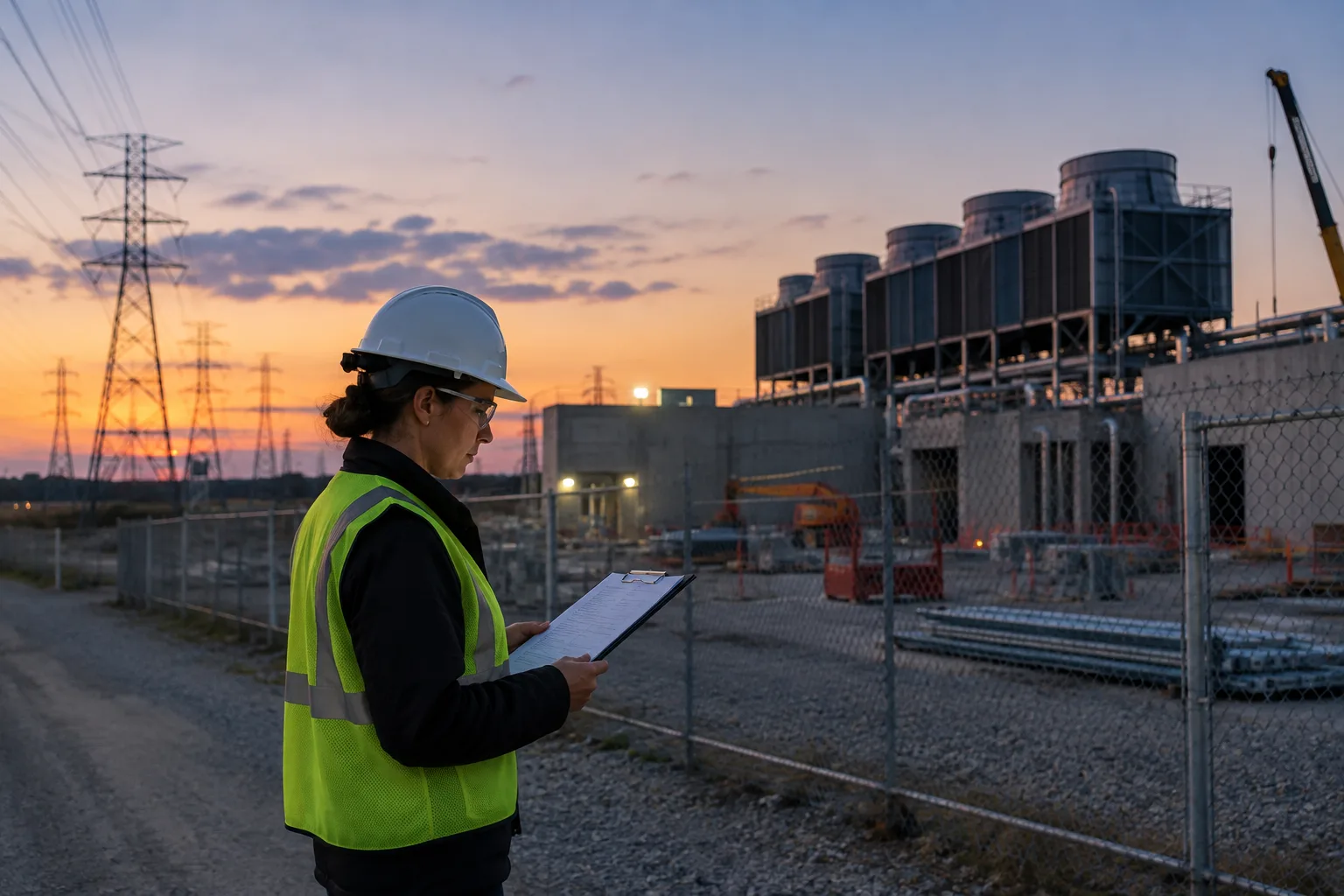
AI’s most immediate impacts are often not algorithmic—they are infrastructural. High-performance training and inference workloads draw enormous electricity and require substantial water for cooling. In regions where grids are already strained, incremental demand can translate into rate pressure for residents and small businesses, while also complicating decarbonization goals.
This is where corporate ESG commitments face their most concrete test. It is increasingly difficult to claim climate leadership while expanding energy-intensive compute without transparent accounting and mitigation. The externalities are not abstract; they are measurable and local, which makes them politically actionable.
Expect the following dynamics to intensify:
- Permitting friction and local ordinances limiting data-center footprints, driven by land use, noise, water, and grid concerns.
- Potential state-level levies or usage-based fees tied to compute consumption, framed as infrastructure cost recovery.
- Rising demands for utility-style oversight of mega-data centers, especially where grid upgrades are publicly subsidized.
- Greater scrutiny of water rights and thermal discharge, particularly in drought-prone regions.
At the same time, the AI value chain is likely to fragment. Enterprises are increasingly evaluating whether general-purpose models justify their cost, or whether domain-specific AI—tailored to regulated industries like healthcare, aerospace, and advanced manufacturing—delivers clearer ROI with fewer governance risks. This bifurcation could produce two parallel markets: high-margin bespoke systems with defensible compliance moats, and commoditized cloud AI competing on price, scale, and energy efficiency.
What responsible scale looks like now: governance, metrics, and community-centered deployment
The next phase of AI growth will be shaped less by model benchmarks and more by operational legitimacy—the ability to expand compute while maintaining public trust, regulatory alignment, and financial discipline. Stakeholders are already calling for more stringent oversight of AI’s economic and environmental footprint, and companies that engage early will have more influence over the rules that emerge.
Practical pathways are coming into focus:
- Recalibrate capex with sustainability metrics, including “AI Return on Energy” (AIRE) targets alongside traditional ROI.
- Site data centers strategically near renewable-rich grids and invest in grid modernization to reduce power-price volatility and emissions exposure.
- Prioritize domain-specific deployments with clear revenue paths and measurable productivity gains, rather than assuming horizontal platforms will monetize quickly.
- Engage proactively in regulatory sandboxes and standards, shaping transparency and accountability requirements before they harden into blunt mandates.
- Strengthen community and workforce commitments through local upskilling, targeted hiring pipelines, and offset projects directly tied to data-center operations.
- Stress-test financial models against 20–40% valuation corrections and prolonged high-rate environments, including plans to monetize excess compute capacity.
AI’s long-term trajectory may still be transformative, but the near-term mandate is more pragmatic: prove that the technology can scale without externalizing its costs onto households, municipalities, and fragile grids. The companies that thrive will be those that treat energy, water, governance, and community impact not as peripheral constraints, but as core design parameters of the AI economy.

 By
By
 By
By
 By
By

 By
By
 By
By
 By
By