

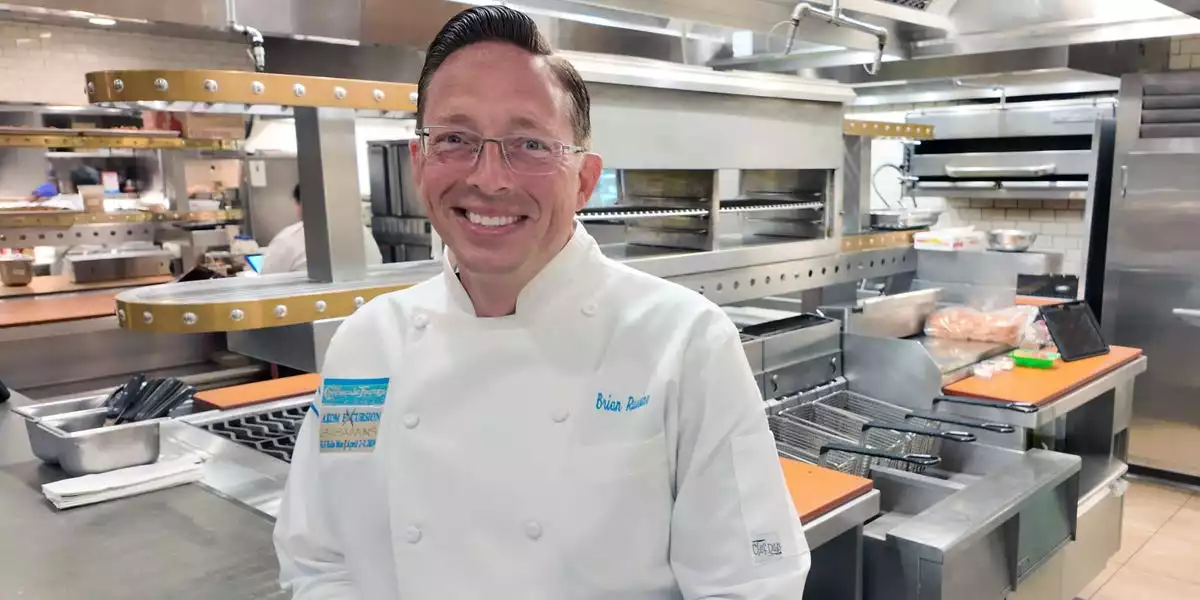

A veteran operator’s “Monday bun” rule—and what it reveals about modern restaurant quality
Brian Russino’s long-held “Monday bun” rule is the kind of kitchen-floor wisdom that rarely makes it into quarterly earnings calls, yet it captures a real consumer truth: freshness is experienced, not merely measured. The premise is simple—avoid certain menu items early in the week because ingredients delivered on Friday or Saturday may have lost their ideal texture or flavor by Monday. Russino is careful to separate this from food safety; the concern is peak quality, not contamination.
What makes the anecdote newsworthy is not the rule itself, but the exception Russino draws for The Cheesecake Factory, where he spent 22 of his 35 years in restaurant operations. He says he will eat at his own restaurants any day of the week because the chain’s operational discipline is designed to keep product moving, validated, and consistently guest-ready.
For business and technology leaders, the “Monday bun” becomes a lens on a bigger shift: restaurant operations are increasingly a data and systems problem, not just a culinary one.
Inventory discipline as a brand asset: traceability, turnover, and frontline enforcement
At scale, freshness is less about ideal sourcing narratives and more about time-in-system—how long ingredients sit, where they sit, and whether the organization can prove it. The Cheesecake Factory’s approach, as described, reflects a mature operational model built on visibility and repeatability:
- Product dating and traceability at receipt: Date-stamping upon arrival creates a simple but powerful audit trail. It is the restaurant equivalent of chain-of-custody thinking used in regulated industries, ensuring that “unknown age” inventory doesn’t quietly become normalized.
- First-in, first-out (FIFO) rotation: FIFO is operational hygiene, but it is also a financial control. It reduces the probability that older inventory lingers until it becomes a quality compromise or a write-off.
- Strict validation of incoming goods: Empowering kitchen teams to reject subpar deliveries pushes quality control upstream. It also signals to suppliers that standards are enforced daily, not only during periodic audits.
- Rapid turnover supported by forecasting and ordering systems: The operational goal is not merely to store food safely—it is to minimize dwell time so that Monday doesn’t feel like Monday to the guest.
This is where restaurant operations become a competitive differentiator. When consumers pay premium prices for consistency, the brand promise is delivered through systems: freshness, portion integrity, texture, and flavor are operational outputs.
The technology trajectory: from manual checks to AI forecasting, IoT sensing, and provenance systems
Russino’s confidence in weekday dining hinges on controls that are already robust—labels, rotation, ordering discipline, and human validation. Yet the direction of travel across foodservice is clear: instrument the supply chain, predict outcomes, and document provenance.
Several technology layers are poised to deepen what inventory programs can do:
- IoT-driven condition monitoring: Temperature and humidity sensors in storage areas are increasingly common, but the next step is broader coverage—monitoring conditions at the crate or pallet level, and flagging deviations in real time. For freshness, this matters because quality degradation is often a function of cumulative exposure, not a single failure event.
- AI-enhanced shelf-life and demand prediction: Traditional forecasting aligns purchasing to expected traffic. Machine learning can go further by incorporating:
– supplier performance variability,
– seasonal demand shifts,
– historical spoilage patterns,
– weather and local event signals,
– and item-level waste data.
The business outcome is sharper ordering precision—fewer stockouts, less spoilage, and more consistent guest experience.
- Blockchain or tamper-resistant provenance ledgers: While not necessary for every ingredient, provenance systems are gaining relevance as regulators and consumers ask for proof—where food came from, how it moved, and when it changed hands. In quality incidents, speed matters; traceability can compress response time and protect brand trust.
The strategic point is not that every chain must adopt every tool. It is that freshness is becoming measurable in more dimensions, and measurement tends to reshape competition.
Margin protection and sustainability: why freshness systems now sit at the center of strategy
Food inflation and labor constraints have turned waste from an operational annoyance into a board-level concern. Restaurants typically discard a meaningful share of inventory; even small percentage improvements can translate into material EBITDA impact at scale. Inventory rigor, then, becomes both a cost lever and a sustainability lever.
Key business implications emerge from Russino’s “Monday bun” framing:
- Waste reduction is profit expansion: Better rotation, smarter ordering, and tighter validation reduce write-offs without requiring price increases—an advantage when consumers are price-sensitive.
- Pricing stability depends on operational efficiency: When spoilage rises, the cost must be absorbed somewhere—often through menu pricing or portion adjustments that guests notice. Efficient inventory management helps preserve value perception.
- Labor upskilling becomes unavoidable: Systems only work when executed. The more rigorous the protocol, the more important it is to embed it in user-friendly tools—checklists, mobile workflows, guided receiving, and exception alerts—so quality doesn’t depend on a few veterans who “just know.”
Looking ahead, the most compelling operators may turn freshness into both a marketing narrative and an operational science—potentially through hyper-local prep hubs, dynamic “freshness indices” informed by sensor data, and circular partnerships that redirect near-end-of-prime ingredients into donations or alternative channels.
Russino’s rule resonates because it’s relatable, but the underlying message is more consequential: in modern foodservice, the guest’s perception of freshness is engineered through process, data, and accountability—and the brands that operationalize that reality will define the next standard for consistency.

 By
By
 By
By

 By
By
 By
By


 By
By







