

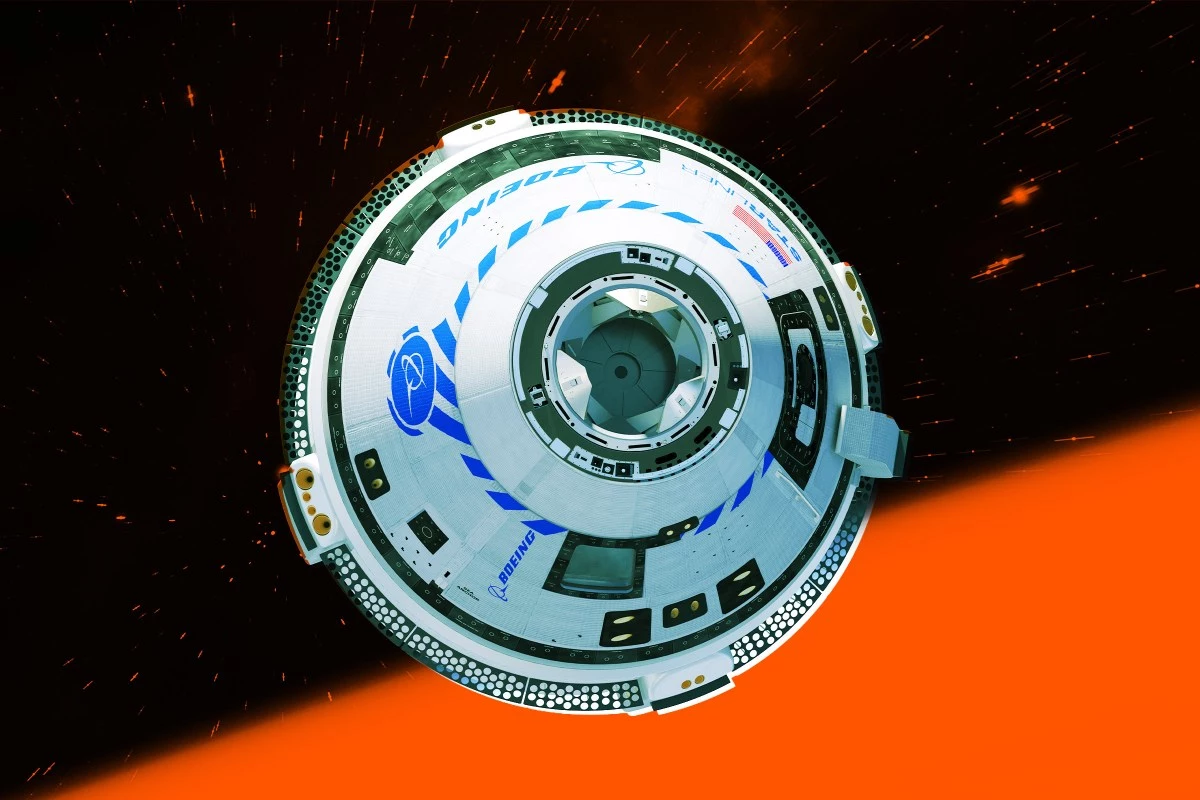

Starliner’s prolonged limbo and the narrowing window of relevance for ISS-era transport
Boeing’s CST-100 Starliner was designed to stand shoulder-to-shoulder with SpaceX’s Crew Dragon as a second, independent U.S. pathway for astronaut transport under NASA’s Commercial Crew Program. Instead, the program’s first crewed mission—carrying Butch Wilmore and Sunita Williams—has become a defining stress test of technical readiness, organizational rigor, and governance discipline.
The headline outcome is stark: a spacecraft intended to provide routine, redundant access to low Earth orbit experienced critical thruster failures and helium leaks, leaving the capsule effectively stranded for nine months before an uncrewed return. For NASA, the operational consequence is continued reliance on a single domestic provider for ISS crew rotation. For Boeing, the reputational and financial consequence is the intensification of scrutiny around whether a legacy aerospace prime can reliably execute a modern, safety-critical, software-heavy human spaceflight system on a competitive timeline.
Timing compounds the stakes. With the International Space Station (ISS) expected to retire in roughly four years, every schedule slip compresses Starliner’s potential utility. A follow-on uncrewed mission—normally the kind of confidence-restoring step that would reset momentum—still lacks a firm launch date and could slip by as much as a year. The risk is not merely delay; it is obsolescence, where the program reaches maturity just as the platform it was built to serve winds down.
What the anomalies reveal: propulsion fragility, helium integrity, and software’s long tail
The failure modes described—Reaction Control System (RCS) thruster malfunctions and helium leaks—are not exotic problems in spaceflight, but their persistence signals deeper integration and verification challenges.
Key technical fault lines emerging from the incident include:
- Propulsion and guidance vulnerabilities
Starliner’s repeated thruster issues highlight how difficult it is to achieve robust redundancy and fault isolation in a spacecraft that must maintain precise attitude control for rendezvous, docking, and safe deorbit. In human spaceflight, propulsion anomalies are rarely “local”; they cascade into guidance margins, thermal constraints, and mission rules that quickly narrow options.
- Helium leak dynamics as an integration and quality-control test
Helium systems sit at the intersection of tanks, valves, seals, and plumbing, where microscopic defects can become mission-threatening. Persistent leakage points to the need for tighter materials characterization, improved supplier traceability, and more aggressive acceptance testing—especially when composite structures and complex valve assemblies are involved.
- Software integration and autonomy under real mission edge cases
Starliner’s flight software must manage orbital insertion, proximity operations, and contingency handling. The report’s emphasis on unresolved instabilities underscores a familiar truth in aerospace: software defects often survive until the system encounters rare combinations of sensor noise, thermal conditions, timing, and operator interventions. Closing that gap typically requires deeper investment in model-based systems engineering (MBSE), formal verification, and automated test harnesses that can explore edge-case behavior at scale.
- Telemetry and ground-support limitations
Delayed anomaly resolution is frequently a data problem before it is an engineering problem. If real-time telemetry is insufficiently granular, teams lose the ability to discriminate between sensor artifacts, software states, and true hardware degradation. The next iteration of Starliner operations will likely demand richer onboard logging and more advanced ground analytics—potentially including AI-assisted anomaly triage—to shorten the time from symptom to root cause.
The Program Investigation Team’s “Type A mishap” finding and what it implies about governance
NASA’s Program Investigation Team (PIT) classified the incident as a “Type A mishap”, a designation that signals severity—here tied to property damage exceeding $2 million—and triggers a more stringent corrective-action pathway. The most consequential element of the PIT narrative is not only the hardware failure, but the attribution of root causes to cultural and leadership deficiencies within Boeing, alongside gaps in NASA oversight.
For industry observers, this is the crux: human spaceflight programs are engineered systems and management systems simultaneously. When a mishap is framed as cultural and leadership-driven, it implies that corrective actions must extend beyond component redesign into:
- Accountability mechanisms that make risk ownership explicit across engineering, quality, and program leadership
- Independent technical authority and third-party audit practices that reduce confirmation bias
- Stronger NASA-contractor integration, potentially embedding personnel to improve transparency and speed of issue escalation
- Certification discipline that treats uncrewed demonstrations not as formalities, but as data-generating gates with real schedule consequences
This also lands in a broader context for Boeing. Starliner’s quality-control narrative echoes concerns seen in other parts of the company’s portfolio, raising the strategic question of whether Boeing can implement a cross-division quality and digital engineering reset—one that standardizes best practices, strengthens configuration control, and improves verification methods through tools like digital twins and hardware-in-the-loop simulation.
Market and industrial repercussions: competition, supply chains, and the post-ISS scramble
Economically, Starliner’s trajectory sharpens debate about incentives and performance in large aerospace programs. More than $2 billion in development funding without a successful crew-transport outcome invites renewed attention from investors, auditors, and policymakers—particularly around how contract structures balance innovation risk with accountability.
The broader market implications are equally material:
- Reduced competitive pressure in U.S. crew transport
As long as Starliner remains uncertified for routine crewed operations, NASA’s practical dependence on SpaceX persists. That can influence per-seat economics, manifest flexibility, and resilience planning for contingencies.
- Industrial base strain
Prolonged delays can idle specialized suppliers—often small and mid-sized firms providing propulsion components, avionics, and composites. When these suppliers lose continuity, the ecosystem’s ability to surge for future programs erodes.
- Shifting partnership gravity
NASA and international partners may accelerate diversification toward emerging commercial station and spacecraft players—Axiom, Sierra Space, and others—reshaping how future LEO infrastructure is financed and governed.
Starliner’s most enduring impact may be as a case study in what the next era of space operations demands: digital traceability from supplier to flight, verification methods that treat software as a primary safety driver, and leadership cultures that reward early disclosure of risk over schedule optics. Whether Boeing can translate this mishap into a credible, repeatable recovery will determine not just Starliner’s place in the ISS twilight, but the confidence the market assigns to legacy primes competing in an increasingly data-driven space economy.

 By
By

 By
By
 By
By
 By
By


 By
By







