


A small actuator with outsized implications for the smart-home retrofit economy
SwitchBot’s Mother’s Day promotion for its rechargeable SwitchBot Bot actuator is, on the surface, a seasonal discount: $26.99 through May 10 with code FORHER20, down $7. Yet the product category it represents—mechanical retrofit automation—is increasingly central to how mainstream consumers adopt smart-home technology without rewiring, replacing appliances, or hiring installers.
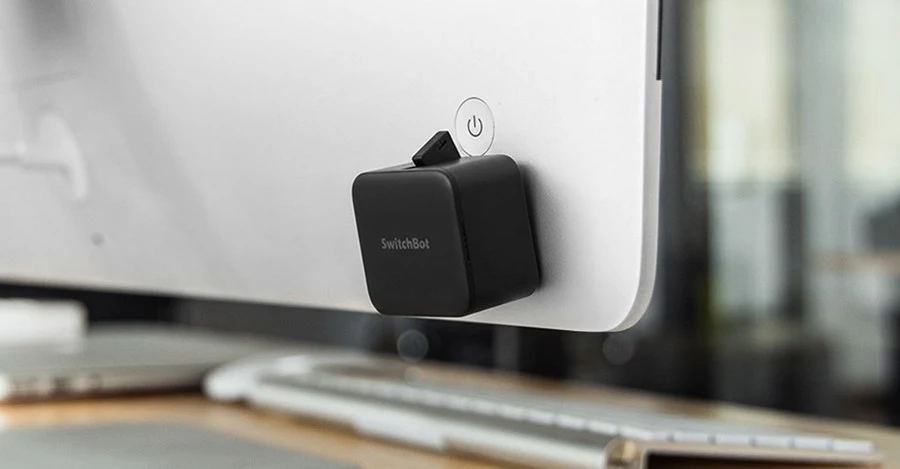
The Bot’s value proposition is deliberately pragmatic: it physically presses an existing button or rocker switch on command, triggered by a smartphone app or a schedule. That design choice matters because it reframes “smart home” from a renovation project into a low-friction add-on. Instead of asking households to swap out a coffee maker, air purifier, or light switch for a connected alternative, SwitchBot positions automation as a non-invasive overlay that extends the useful life of legacy devices.
This approach also broadens the addressable market. Many consumers are not avoiding smart homes because they dislike the idea—they avoid them because of complexity, compatibility anxiety, and perceived permanence. A motorized “finger” that can be removed in minutes lowers the psychological and technical barrier, making automation feel more like an accessory than infrastructure.
USB‑C rechargeability signals a sustainability and standards pivot—not just convenience
The most meaningful product shift in this campaign is not the discount; it’s the move from disposable batteries to a USB‑C rechargeable model with up to six months of light usage per charge. That change aligns SwitchBot with two converging forces shaping consumer electronics:
- Regulatory and ecosystem momentum toward USB‑C standardization, reducing cable clutter and improving cross-device compatibility
- Rising sensitivity to single-use battery waste, especially among eco-aware buyers and households that already manage multiple battery-dependent devices (remotes, sensors, toys, flashlights)
Rechargeability also subtly changes the economics of ownership. Disposable batteries create recurring friction—both cost and inconvenience—that can quietly degrade satisfaction over time. A rechargeable Bot shifts that burden into a predictable routine, and the six-month cadence (even if usage-dependent) is long enough to feel “set-and-forget” for many households.
SwitchBot is also keeping its legacy model in play: the original disposable-battery Bot at $22.99. From a market strategy standpoint, that dual offering is a classic segmentation move—capturing price-sensitive buyers while nudging sustainability-minded customers toward the rechargeable upgrade. Over time, the rechargeable version may become the default as USB‑C expectations harden across product categories.
Interoperability as strategy: hubs, voice assistants, and Matter as the long game
The promotion extends beyond the Bot itself into the ecosystem layers that determine whether a device becomes a novelty or a habit. The SwitchBot Hub Mini is discounted to $28.99, enabling voice control through Amazon Alexa, Google Assistant, and Siri. More strategically, SwitchBot is emphasizing Matter compatibility—but notably via upgraded hubs: the Hub Mini Matter ($59.99) or Hub 2 ($59.99).
This hub-mediated path to Matter reflects the current reality of the smart-home market: interoperability is improving, but it is not frictionless. Matter is designed to reduce fragmentation, yet many brands still rely on bridges and hubs to translate between device capabilities, legacy protocols, and platform expectations. For SwitchBot, that’s not merely a technical compromise—it’s a business lever.
A layered hardware stack creates a clear upgrade ladder:
- Entry point: Bot actuator under $30 (impulse-friendly, giftable)
- Ecosystem expansion: Hub Mini for voice control and remote access
- Future-proofing: Matter-enabled hubs for cross-platform interoperability and reduced lock-in risk
For consumers, Matter support can function as a trust signal: a hedge against buying into a dead-end ecosystem. For SwitchBot, it’s a way to remain relevant as platform power consolidates around standards-based control. The company’s positioning suggests it wants to be the “glue” between old-world appliances and new-world orchestration—especially as households mix Apple, Google, and Amazon devices under one roof.
Pricing, gifting, and ecosystem monetization: why this campaign is more than a holiday push
Mother’s Day promotions are often dismissed as short-term demand grabs. In smart home, they can be something more precise: customer acquisition with built-in upsell mechanics. A Bot is easy to gift because it’s small, inexpensive, and immediately demonstrable—press a button remotely, schedule a routine, feel the payoff. That first success is what drives the next purchase.
SwitchBot’s commercial logic is reinforced by the product’s natural expansion curve. Once a household automates one button, it tends to notice others:
- additional rooms or devices that could benefit from scheduled control
- the convenience of voice activation for hands-free routines
- the appeal of interoperability via Matter to avoid platform silos
This is where the company’s modular approach becomes a form of ecosystem lock-in—less through coercion, more through incremental utility. Each added component increases switching costs because routines, placements, and habits accumulate.
Looking ahead, the most under-discussed asset in mechanical actuation is data. Button-press events create a behavioral log—timing, frequency, exceptions—that could support smarter scheduling recommendations, energy-aware routines, or even maintenance nudges (“your dehumidifier has run unusually often this week”). Whether SwitchBot chooses to monetize that through subscriptions or keeps it as a retention feature will shape how it competes against both low-cost gadget makers and full-stack smart-home platforms.
What this campaign ultimately highlights is a broader market truth: the next wave of smart-home growth is likely to come less from futuristic appliances and more from practical retrofit automation, sustainability-forward hardware choices like USB‑C rechargeability, and a credible path through the interoperability maze via Matter. SwitchBot is betting that the simplest way to modernize a home is not to replace it—but to teach what’s already there a few new tricks.

 By
By
 By
By

 By
By
 By
By

 By
By
 By
By







