

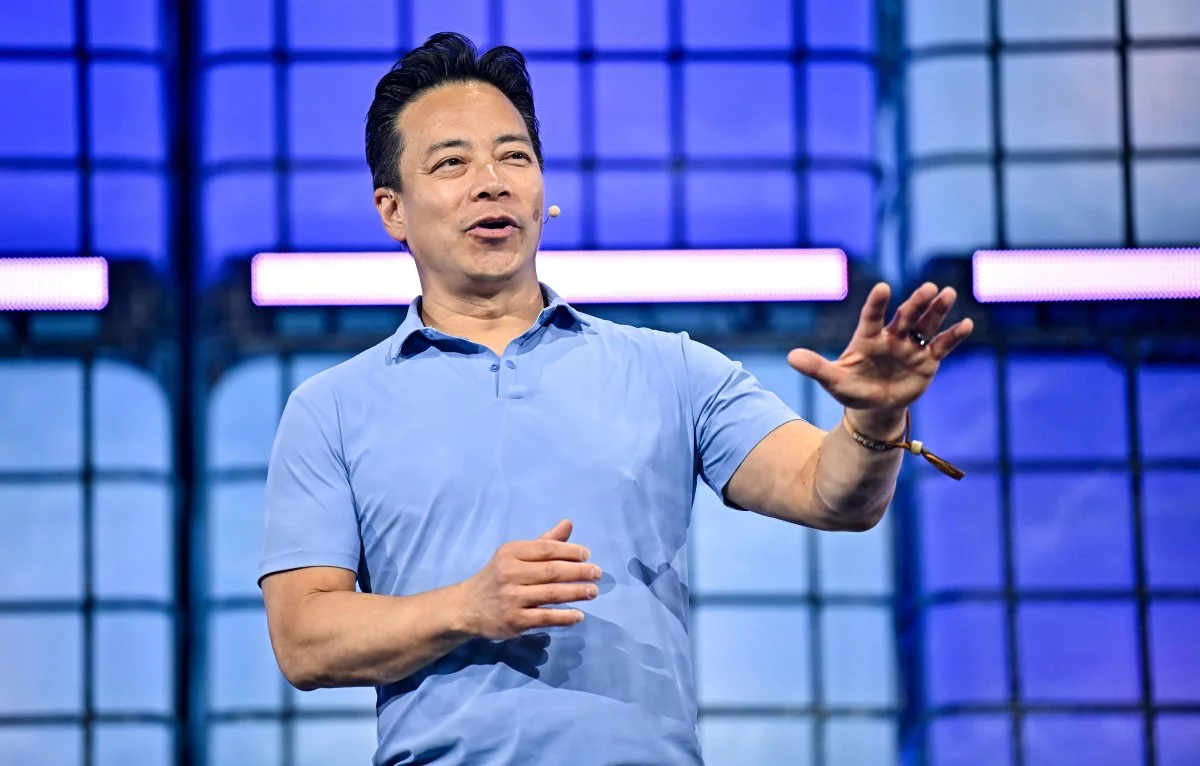

A mayor’s “11 AI agents” remark becomes a case study in public-sector AI credibility
Vancouver Mayor Ken Sim’s disclosure that he uses “11 AI agents” in his workflow landed with the force of a policy announcement—whether or not it was intended that way. The immediate public and political backlash was less about the number and more about what the statement implied: that official municipal responsibilities might be delegated to artificial intelligence, potentially without clear oversight, procurement controls, or public disclosure.
Sim’s subsequent clarification—that these tools were for personal productivity and not connected to city decision-making or sensitive data—helped narrow the scope of concern. Yet the episode illustrates a broader reality facing governments and enterprises alike: AI adoption is no longer judged solely on innovation, but on governance, transparency, and the ability of leaders to communicate boundaries with precision.
For a mayor, the reputational stakes are amplified. Municipal governance depends on public trust, auditability, and procedural fairness. Even the perception of “AI in the loop” without safeguards can trigger questions about accountability: Who is responsible for errors? What data was used? Were outputs reviewed? Were residents informed? In that context, a casual comment can quickly become a referendum on institutional readiness for AI.
Infrastructure ambition meets operational skepticism in Vancouver’s AI data center push
The timing matters. Sim’s remarks surfaced alongside the unveiling of two new AI-focused data centers for Vancouver—an investment that signals strategic intent: to position the city as a hub for AI-enabled services and digital infrastructure. On paper, AI-optimized data centers can support:
- Low-latency public services (traffic optimization, emergency response coordination, service request triage)
- Data sovereignty and privacy compliance, keeping sensitive workloads closer to home under Canadian regulatory expectations
- Regional innovation capacity, attracting startups, research institutions, and enterprise partners that need compute
But infrastructure is the easy part to announce—and often the hardest part to operationalize responsibly. Data centers do not automatically produce trustworthy AI outcomes; they produce compute capacity. The real differentiator becomes the governance layer: what models run, what data they touch, how outputs are validated, and how decisions remain explainable to residents, auditors, and courts.
This is where skepticism from frontline staff and the public tends to concentrate. Many organizations are discovering that AI tools can create a new class of operational work: monitoring, correcting, documenting, and defending machine-generated outputs. Without clear process design, the “AI transformation” can feel less like automation and more like a new compliance and quality-control burden.
The AI productivity paradox: why “more agents” can mean more work
The mayor’s “11 agents” framing also inadvertently spotlighted a growing enterprise pattern: tool proliferation. Multiple specialized AI agents can sound like a productivity dream—one for drafting, one for research, one for summarization, one for scheduling. In practice, it can introduce friction:
- Error propagation and subtle inaccuracies that require human verification
- Conflicting outputs across tools that must be reconciled
- Version control problems, especially when AI-generated text is iterated across teams
- Cognitive load, as users learn prompts, interfaces, and limitations for each agent
Research and surveys frequently show a gap between executive expectations and frontline experience. Leaders may forecast large productivity gains, while employees report modest net benefits once the time spent on oversight and correction is included. In public-sector environments—where documentation, accessibility, and procedural rigor are non-negotiable—those overheads can be even more pronounced.
There is also the economic dimension: AI’s total cost of ownership is rarely limited to subscription fees. It often includes:
- Training and change management
- Systems integration and data engineering
- Security hardening and privacy impact assessments
- Ongoing model monitoring (drift, bias, performance degradation)
- Procurement and vendor management, especially when tools touch regulated data
For municipalities managing post-pandemic fiscal constraints, these hidden costs can complicate ROI narratives—particularly if AI is framed as a near-term labor substitute rather than a long-term capability upgrade.
What this moment signals for AI governance, regulation, and civic trust
The Vancouver episode is less a one-off controversy than a preview of how AI debates will unfold in city halls and boardrooms: not around whether AI exists, but around whether it is controlled. Globally, regulatory momentum is moving toward transparency, human oversight, and risk-based controls. Municipalities that appear casual about AI usage may accelerate demands for:
- Human-in-the-loop requirements for consequential decisions
- Model registries documenting what systems are used, for what purpose, and with what data
- Audit mechanisms that can explain outcomes and measure error rates
- Procurement standards that prioritize interoperability and reduce platform lock-in
For Vancouver, the strategic opportunity remains real. AI data centers can become civic infrastructure that supports economic development and better services—if paired with governance that is as visible as the ribbon-cutting. The lesson from the “11 AI agents” moment is straightforward: in the public sector, credibility is a technology prerequisite. Cities can move fast, but they cannot afford to move ambiguously—because the first casualty of unclear AI adoption is not efficiency, it is trust.

 By
By
 By
By


 By
By
 By
By
 By
By
 By
By







