

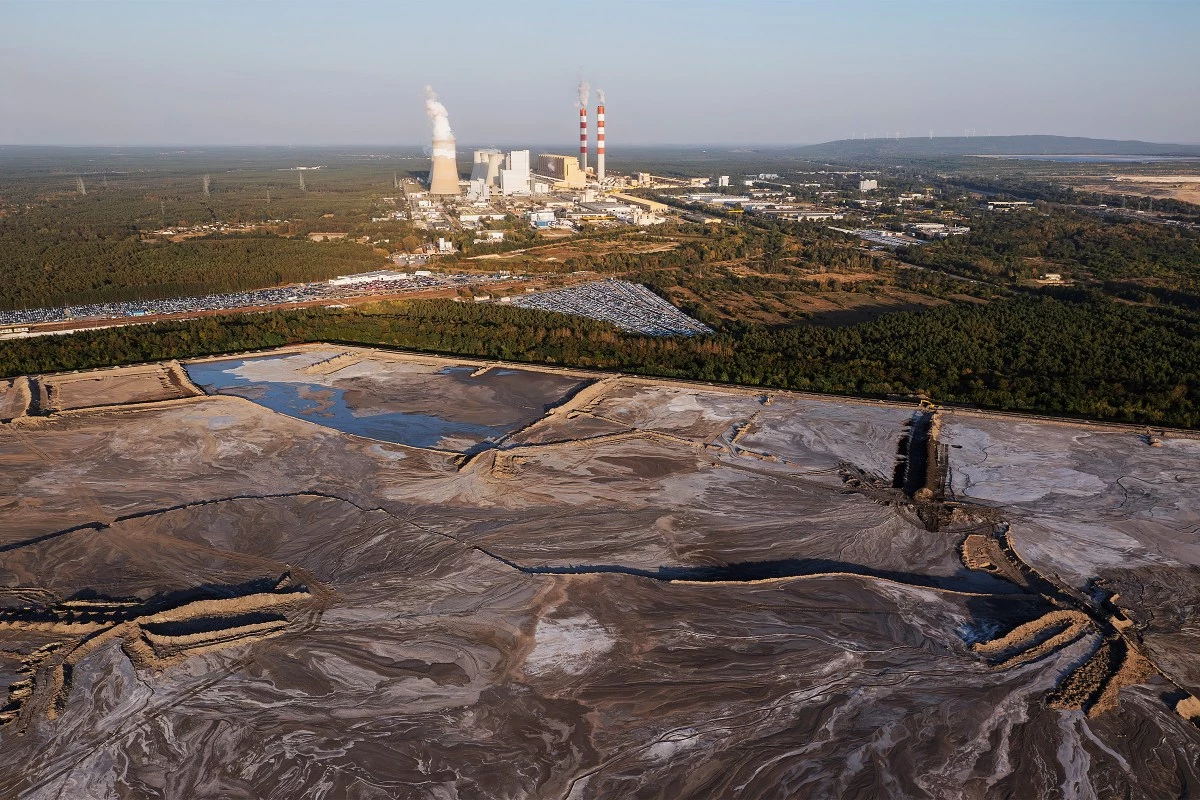

A pivotal shift in U.S. coal-ash oversight—and why it matters beyond environmental policy
The U.S. Environmental Protection Agency’s 2024 coal-ash rule was designed to tighten cleanup obligations and expand groundwater monitoring at coal-combustion residuals (CCR) disposal sites—an area of regulation shaped by high-profile spills, long-lived contamination concerns, and a decade of incremental federal standard-setting. The proposed rollback now under discussion, framed by EPA Administrator Lee Zeldin as a step to “restore American energy dominance,” would meaningfully re-balance authority away from Washington and toward state regulators.
At the center of the debate is not simply the pace of enforcement, but the architecture of accountability. Allowing states to issue exemptions, weakening federal oversight, and delaying cleanup triggers could reduce near-term compliance pressure on coal-plant operators and utilities. Critics argue that this approach risks undermining the core purpose of the CCR framework: preventing coal-ash constituents—often including arsenic, selenium, mercury, and other contaminants—from migrating into aquifers and surface waters.
For business leaders, the significance is structural. Coal ash is a legacy liability with long time horizons, and regulatory uncertainty can be as financially consequential as regulation itself. A looser federal baseline may reduce immediate costs for some operators, but it can also amplify downstream exposure—through litigation, reputational harm, and future policy whiplash when standards tighten again.
Technology and data: remediation innovation meets a fragmented compliance landscape
Coal-ash regulation has quietly functioned as an innovation catalyst for environmental engineering and monitoring. A rollback could change the incentives that determine which technologies get funded, deployed, and scaled.
When cleanup obligations are delayed or softened, the market signal for advanced remediation weakens—particularly for specialized providers and startups whose growth depends on mandated projects and predictable procurement cycles. Technologies that could see slower adoption include:
- In situ stabilization and solidification methods that immobilize contaminants in place
- Geosynthetic liners and engineered caps designed to reduce leachate migration
- Phytoremediation and hybrid biological approaches for long-term site recovery
- Advanced dewatering and closure systems for ash ponds
Even with reduced federal pressure, many operators—especially those with public-market scrutiny, municipal stakeholders, or sensitive water basins—may choose to maintain higher internal standards. That creates a different kind of demand: continuous measurement, defensible reporting, and early-warning systems. Providers of integrated monitoring platforms may find expanding opportunity in:
- IoT groundwater sensors and automated sampling networks
- Real-time telemetry and anomaly detection for contamination events
- Satellite and aerial imagery for surface change detection and site integrity
- AI-powered predictive analytics that forecast plume movement and risk hotspots
The deeper technological risk is data fragmentation. If states adopt divergent protocols for sampling frequency, reporting formats, and enforcement thresholds, the U.S. could lose comparability across jurisdictions. That complicates cross-state aquifer studies and makes it harder to build unified “digital twins” for watershed health—tools increasingly relevant to insurers, infrastructure planners, and ESG analysts. In a world where environmental risk is priced through data, inconsistent data standards can become a hidden cost of deregulation.
Capital markets, liability transfer, and the evolving economics of coal-ash risk
The proposed rollback also reshapes the financial logic of coal-ash management—particularly who bears the cost, when it is recognized, and how it is priced into capital.
Relaxed enforcement can shift cleanup burdens away from operators in the short term, but the underlying contamination risk persists. Critics warn that this dynamic effectively transfers costs toward:
- Local communities facing water-quality impacts
- Municipal budgets funding mitigation and monitoring
- Taxpayers absorbing long-tail remediation when responsible entities restructure, sell assets, or litigate
From a corporate finance perspective, this alters the risk profile of coal-heavy utilities and independent power producers. Even if regulatory costs decline temporarily, lenders and investors may still treat coal-ash exposure as a material contingent liability—especially given the possibility of future federal tightening or state-level litigation.
Sophisticated financial institutions increasingly embed environmental liabilities into underwriting. A diluted federal baseline may not lower financing costs; it may raise them if it increases uncertainty. Expect greater use of:
- Environmental covenants tied to monitoring, closure plans, and reserve funding
- Higher risk premiums for coal-dependent balance sheets
- More stringent insurance requirements or exclusions around legacy waste
A rollback can intensify scrutiny rather than reduce it. Institutional investors and NGOs may interpret state exemptions as evidence of governance weakness, using the gap as leverage in shareholder engagement and litigation strategies. Conversely, operators that voluntarily exceed minimum requirements can pursue a different narrative—turning compliance into competitive positioning through:
- Green bonds or sustainability-linked financing tied to closure milestones
- Third-party audits and transparent disclosure that reduce perceived tail risk
- Community engagement that strengthens the “social license to operate”
Strategic playbook for executives navigating regulatory whiplash and the energy transition
The rollback debate lands in the middle of a broader tug-of-war: legacy fossil assets versus accelerating decarbonization. For executives, the question is less about politics and more about portfolio resilience.
Several strategic responses stand out:
- Beyond-compliance operating models: Maintain robust groundwater monitoring, third-party verification, and public reporting even where exemptions are available—reducing litigation exposure and improving investor confidence.
- Modular remediation investments: Deploy scalable solutions now to lock in costs and build internal capability before the next regulatory tightening cycle.
- Asset transition planning: Use uncertainty as a catalyst to retire aging coal units, repurpose sites for energy storage, grid infrastructure, or industrial redevelopment, and retrain workforces accordingly.
- Partnership-based risk sharing: Co-fund pilots with municipalities, tribal authorities, and NGOs—particularly around ash reuse in cement and concrete, where feasible and safe—spreading capex and improving stakeholder alignment.
- Scenario planning at board level: Quantify EBITDA, capex, and liability impacts under three plausible paths—continued rollbacks, reinstatement of stricter standards, or an even tighter future regime—and align capital allocation to those scenarios.
The proposed EPA coal-ash rollback is ultimately a test of how U.S. industry manages legacy environmental risk in an era where data transparency, capital discipline, and public trust increasingly determine competitive advantage. Companies that treat coal-ash obligations as merely a compliance cost may win time; those that treat them as a balance-sheet and technology strategy may win the decade.

 By
By
 By
By
 By
By
 By
By











