

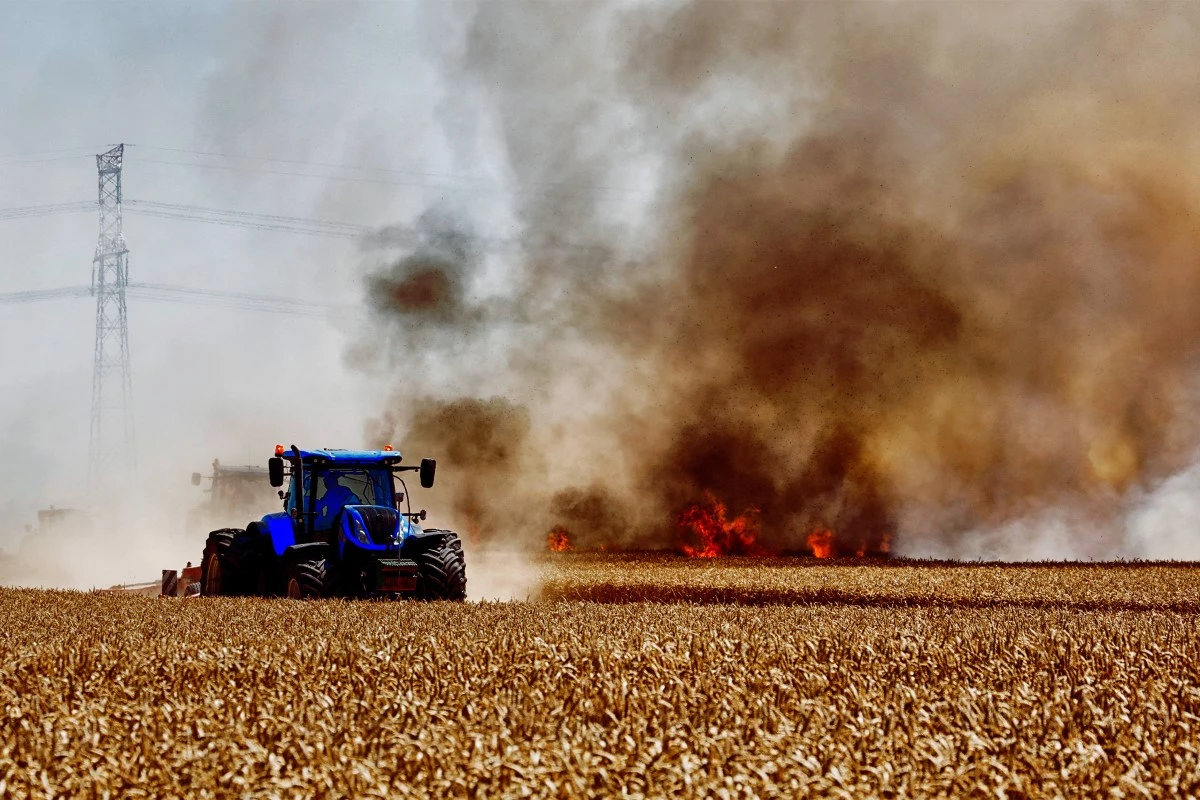

A once-in-a-century El Niño forecast becomes a boardroom variable, not just a meteorological headline
Forecasts pointing to a historically intense El Niño in late 2025 into 2026—with sea-surface temperature anomalies potentially exceeding +5.4 °F—reframe climate risk as an immediate business and policy concern. The signal is not merely that “weather will be volatile,” but that the global economy may face a synchronized shock across food systems, water availability, logistics, and insurance capacity.
The historical reference point often cited is the 1877 El Niño, associated with cascading droughts and crop failures that contributed to famine and mortality estimates of 50–60 million worldwide. The modern world is wealthier, more technologically capable, and better connected—yet also more interdependent. That interdependence is the defining vulnerability: today’s supply chains can transmit localized climate disruption into global price spikes, industrial downtime, and political stress with remarkable speed.
What makes this forecast especially consequential is the backdrop of record ocean warming and intensifying hydrological extremes. In practical terms, a powerful El Niño can amplify drought in some regions and flooding in others, creating a “dual shock” to agricultural output and transport infrastructure. For executives and policymakers, the question is no longer whether climate variability matters, but whether institutions can convert early scientific warning into operational resilience at scale.
Climate intelligence goes mainstream: AI forecasting, precision agriculture, and digital water management
A defining difference between 1877 and 2025 is the emergence of climate intelligence as a deployable capability. Advanced climate modeling increasingly blends physics-based simulations with machine learning that ingests real-time data from satellites, ocean buoys, and atmospheric sensors. The result is not perfect certainty, but materially improved lead time and geographic specificity—the currency that allows markets and governments to act before losses compound.
Several technology domains are positioned to shape outcomes if the forecast intensifies:
- AI-driven El Niño forecasting and early warning
Higher-resolution projections can inform procurement, planting decisions, reservoir management, and humanitarian pre-positioning. The strategic value rises when forecasts are integrated into enterprise systems rather than treated as external reports.
- Precision agriculture and IoT-enabled irrigation
Soil-moisture sensors, drones, and edge computing can support hyperlocal irrigation schedules, reducing water waste while stabilizing yields. This is where agritech startups increasingly intersect with incumbents in seed genetics, farm equipment, and fertilizer optimization.
- Digital water management as critical infrastructure
Water scarcity is no longer a peripheral ESG metric; it is an uptime risk. Utilities and industrial operators are adopting telemetry, leak detection, and predictive maintenance to protect supply in drought-prone basins.
- Supply-chain resilience tooling: blockchain traceability and risk analytics
Distributed ledgers can improve commodity provenance and inventory verification, while scenario-based stress testing helps firms identify fragile nodes—ports, rail hubs, cold chains—and reroute before disruption becomes systemic.
The common thread is that technology only reduces risk when paired with governance: data standards, interoperability, and incentives that encourage adoption beyond pilots. A fragmented ecosystem of dashboards does not prevent shortages; decision-grade integration does.
Markets under strain: food inflation, credit risk, and a tightening insurance cycle
A strong El Niño has a well-documented relationship with commodity price volatility, particularly in staples and climate-sensitive crops such as rice, maize, and coffee. In an era already marked by geopolitical fragmentation and uneven recovery dynamics, food inflation can become a macroeconomic accelerant—eroding real incomes and pressuring central banks, especially in import-dependent emerging markets.
Key economic transmission channels to watch include:
- Commodity shocks and inflationary spillovers
Price spikes can propagate into packaged foods, livestock feed, and consumer staples, reshaping demand and compressing margins for firms with limited pricing power.
- Sovereign and corporate credit deterioration
Agriculture-dependent economies may face fiscal stress from drought or flood damage, raising default probabilities and pressuring local banking systems. Credit-rating actions can amplify the cycle by increasing borrowing costs precisely when recovery spending is needed.
- Insurance and reinsurance hardening
With insured weather losses already elevated, a severe El Niño could tighten underwriting, raise premiums, and expand protection gaps. Parametric insurance—payouts triggered by measurable thresholds—may grow, but affordability and basis risk remain constraints.
- Trade policy and resource nationalism
Export restrictions on food and water-intensive commodities can emerge quickly under domestic pressure, reshaping trade flows and forcing importers to diversify suppliers—often at higher cost.
For corporate leaders, these are not abstract risks. They translate into procurement volatility, working-capital strain, contract disputes, and reputational exposure—particularly where food security and affordability become politically charged.
The strategic playbook: stress testing, resilience capital, and cross-sector coordination
If late 2025 brings an El Niño of unusual magnitude, it will function as a real-time audit of 21st-century preparedness. The organizations that perform best will treat the event as a scenario planning imperative, not a crisis communications exercise.
A pragmatic resilience agenda is already visible across leading firms and financial institutions:
- Embed extreme-weather scenarios into enterprise risk management
Boards are increasingly adopting war-gaming methods once reserved for geopolitics—quantifying impacts on supply, operations, labor availability, and demand.
- Mobilize capital for adaptation infrastructure
Public-private partnerships around water storage, flood control, micro-irrigation, and coastal defenses are emerging as both resilience necessities and investable assets. Financing structures—green bonds, catastrophe bonds, and blended finance—can accelerate deployment.
- Reclassify food security as a growth theme, not only a risk
Companies enabling drought- and flood-tolerant seeds, smallholder credit, last-mile cold chains, and logistics redundancy may increasingly be viewed as strategic climate-adaptive equities.
- Build climate-intelligence units that connect science to execution
The differentiator is not access to forecasts, but the ability to fuse climate data with internal supply-chain telemetry, procurement rules, and pricing strategy—turning warning into action.
The forecast of a potentially record-setting El Niño is ultimately a test of translation: whether scientific insight, private-sector innovation, and public governance can be converted into coordinated resilience before volatility becomes scarcity. In a tightly coupled global economy, preparedness is no longer a defensive posture—it is a competitive advantage with societal stakes.

 By
By
 By
By

 By
By
 By
By

 By
By
 By
By







