

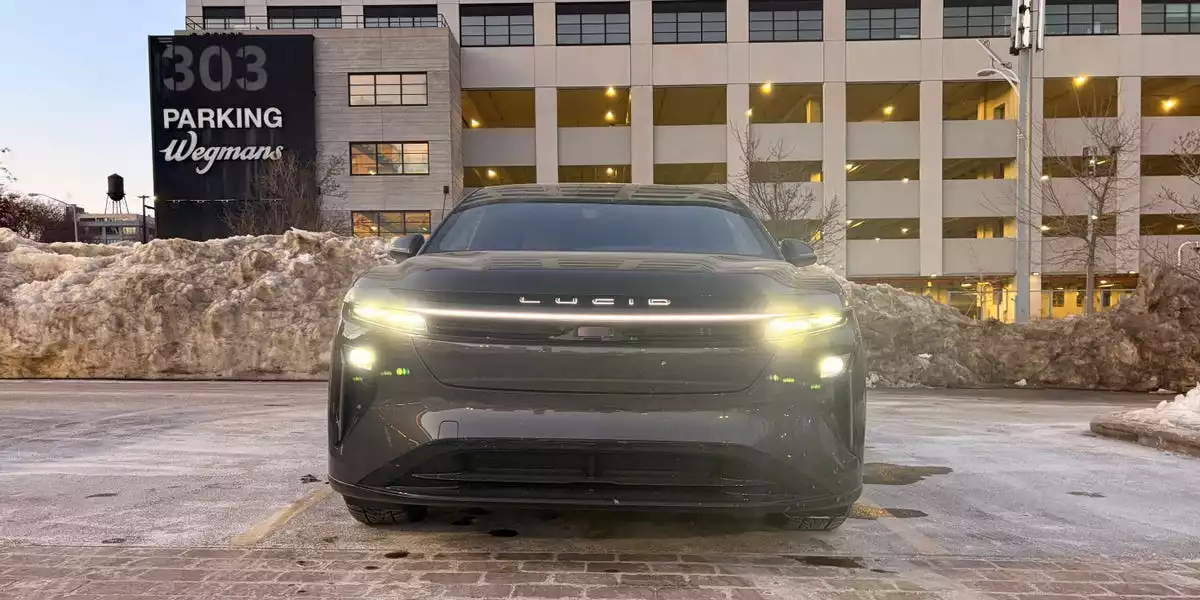

The Gravity Gambit: Lucid Motors’ High-Stakes Entry into the Luxury EV SUV Arena
Lucid Motors has chosen its moment with a gambler’s nerve. The unveiling of Gravity, its first SUV and second-ever vehicle, is not merely a product launch—it’s a declaration of intent in the most lucrative and fiercely contested segment of the American automotive landscape. The stakes are formidable: Gravity enters an SUV market that dominates over half of U.S. light-vehicle sales and commands the lion’s share of global EV profits, yet it does so at a time when the electric vehicle demand curve is flattening, capital is dear, and price wars rage across the sector.
Engineering Ambition Meets Market Realities
Gravity’s technical credentials are nothing short of audacious. Lucid’s engineers have endowed this SUV with:
- Supercar Acceleration: 0-60 mph in approximately three seconds, a feat that blurs the line between family hauler and performance icon.
- Endurance and Efficiency: An EPA-targeted range near 400 miles, underpinned by a cutting-edge 900-volt electrical architecture—among the highest in the industry.
- Rapid Recharging: The ability to recover 200 miles of range in just 15 minutes, addressing a perennial anxiety for long-distance EV drivers.
The interior, meanwhile, is a study in modern luxury: panoramic glass, sustainable materials, massaging seats, and a sweeping curved display. These touches are designed to elevate Lucid’s brand, signaling its aspirations to rival the likes of Mercedes, Tesla, and Cadillac at the upper echelons of the market.
Yet, beneath the surface, Gravity’s launch exposes the friction between technical ambition and executional reality. Early drive impressions praise the SUV’s dynamics and cabin quality, but also spotlight software glitches—quirks in key-fob pairing and user interface navigation that feel out of place at a six-figure price point. Lucid’s over-the-air update pipeline is a strategic asset, but in a world where Tesla has normalized seamless digital experiences, consumer patience for “beta” software is vanishingly thin.
Navigating the Squeeze: Pricing, Policy, and Positioning
Gravity’s pricing strategy is unapologetically premium: an entry MSRP around $80,000, with loaded trims surpassing $124,000. This places Lucid in direct competition with the Rivian R1S, Mercedes EQS SUV, Cadillac Escalade IQ, and the upper reaches of Tesla’s Model X. However, the timing is fraught. The market for high-priced EVs is cooling, interest rates are climbing, and Tesla’s aggressive price cuts have forced average selling prices down across the sector.
Key headwinds include:
- Tax Credit Exclusion: Gravity’s price and battery sourcing disqualify it from the U.S. federal EV tax credit, a disadvantage against sub-$80,000 rivals like the Kia EV9.
- Margin Compression: Lucid must justify its premium with tangible technology and brand cachet, or risk being squeezed by both mass-market and luxury competitors.
- Demand Elasticity: While luxury SUV buyers are less price-sensitive, economic uncertainty is lengthening purchase cycles—even among the affluent.
Lucid’s adoption of the Tesla NACS charging standard is a pragmatic move, mitigating range anxiety and broadening charging access. Still, it also dilutes the exclusivity of a proprietary network, nudging Lucid toward partnerships and potentially bundled luxury charging services to maintain its premium allure.
Strategic Crossroads: From Boutique Innovator to Volume Contender
Gravity is more than a vehicle; it’s a litmus test for Lucid’s evolution from niche disruptor to full-line automaker. The company’s expanded Casa Grande, Arizona facility is primed for higher-volume production, but the capital intensity remains daunting. Saudi Arabia’s Public Investment Fund, with its 60% stake, ensures near-term liquidity but introduces long-term governance and geopolitical complexities, especially for Western fleet customers.
For Lucid, the road ahead hinges on several critical vectors:
- Product Line Maturation: Gravity marks the pivot from single-product risk to portfolio leverage, enabling platform sharing and cost control.
- Brand Identity vs. Value Proposition: Lucid must articulate why its techno-luxury positioning merits a premium when competitors offer compelling alternatives at a fraction of the price.
- Global Rollout: Balancing U.S. ramp-up with planned Saudi production will test management’s ability to harmonize quality and brand standards across continents.
The Broader Signal: Gravity’s Role in the EV Ecosystem
Gravity’s launch reverberates beyond Lucid’s own ambitions. Suppliers of high-voltage components and sustainable materials will find new opportunities in its wake. Legacy automakers, eyeing Lucid’s drivetrain intellectual property, may contemplate strategic investments or technology licensing if market valuations soften. Meanwhile, rival premium EVs are likely to shift focus from raw acceleration to software sophistication, driver-assistance maturity, and price-performance sweet spots.
Should regulators tighten efficiency or weight-based taxation, Lucid’s energy-density advantage could become a tradable asset for compliance credits. For decision-makers in adjacent fields—from charging infrastructure to battery leasing—Gravity’s early sales will serve as a bellwether for the resilience of the high-end EV market.
In the final calculus, Gravity is not just a new SUV; it is a referendum on whether advanced technology and design can still command premium margins in an era of accelerating EV commoditization. The outcome will shape not only Lucid’s trajectory but the competitive dynamics of the luxury electric vehicle landscape.

 By
By
 By
By
 By
By

 By
By

 By
By
 By
By







