

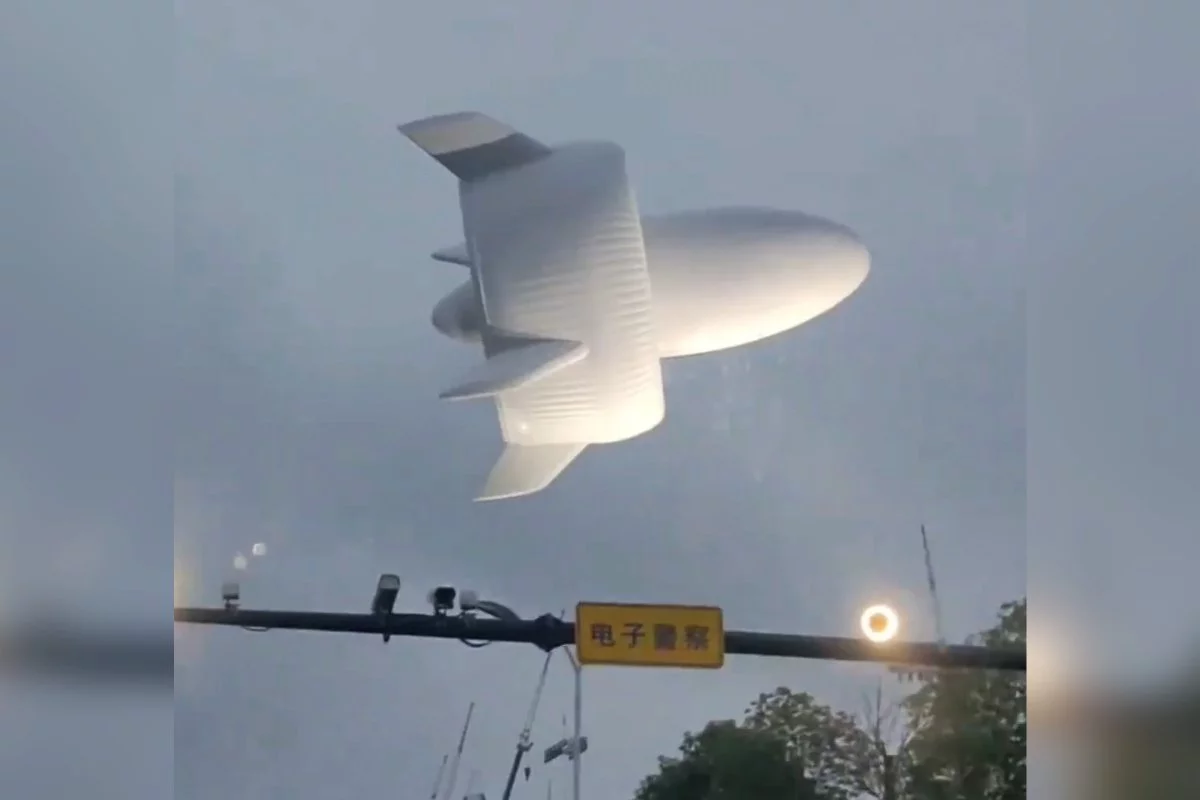

Urban Skies Transformed: The Advent of Megawatt-Scale Airborne Wind Power
In a world where urban density and the relentless pursuit of decarbonization increasingly collide, the recent flight of the SAWES S2000 airborne wind turbine marks a pivotal moment for renewable energy. Developed by Linyi Yunchuan in collaboration with Tsinghua University and the Chinese Academy of Sciences, this megawatt-class, grid-connected platform is not just a feat of engineering—it’s a harbinger of how cities might soon harvest the wind above their skylines.
The S2000’s maiden voyage reached an altitude of 6,500 feet, delivering 385 kWh in a mere half hour and demonstrating a robust 3 MW nameplate capacity. Twelve lightweight turbines, suspended beneath an inflatable aerostat hull, form the heart of this airborne system. The entire installation, remarkably, is containerized and can be deployed within five hours—a logistical revolution for a sector where wind farms traditionally require years of planning and construction.
High-Altitude Innovation: Engineering Beyond the Tower
The technological leap embodied by the SAWES S2000 lies in its ability to transcend the physical and regulatory constraints that have long defined terrestrial wind power. By ascending to the 1.5–3 km atmospheric layer, the platform captures steadier, faster winds—8 to 12 meters per second—pushing capacity factors beyond the 25–35% typical of onshore turbines and into the 45%+ territory usually reserved for offshore installations.
Key technical breakthroughs include:
- Aerostat–Power Electronics Convergence: The fusion of lighter-than-air composites, advanced tether conductors, and compact generators eliminates the need for massive towers and heavy nacelles. This not only slashes material costs but also sidesteps the logistical headaches of transporting and erecting traditional turbines.
- Rapid, Modular Deployment: Packaged in standard shipping containers, the S2000 can be deployed in hours, not months, enabling “pop-up” power plants for peak demand, disaster recovery, or remote industrial sites.
- Grid-Ready Performance: The platform’s real-time grid interconnection demonstrates that airborne wind has matured past its experimental roots, now offering utility-grade reactive power control and harmonic compliance.
Yet, the helium required to keep each 3 MW unit aloft—some 20–25 thousand cubic meters—introduces a new supply chain challenge. With global helium markets notoriously volatile, the economics of airborne wind will depend on secure sourcing and efficient recycling, echoing China’s strategic maneuvers in rare earths and polysilicon.
Economic and Geopolitical Ripples: AWTs in the Global Energy Chessboard
The SAWES S2000 arrives as China’s CO₂ emissions are already on a downward trajectory, thanks to record solar and offshore wind additions. But airborne wind turbines (AWTs) promise to push this trend further, especially in urban and peri-urban environments where land is scarce and rooftop solar is nearing saturation.
Economic Disruption:
- Competitive Cost Curve: Early estimates place the levelized cost of energy (LCOE) at $0.06–0.09/kWh, rivaling mid-offshore wind—provided helium logistics can be tamed.
- Land-Use Arbitrage: By floating above the city, AWTs bypass land acquisition and permitting hurdles, unlocking “vertical brownfield” potential for megacities.
- Investment Magnet: The success of the S2000 prototype strengthens the case for a new asset class blending infrastructure stability with aerospace innovation, likely attracting specialized green-tech funds and state-backed capital.
Strategic Leverage:
- Energy Security: High-altitude generation diversifies renewable portfolios, providing a hedge for regions like Sichuan, where hydropower is vulnerable to seasonal drought.
- Soft Power Play: By pioneering airborne wind standards and integrating domestic helium extraction, China positions itself as a rule-setter in both technology and resource governance—an echo of its dominance in solar and battery supply chains.
Non-Obvious Synergies and the Competitive Horizon
The implications of airborne wind extend far beyond electricity generation. High-altitude platforms offer line-of-sight microwave backhaul, making them attractive for data center co-location and edge computing. Excess power during off-peak hours can feed electrolyzers, producing green hydrogen for industrial clusters. Meanwhile, the unique risks of tether failure and envelope puncture will spur innovation in insurance and risk modeling.
For traditional wind OEMs, the rise of AWTs presents a stark choice: adapt, acquire, or risk obsolescence. The sector’s history—where early skepticism toward offshore wind led to lost market share—serves as a cautionary tale.
As commercialization accelerates, with pre-series deployments expected by 2025–26, a new ecosystem of composite manufacturers, tether suppliers, and helium recyclers will emerge. Regulatory frameworks—spanning aviation, energy, and cybersecurity—are still nascent, offering early movers the chance to shape global standards and cost structures.
The SAWES S2000 is not merely a technical marvel; it signals a profound shift in how cities, investors, and nations might reimagine the very air above us as a canvas for sustainable growth. For those attuned to the interplay of technology, logistics, and policy, the sky is no longer the limit—it’s the next frontier.

 By
By
 By
By


 By
By

 By
By
 By
By







