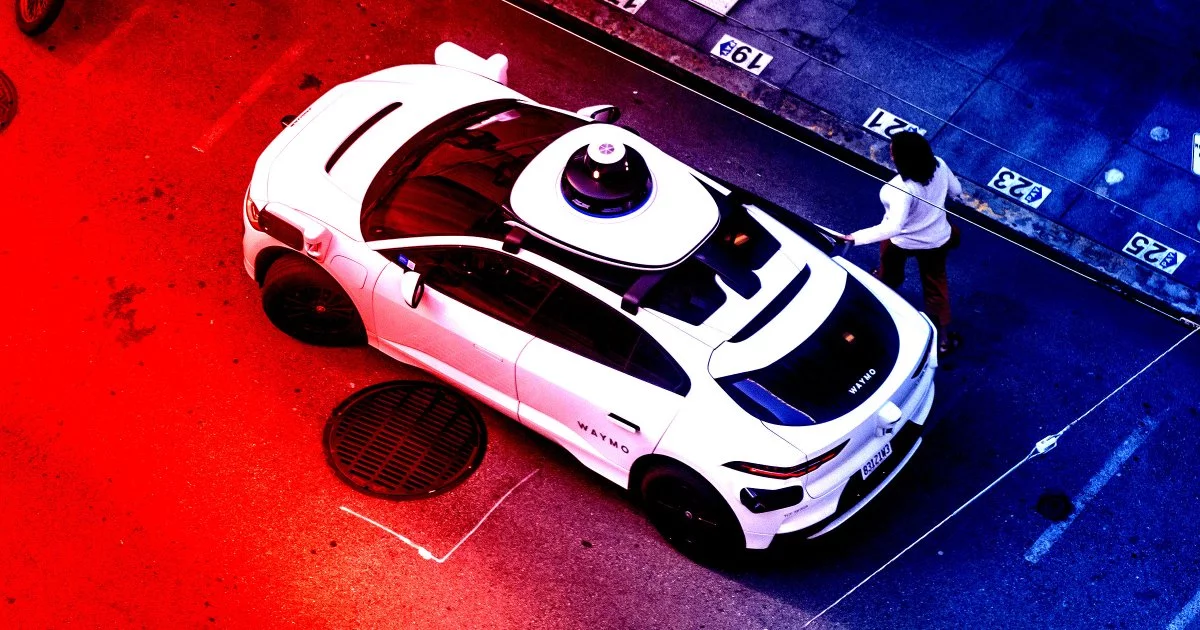

A Trunk Stowaway in Los Angeles: Autonomous Vehicles Confront Their Physical Security Frontier
When a Waymo autonomous taxi in Los Angeles was discovered ferrying an unauthorized individual hidden in its trunk, the incident quickly transcended the realm of urban oddity. Captured on video and escalating to police involvement, the episode has become a crucible for the autonomous vehicle (AV) industry’s most persistent anxieties: the interplay between technological promise and the stubborn unpredictability of the physical world. In a sector obsessed with software validation and collision statistics, this breach exposes a raw nerve—one where the boundaries between cyber and physical security blur, and where the stakes for trust, regulation, and market momentum are nothing short of existential.
—
The Blind Spots of Machine Perception: Where Algorithms End and Reality Begins
The AV industry’s technological narrative has, until now, been dominated by the relentless march of external perception—LiDAR arrays, radar, and multi-spectral cameras parsing the chaos of city streets. Yet, as the Los Angeles incident reveals, the sophistication of outward-facing sensors is not mirrored by the systems monitoring the vehicle’s own interior and cargo spaces. Most current AV stacks treat the cabin as a solved problem, relying on rudimentary weight sensors or post-ride lost-and-found checks that fail to detect a human stowaway in the trunk. This gap is not merely technical—it is conceptual, highlighting a misalignment between policy design and actual threat surfaces.
- Sensor and Algorithmic Gaps: The absence of comprehensive, volumetric occupancy detection—especially in non-passenger compartments—creates a seam in the safety envelope, one that is easily exploited and difficult to monitor.
- Cyber-Physical Security Risks: As over-the-air updates become the norm, the rush to patch such vulnerabilities risks introducing new attack vectors unless threat modeling expands to encompass both software and hardware domains.
- Human-Machine Interface Lags: The delay experienced by the passenger in reaching Waymo support underscores the need for AVs to adopt robust, real-time exception management. Panic buttons and live monitoring—standard in elevators and ATMs—are conspicuously absent in many autonomous fleets.
These technical and operational blind spots are not isolated; they reverberate through the entire AV value chain, from regulatory compliance to fleet insurance and public perception.
—
Economic and Regulatory Aftershocks: Trust, Liability, and the New Rules of the Road
Trust, in the autonomous era, is not a soft metric—it is a balance-sheet asset. For giants like Waymo’s parent company Alphabet, the brand can absorb episodic shocks. But for the constellation of smaller AV startups, each incident is a potential death knell, threatening to spike insurance premiums and unsettle already fragile investor confidence. Insurers, eyeing the specter of physical breaches, may soon demand new forms of coverage akin to maritime hull insurance, while regulators—emboldened by public scrutiny—could broaden audit requirements to include holistic intrusion detection.
- Liability and Insurance: Negligence claims stemming from foreseeable trunk intrusions could raise deductibles and slow deployment, undermining the economics of high-utilization, thin-margin robotaxi models.
- Investor Sentiment: With public-market enthusiasm for autonomy already dampened by macroeconomic headwinds, any event that lengthens the perceived road to profitability will compress valuations—not just for AV operators, but for the entire ecosystem of suppliers and technology partners.
- Policy Evolution: Regulatory bodies may soon move beyond software-centric standards (ISO 26262, ISO 21434) to mandate physical intrusion detection, mirroring the rapid adoption of cockpit-door security in aviation post-9/11. Municipal authorities could require end-to-end custody documentation, fundamentally altering operational models.
The incident thus acts as a catalyst, accelerating the convergence of functional safety and operational security, and forcing a reckoning with the messy realities of urban mobility.
—
Strategic Pathways: From Crisis to Competitive Advantage
The Los Angeles trunk episode is more than a cautionary tale—it is a blueprint for the next phase of AV evolution. Forward-thinking organizations will treat this as a stress test, prompting a re-engineering of both technology and process.
- Full-Volume Sensing: Integrating advanced radar or mm-wave imaging for comprehensive occupancy detection—including trunks and under-seat spaces—will become table stakes.
- Incident Command Infrastructure: Establishing security operations centers that blend fleet management, law enforcement, and behavioral expertise can compress detection-to-response times, restoring passenger confidence.
- Insurance Innovation: Parametric policies tied to sensor uptime and validated safety metrics can buffer against episodic shocks, while risk pools and consortiums may stabilize premiums amid regulatory flux.
- Urban Mobility Hubs: If onboarding shifts to supervised, access-controlled environments, real estate developers and mobility operators alike will need to rethink the economics and logistics of citywide AV deployment.
- Holistic Communication: Transparent, timely reporting—and visible design changes—are essential to rebuilding trust. Marketing must evolve from touting statistical safety to emphasizing personal security and control.
The lesson is clear: psychological safety often trumps actuarial data. Incidents that violate personal boundaries—no matter how rare—command an outsized influence on public sentiment and regulatory action.
—
The trunk stowaway in Los Angeles is not an outlier; it is a mirror held up to the autonomous vehicle industry’s unfinished business. As AVs edge closer to mainstream adoption, the sector must confront the full spectrum of security—physical, digital, and psychological. Those who rise to the challenge, forging new alliances across technology, insurance, and urban infrastructure, will define the future of mobility—not just for their brands, but for the cities and societies they serve.

 By
By
 By
By
 By
By
 By
By

 By
By
 By
By
 By
By