
Lunar Regolith as Power Storage: Engineering the Moon’s Next Frontier
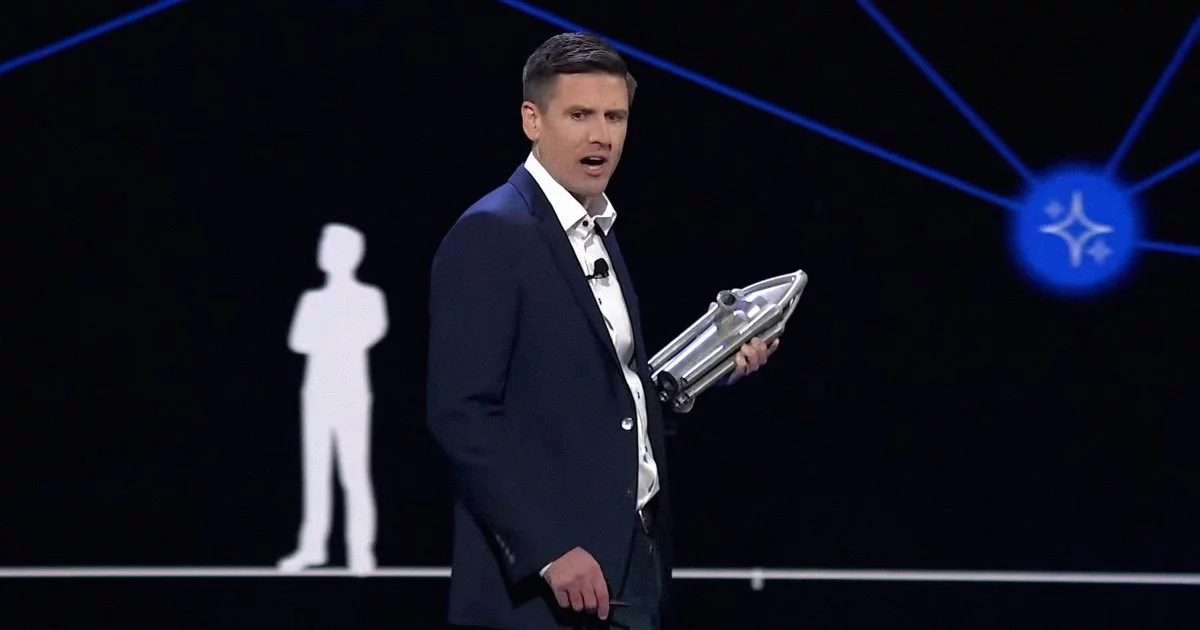
In the ever-evolving theater of lunar exploration, the unveiling of TEAREX—a collaborative initiative between Blue Origin and Istari Digital—marks a bold foray into the uncharted territory of lunar thermal energy storage. Announced to a captivated audience at AWS re:Invent 2025, TEAREX proposes to transform the Moon’s ubiquitous regolith into a thermal “battery,” capable of powering habitats and rovers through the long, sunless lunar night. Yet, beneath the surface of this futuristic vision, a deeper narrative unfolds: one where generative AI, modular design, and shifting economic incentives intersect to redefine the very fabric of space infrastructure.
The Physics and Pitfalls of Lunar Thermal Storage
At first glance, the idea of using lunar regolith—a material notorious for its abrasive dust and poor thermal conductivity—as a medium for energy storage seems counterintuitive. The TEAREX concept hinges on a closed-loop system: regolith is superheated well above 500°C, storing thermal energy that can be tapped during the Moon’s two-week night. This approach requires a suite of formidable technologies, including:
- High-efficiency heat-transfer fluids (potentially liquid metals like NaK) that must operate reliably across extreme temperature swings and resist regolith abrasion.
- Vacuum-optimized radiative heat rejection systems to minimize energy loss in the airless lunar environment.
- Ruggedized pumps and seals capable of surviving both the mechanical brutality of lunar dust and the relentless cycling of thermal loads.
None of these subsystems, as of yet, have been demonstrated at the scale necessary to power lunar habitats or mobile platforms. The absence of concrete performance data—thermodynamic efficiency, mass budget, or readiness for flight—casts a shadow of skepticism over near-term feasibility. However, the technical audacity of TEAREX is precisely what makes it a bellwether for the next phase of lunar engineering.
AI-Native Engineering: Compressing the Innovation Cycle
While the thermodynamics of TEAREX remain to be validated, the project’s most disruptive element may be its process rather than its product. Blue Origin and Istari Digital assert that their use of generative-AI engineering tools has slashed hardware design cycles by an astonishing 75%. This is not merely incremental improvement—it is a paradigm shift.
- Multi-agent AI workflows now orchestrate the design-manufacture-test loop, echoing the digital-first strategies seen in Lockheed Martin’s “factory of the future” and SpaceX’s rapid Starship iterations.
- Platform integration with AWS positions Amazon’s cloud and AI stack as the de facto operating system for space hardware design, foreshadowing a future where data-centric, software-driven engineering eclipses traditional hardware-centric approaches.
For decision-makers, this signals an urgent mandate: firms without a robust, AI-native design pipeline risk falling irretrievably behind. The velocity of innovation is no longer set by hardware constraints, but by the sophistication of digital toolchains—an insight that will reverberate across aerospace, defense, and beyond.
Strategic and Economic Ripples Across the Cis-Lunar Economy
TEAREX’s implications extend far beyond the technical. The lunar power ecosystem—currently dominated by solar, fission, and fuel cell modalities—stands to be fundamentally reshaped if regolith-based thermal storage proves viable. For NASA’s Artemis program and its commercial partners, the allure is clear:
- Reduced mass and complexity compared to kilo-class fission reactors or cryogenic fuel cells.
- Modular, dual-use architectures that dovetail with in-situ resource utilization (ISRU) roadmaps, enabling shared infrastructure for power, construction, and oxygen extraction.
- Strategic autonomy from imported nuclear hardware, lowering both capital expenditure and regulatory risk for private operators.
The defense sector, too, is watching closely. The prospect of resilient, distributed power nodes on the lunar surface aligns with emerging doctrines for cislunar logistics and surveillance—an area where former Air Force acquisition leaders, such as Istari’s CEO, bring invaluable perspective.
Yet, this rapid digital acceleration also exposes regulatory and security gaps. If AI agents generate the majority of flight hardware IP, questions of ITAR compliance, cybersecurity, and design verification loom large—issues that current export-control frameworks are ill-equipped to address.
The Next Decade: Power, Policy, and Platform Convergence
TEAREX is less a finished product than a harbinger of converging macro trends: the AI-accelerated reinvention of engineering, the commercialization of lunar infrastructure, and the militarization of cislunar space. For investors and policymakers, the message is unmistakable:
- Demand early, rigorous demonstrations—not just renderings or AI-generated blueprints, but kilowatt-scale prototypes with documented performance in lunar analog conditions.
- Treat AI toolchains as strategic infrastructure—the competitive gap will widen with each design cycle.
- Structure lunar power architectures for modularity—hybrid ecosystems that can flexibly incorporate or shed new technologies.
- Engage proactively in standards-setting—those who shape the rules will shape the market.
- Monitor adjacent supply chains—from excavation robotics to high-temperature alloys, secondary markets may yield the most outsized returns.
The TEAREX announcement is a stake in the ground, signaling that the future of lunar power—and by extension, the future of industrial growth both on and off Earth—will be written by those who master the interplay of digital intelligence, physical engineering, and strategic vision. The Moon’s night may be long, but the race to illuminate it has only just begun.

 By
By
 By
By
 By
By

 By
By
 By
By
 By
By
 By
By