


Gamepad to Battlefield: The Merops Interceptor and the Unfolding Revolution in Air Defense
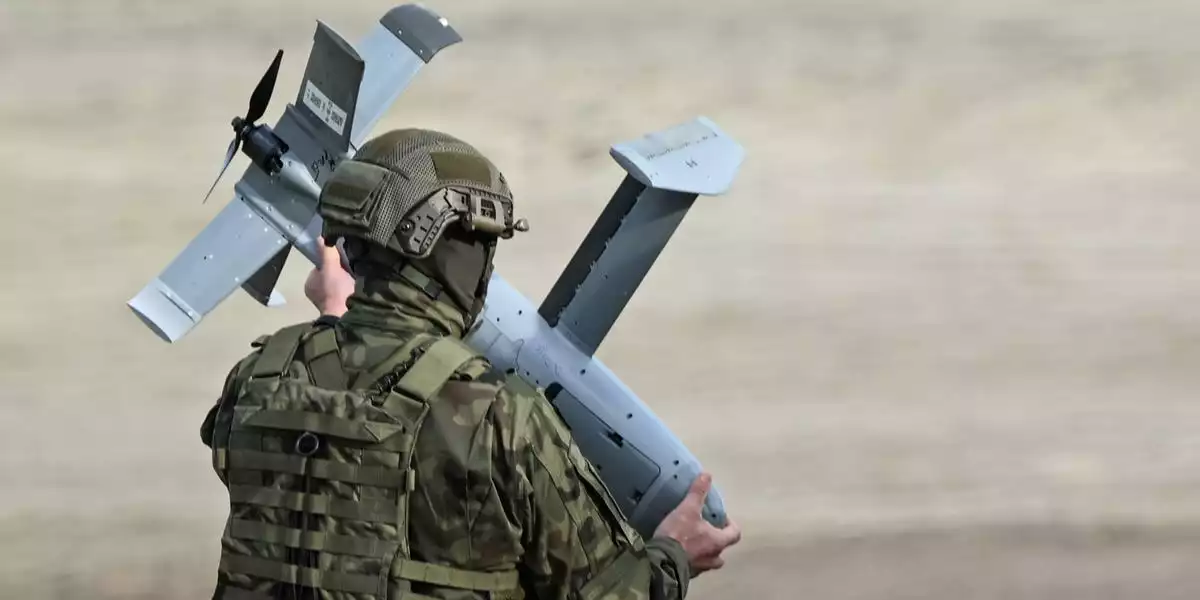
In the shadowed skies over Ukraine, a quiet revolution is underway—one that is less about the roar of engines and more about the subtle click of a familiar button. The Merops interceptor drone system, a $15,000 marvel behind over a thousand Shahed-class kills, is now being woven into the training regimens of U.S., Polish, and Romanian forces. Its adoption signals not just a tactical upgrade, but a tectonic shift in how modern militaries conceptualize, procure, and deploy air-defense capabilities along NATO’s eastern frontier.
Consumer Hardware, Military Doctrine: The Xbox Controller as Force Multiplier
The image is as jarring as it is telling: soldiers hunched over ruggedized Xbox controllers, not in a living room, but in a command tent on the edge of a contested border. This is not a gimmick. The controller—a product of the $200 billion gaming industry’s relentless pursuit of ergonomic perfection—now serves as the interface between human intent and lethal autonomy.
- COTS (Commercial Off-The-Shelf) Ergonomics: Years of human-computer interaction research, distilled into a device designed for teenagers, are now accelerating military training cycles. Four-person crews reach operational proficiency in mere weeks, not months.
- Plug-and-Play Integration: Standardized USB and Bluetooth protocols mean that hardware obsolescence is less a logistical nightmare and more a matter of a firmware push—updates that can be delivered as seamlessly as the latest game patch.
- Modular, Software-Defined Warfare: The Merops architecture decouples guidance logic from its airframe. This modularity, reminiscent of an “app store” model, allows AI targeting and electronic warfare countermeasures to be field-upgraded without the bureaucratic drag of recertification.
Each engagement, each intercepted drone, generates a stream of telemetry—data that, when aggregated across NATO, forms a living, crowdsourced threat-intelligence graph. This data exhaust is not just a byproduct; it is a strategic asset, feeding machine learning models that promise to make future interceptions faster, smarter, and more autonomous.
Economics of Disruption: Cost, Supply Chains, and Talent in a New Defense Era
The Merops system is not just a technological leap; it is an economic provocation. At $15,000 per round, it undercuts legacy interceptors by two orders of magnitude, fundamentally altering the offense-defense calculus that has, since 2014, favored the attacker.
- Cost Curve Inversion: The affordability of Merops makes the mass deployment of cheap enemy drones economically unsustainable, restoring balance to the battlefield.
- Procurement Agility: By shifting procurement from defense primes to mixed commercial supply chains, the system forces traditional contractors to innovate—whether through sovereign IP, ruggedization, or secure firmware. Secondary markets for hardened gaming peripherals are already emerging, echoing the rise of mil-spec smartphone cases.
- Talent Arbitrage: Shorter training cycles mean operational readiness is achieved faster, a crucial advantage as NATO nations grapple with demographic headwinds. The gaming-native Gen Z recruit, already fluent in controller-based interfaces, arrives “pre-trained,” reducing the total cost of ownership for human capital.
Strategic Ripples: From NATO’s Eastern Flank to the Global Defense Marketplace
The rapid adoption of Merops by Poland and Romania is more than a procurement decision; it is a strategic signal. NATO’s air-defense envelope is no longer static, no longer tethered to the slow churn of fixed batteries. Instead, it is elastic, mobile, and capable of surging where needed most—complicating adversary targeting and accelerating deterrence.
- Iterative Deterrence: The West’s ability to upgrade counter-UAS (Unmanned Aerial Systems) capabilities on commercial timelines stands in stark contrast to Russia’s reliance on aging doctrine and Iran-supplied drones. China, too, will be watching—studying how inexpensive, software-centric systems can erode the value of massed drone salvos.
- Distributed Resilience: As Merops production leans on U.S. hardware ecosystems, the prospect of European co-manufacturing lines looms—both as a hedge against geopolitical risk and as a nod to EU defense-industrial ambitions.
The ripples extend beyond defense. Gaming and e-sports platforms may find themselves unlikely partners in training simulators, while cloud and edge-compute providers near conflict zones will see new demand for low-latency inference. Even cybersecurity firms must prepare for a new class of exploits targeting consumer controllers now repurposed for kinetic effect.
The Next Competitive Frontier: Where Ergonomics Meet Autonomy
The Merops system, with its Xbox-driven interface, is more than a footnote in the annals of military procurement. It is a harbinger of a new paradigm—one where defense value migrates from bespoke hardware to commodity interfaces and adaptive software. Organizations that can fuse consumer-grade ergonomics with rapid, data-driven iteration will not only shape the future of military conflict but redefine the boundaries of adjacent commercial sectors. As the lines blur between gaming and warfighting, the controller in a soldier’s hand becomes both a symbol and a tool of a new era—one where agility, affordability, and autonomy are the ultimate force multipliers.

 By
By


 By
By
 By
By
 By
By
 By
By
 By
By



 By
By
 By
By







