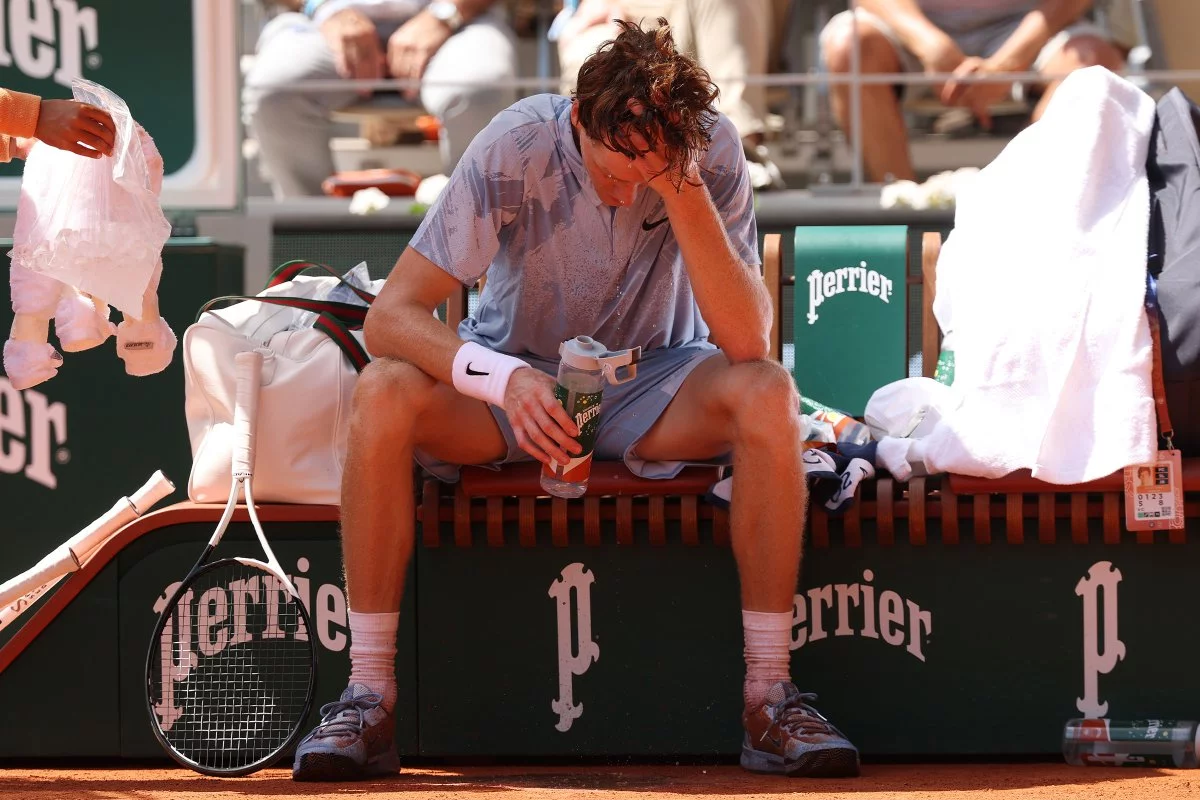

A springtime Grand Slam meets a midsummer climate reality
The French Open has long traded on a particular promise: Paris in late May and early June, temperate and playable, a stage where endurance is tested by rallies and nerves—not by air that feels like July. That brand expectation is now colliding with a new operating environment. In 2025, a record-setting European heat wave pushed daytime highs into the low 90s Fahrenheit, turning Roland-Garros into a case study in how climate volatility is reshaping elite sport in real time.
The immediate human impact has been difficult to ignore. Reports of disorientation, medical timeouts, and on-court collapses—including incidents involving high-profile competitors such as Casper Ruud and Jakub Menšík—have reframed the tournament’s narrative from pure competition to risk management under heat stress. For fans, the experience shifts as well: queues, sun exposure, hydration access, and the simple act of sitting through a five-set match become materially different when a “spring Slam” behaves like a summer one.
Meteorologically, the proximate driver is a persistent heat dome, a pattern that traps hot air and suppresses cooling. Strategically, however, the deeper signal is broader: climate change is compressing the margin for error in outdoor events. What was once an occasional anomaly is becoming a planning assumption—one that affects governance, technology investment, insurance, and the commercial architecture of global sports.
Heat stress as a technology roadmap for modern tennis operations
Extreme heat is not merely a welfare issue; it is a systems problem that exposes gaps in how tournaments sense, decide, and respond. The 2025 French Open highlights a near-term technology agenda where thermal safety becomes measurable, actionable, and auditable.
Key innovation vectors are emerging:
- Advanced thermal management on court and in apparel
Cooling is moving beyond towels and ice packs toward engineered solutions: phase-change materials in clothing, smarter shade structures, and misting or evaporative cooling systems designed to reduce radiant heat load without compromising play. The commercial opportunity is significant—tournaments can become reference customers for scalable cooling infrastructure.
- Wearable bio-monitoring as a safety and performance layer
Real-time signals—heart rate variability, skin temperature, hydration proxies, and core-temperature estimation—can shift medical response from reactive to proactive. For athletes, this data can inform pacing and recovery; for organizers, it can support consistent application of heat rules. The governance challenge will be ensuring privacy, data ownership, and competitive fairness.
- AI-assisted scheduling and court allocation
Heat risk is predictable enough to manage if decision-making is dynamic. Integrating meteorological analytics with match scheduling can reduce exposure during peak heat while protecting broadcast commitments. This is where AI becomes operational rather than experimental: optimizing start times, court assignments, and even warm-up windows based on forecasted heat index and solar load.
- Broadcast innovation that turns conditions into context
Extreme weather can degrade the product—or it can be explained. Augmented overlays that show court temperature, humidity, and heat protocols can improve transparency and trust. Done well, it also creates a new storytelling layer: how athletes adapt, how rules protect them, and how the venue performs under stress.
Collectively, these technologies point to a future where tournaments behave more like smart facilities—instrumented environments that continuously monitor risk and adjust operations with traceable rationale.
The business calculus: insurance, sponsorship, and capital expenditure under climate pressure
As heat incidents become more visible, the economics of hosting a major tournament change. The French Open’s 2025 conditions underscore that climate volatility is now a balance-sheet issue as much as a sporting one.
Several business implications stand out:
- Insurance and liability risk are likely to reprice
More medical incidents and higher disruption probability can drive higher premiums and tighter policy terms. Organizers may face new requirements: documented heat protocols, staffing thresholds, and infrastructure standards. Risk modeling will increasingly treat extreme heat as a recurring peril, not a remote contingency.
- Sponsorship alignment will tilt toward visible ESG credibility
Sponsors—especially those with public sustainability commitments—will expect tournaments to demonstrate water stewardship, energy efficiency, and credible emissions strategies. The reputational risk of appearing indifferent to athlete welfare or environmental realities is rising. Conversely, proactive adaptation can strengthen brand partnerships and open new categories, including climate-tech and smart infrastructure sponsors.
- Infrastructure upgrades become both cost center and revenue platform
Investments such as retractable roofs, high-efficiency HVAC for indoor zones, upgraded hydration and medical stations, and sustainable water systems require capital—but they also create monetizable assets. Naming rights, technology partnerships, and premium hospitality offerings can help finance modernization, particularly when paired with measurable performance outcomes (temperature reduction, energy savings, incident reduction).
- Supply chains will need heat-resilient product design and flexible logistics
Equipment and apparel makers face a shifting demand curve: more emphasis on heat-tolerant materials, hydration systems, and rapid replenishment during extreme events. Brands that treat heat adaptation as a core product line—not a niche—may gain share as tournaments and athletes standardize new requirements.
The strategic throughline is clear: climate adaptation is moving from “nice to have” to operational necessity, and the organizations that invest early can convert compliance into competitive differentiation.
Governance and competitive integrity in an era of environmental volatility
The most consequential decisions may sit with regulators and tours—ITF, ATP, and WTA—because heat alters not only safety but also competitive integrity. When conditions materially affect physiology, the sport must answer hard questions: What is a fair threshold for suspending play? How standardized are cooling breaks? How consistently are medical timeouts applied across courts and matches?
Pressure is building for clearer, enforceable standards, including:
- Codified heat-risk protocols with transparent thresholds and escalation steps
- Uniform cooling-break rules and medical staffing requirements
- Incident reporting norms that protect privacy while improving accountability
- Consideration of how weather-driven disruptions affect ranking points and scheduling equity
At the same time, the competitive landscape may shift. Players and teams with superior heat acclimatization programs—sports physiology, nutrition, recovery science, and tailored training blocks—could gain a durable edge. That would reshape development pathways and potentially widen resource gaps between top-tier programs and the rest.
Roland-Garros 2025 is not simply a difficult tournament edition; it is a preview of how professional tennis—and the broader sports industry—must evolve when climate becomes an active participant. The next era will reward stakeholders who treat extreme heat as a design constraint, build trust through transparent governance, and turn adaptation into a platform for innovation rather than a scramble for damage control.

 By
By
 By
By

 By
By


 By
By
 By
By