


Nvidia’s H‑1B surge as a competitive signal in the AI labor market
Nvidia’s decision to increase H‑1B sponsorships to roughly 1,200 certifications in the first two quarters of fiscal 2026, up from about 1,000 a year earlier, stands out precisely because it runs against the prevailing direction of travel in Big Tech. Over the same period, Google and Amazon reportedly cut approvals by roughly half, reflecting a more cautious posture toward headcount growth and operating leverage.
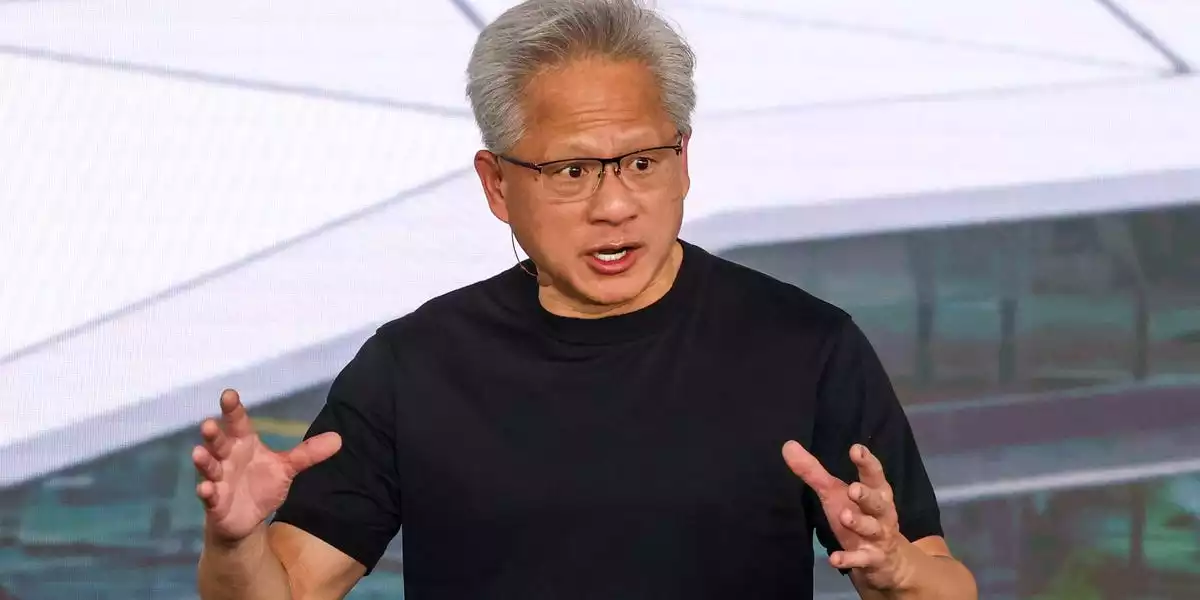
Read plainly, the divergence is not just about hiring volume—it is about strategic intent. Under CEO Jensen Huang, Nvidia has repeatedly framed immigrants as central to the company’s trajectory, and the visa numbers reinforce that message in operational terms. In a sector where many firms are optimizing for efficiency, Nvidia is optimizing for velocity: the ability to staff specialized roles quickly enough to sustain leadership in AI compute, software tooling, and deployment at scale.
For business leaders, the key takeaway is that immigration strategy is functioning as a competitive lever, not a compliance footnote. When a company can access global talent pools while peers slow down, it can compress product cycles, deepen customer integration, and widen the gap in execution—especially in domains like AI accelerators and systems software where expertise is scarce and ramp time is long.
Compensation bands that reveal where AI value is being created
Nvidia’s hiring posture is reinforced by compensation levels that are difficult to ignore. Reported base pay ranges—software engineers up to $391,000, research scientists up to $356,500, and senior architects/directors in the $400,000–$488,750 range—do more than attract candidates. They also communicate to the market where Nvidia believes the highest leverage work sits.
These salary bands operate as economic signaling in three ways:
- Scarcity pricing for AI-critical skills: Advanced GPU architecture, distributed systems, compilers, CUDA optimization, and AI infrastructure engineering remain talent-constrained. Paying top-of-market reduces hiring friction and shortens time-to-productivity.
- Retention as a strategic moat: In a competitive environment where rivals may pursue cost discipline, premium compensation helps prevent talent leakage—particularly among engineers who can move between semiconductor, cloud, and frontier-model ecosystems.
- Confidence backed by financial capacity: Nvidia’s strong financial performance and stock momentum provide the balance-sheet flexibility to sustain wage pressure. In effect, the company is converting current AI demand into long-lived capability by investing in people.
For investors and analysts, the implication is nuanced: higher labor costs can compress margins at the margin, but in Nvidia’s case they may also protect pricing power by sustaining technical differentiation. In AI infrastructure, the company that ships reliably, integrates fastest, and optimizes best often wins the next platform decision—where contracts can be large, sticky, and ecosystem-defining.
From GPU supplier to full-stack AI platform: why the hiring mix matters
The most strategically revealing element is not the visa count alone, but what it enables: broad-based hiring across hardware, software, and customer-facing functions. That mix aligns with Nvidia’s evolution from a high-performance chipmaker into a full-stack AI computing platform provider—spanning silicon, systems, networking, software frameworks, and deployment support.
This end-to-end posture matters because AI infrastructure value increasingly accrues to firms that can reduce complexity for customers. Training and inference at scale are not “plug-and-play” problems; they require orchestration across:
- Hardware design and systems engineering (GPUs, interconnects, thermals, power, rack-scale integration)
- Software layers (drivers, compilers, kernels, libraries, frameworks, performance tooling)
- Deployment and field operations (solution architecture, reliability engineering, customer enablement)
By staffing customer-facing teams alongside core R&D, Nvidia tightens the feedback loop between real-world deployment pain points and product iteration. That can accelerate adoption of platforms such as DGX and HGX in hyperscale data centers and enterprise clusters, while also reinforcing Nvidia’s ability to defend premium pricing through measurable performance and time-to-value.
This is where the contrast with cloud and platform peers becomes sharper. If Google and Amazon are emphasizing cost discipline—often driven by cloud margin pressures and a more mature growth profile—Nvidia is behaving like a company still in a platform land-grab, where the priority is to entrench standards, tooling, and developer mindshare before competitors can commoditize the layer.
What this means for executives, policymakers, and the next phase of AI competition
Nvidia’s approach highlights a broader bifurcation in technology strategy: margin-focused optimization versus growth-focused capability buildout. For business and technology leaders, several forward-looking implications stand out.
- Talent mobility is now a board-level input to R&D velocity. Visa sponsorship is not merely about filling seats; it can determine whether a company can execute on multi-year roadmaps in AI-accelerated computing, simulation, and next-generation infrastructure. Firms that underinvest in global mobility may find innovation cycles throttled by hiring bottlenecks rather than capital constraints.
- Capital allocation is shifting toward “people + platform” economics. Nvidia’s willingness to pay up suggests confidence that AI platforms generate durable returns—through ecosystem lock-in, recurring software value, and long-lived infrastructure relationships. Leaders should benchmark whether incremental headcount delivers more ROI than alternative investments such as bespoke accelerators, edge deployments, or proprietary optimization layers.
- Immigration policy is becoming entangled with national competitiveness in AI. A leading AI hardware firm expanding H‑1B usage could intensify scrutiny and debate over quotas, workforce development, and strategic technology leadership. Governments that want domestic advantage in AI and high-performance computing may face pressure to align immigration frameworks with innovation goals.
- The labor market may be de-commoditizing technical expertise. If Nvidia’s compensation becomes a reference point, suppliers, customers, and competitors across the semiconductor and AI stack may need to recalibrate workforce costs—reshaping negotiations, project timelines, and even where R&D hubs are located.
Ultimately, Nvidia’s H‑1B expansion and premium pay bands read as a coherent thesis: in AI infrastructure, speed of execution and depth of integration are the defensible advantages, and both are purchased—at least in part—through aggressive access to global talent. In a cycle where many technology giants are trimming for efficiency, Nvidia is spending to compound capability, betting that the next era of AI competition will be decided less by incremental features and more by who can deliver the most complete, deployable, and optimized computing platform at scale.

 By
By
 By
By

 By
By
 By
By
 By
By









