

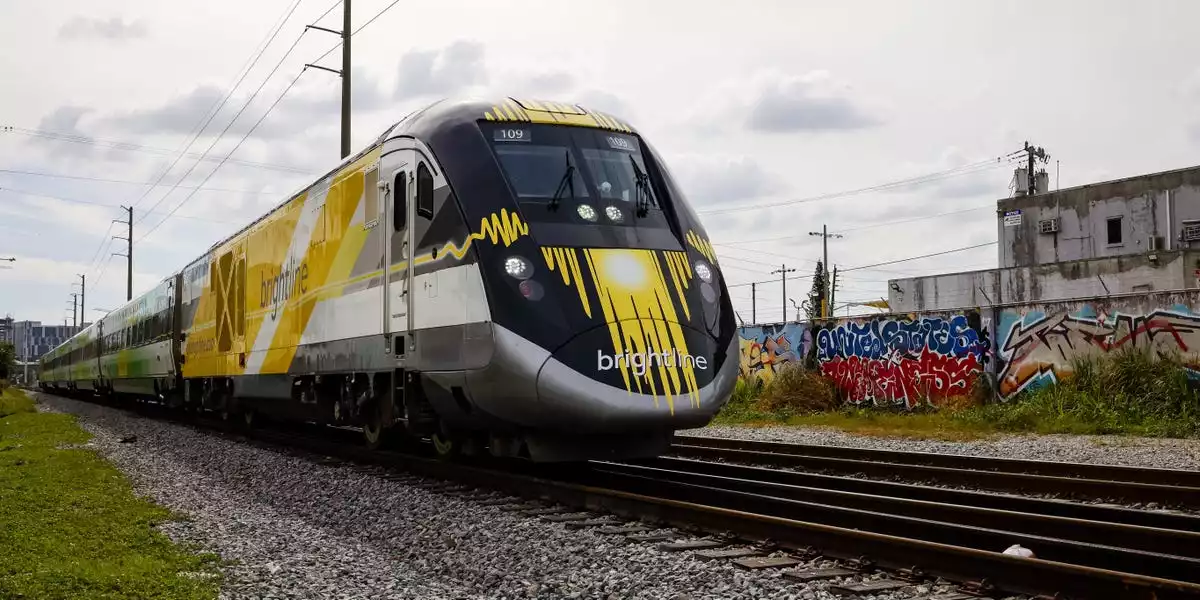

Brightline’s World Cup fare spike signals a new era of “event monetization” in rail
Brightline’s decision to impose game-day surcharges on its Miami–Aventura corridor—lifting a typical $24 round-trip to $76–$151 on dates tied to FIFA World Cup matches—marks more than a pricing tweak. It is a clear indicator that intercity rail in the U.S. is increasingly adopting airline-style revenue management, treating mega-events as monetizable demand shocks rather than civic moments to be absorbed through capacity and public-service pricing.
Aventura is not just another stop; it functions as a critical gateway to Hard Rock Stadium, making the route a de facto stadium connector for many visitors. By applying elevated pricing across multiple tournament dates—including group-stage matches and later-round fixtures—Brightline is effectively converting a transportation link into a premium event-adjacent product.
This approach aligns with a broader commercial logic: when demand becomes time-bound, predictable, and emotionally inelastic (fans “must” arrive), pricing power rises. Yet it also places Brightline at odds with the posture adopted by many public transit agencies in other host cities, where fares are being held flat or even reduced to manage crowds and reinforce accessibility.
Algorithmic yield management moves from airlines to rail—along with its reputational risks
Brightline’s pricing strategy reflects the diffusion of yield management—the same discipline that underpins airline seat pricing and ride-hail surge models—into rail. Modern dynamic pricing engines increasingly rely on advanced analytics and machine learning to recalibrate fares in near real time, using a mix of internal and external signals.
Common inputs to these systems can include:
- Historical ridership patterns by day, time, and event type
- Ticket-sale velocity and secondary-market indicators for the event itself
- Hotel occupancy and local pricing as a proxy for visitor volume
- Weather forecasts and disruption risk
- Competing mode constraints, such as parking scarcity or road congestion
From a business perspective, the rationale is straightforward: maximize revenue during peak willingness-to-pay periods, then compete more aggressively during off-peak windows. For a private operator, this can be an efficient way to fund service expansion, improve margins, and justify capital-intensive rail operations.
The challenge is that rail—especially when positioned as a congestion-relief alternative—carries a different public expectation than airlines. When prices triple or more on globally significant match days, the optics can shift quickly from “smart revenue management” to perceived price gouging, particularly if:
- Public alternatives are limited, crowded, or slower
- The service is viewed as a practical necessity rather than a luxury
- Visitors interpret the surcharge as a penalty for participating in a civic-scale event
That reputational exposure is amplified during the World Cup because the tournament already normalizes dynamic pricing elsewhere—most notably through FIFA’s own ticket pricing, which can range from relatively accessible seats to $4,000+ premium inventory. When both the event and the mobility layer are dynamically priced, fans experience compounding cost escalation across the entire journey.
Public transit’s “social license” vs. private rail’s pricing freedom in host cities
The contrast between Brightline and many public transit agencies is not merely philosophical; it is structural. Public agencies operate under political oversight and public-service mandates that often prioritize equity, crowd management, and predictable pricing during major events. In several host markets, transit operators are keeping fares stable or offering targeted relief—such as flat pricing, reduced fares, or free postgame service—to encourage mode shift away from cars and reduce congestion.
Brightline, by comparison, operates with greater commercial latitude. Without the same voter-driven accountability mechanisms or fare-setting constraints typical of public authorities, it can treat World Cup dates as high-margin opportunities. That freedom is a feature of private infrastructure models—but it also raises questions about consistency and fairness across host-city mobility ecosystems, especially when the World Cup is framed as a public-facing international showcase.
Miami-Dade’s complementary measures—such as free shuttles from Aventura and auxiliary bus links—function as partial mitigation. They also implicitly acknowledge a familiar tension in public-private mobility: when a private operator prices to maximize yield, the public sector may feel pressure to backfill affordability and last-mile access to avoid bottlenecks, backlash, or reputational harm to the host city.
Comparable surcharges in other markets—such as sharp increases for stadium-adjacent rail trips in parts of the Northeast—suggest this is not an isolated incident. Instead, it points to an emerging pattern: mega-events are becoming stress tests for transportation governance, revealing where pricing is treated as a public utility decision versus a market-clearing mechanism.
What this means for business strategy, city competitiveness, and future regulation
For Brightline and similar operators, event-driven pricing can be lucrative—but the long-term strategic question is whether maximizing revenue on marquee days undermines broader goals such as ridership growth, brand trust, and political goodwill. Mega-events are high-visibility moments; pricing decisions made for a handful of dates can shape public perception for years.
Several forward-looking implications stand out:
- Mobility bundling becomes a competitive differentiator: Integrated products that combine rail + shuttle + last-mile options could justify premium pricing by packaging convenience and certainty, rather than simply charging more for the same seat.
- Transparency may become as important as the price itself: Clear communication—fare calendars, advance-purchase guidance, and visible “why prices change” explanations—can reduce consumer resentment and improve predictability for visitors.
- Cities may increasingly compete on affordability of access, not just event hosting: Host markets that keep transit accessible can position themselves as fan-friendly destinations, potentially influencing future bids and tourism sentiment.
- Regulatory scrutiny is likely to intensify: As surge pricing expands beyond ride-hail into rail and other essential mobility layers, policymakers may explore guardrails such as event-fare caps, mandated seat allocations at standard rates, or disclosure requirements.
The World Cup’s expanded field and global draw will continue to amplify demand shocks—and with them, the temptation to monetize scarcity. The defining question for the next generation of event mobility is whether operators and cities can align around a model that captures value without turning access itself into the most expensive ticket in town.

 By
By


 By
By
 By
By

 By
By
 By
By







