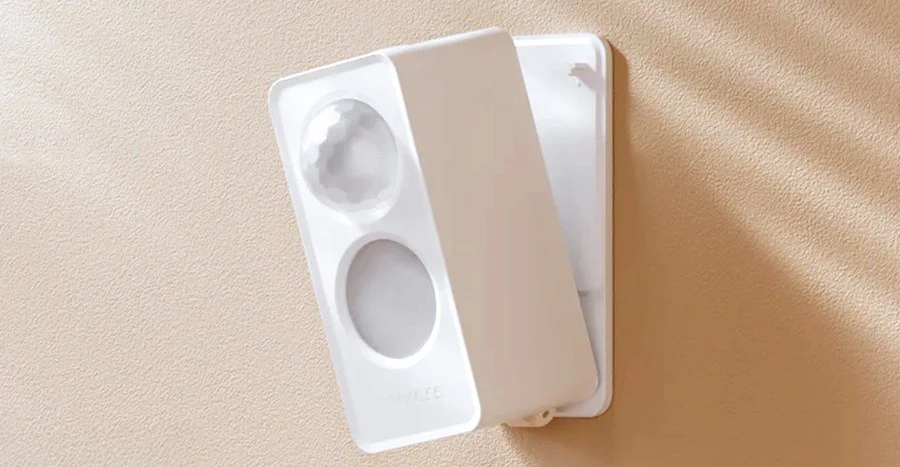

Thread and Matter: The New Backbone of Smart Presence
With the unveiling of the MS605, Meross signals a decisive shift in the architecture of smart home presence sensing. Gone is the dependence on Wi-Fi—a protocol never designed for battery-powered, always-on endpoints. In its place, the MS605 rides the rising tide of Matter-over-Thread, the new lingua franca for connected devices. This transition is more than a technical footnote; it crystallizes a broader industry migration toward low-power mesh networking, where latency is slashed, battery life is measured in years, and the cacophony of SSIDs is replaced by seamless, self-healing connectivity.
Thread’s ascendancy is not happening in isolation. The protocol’s border routers are quietly proliferating, embedded in everything from Apple’s HomePod to Google’s Nest hubs and Amazon’s Eero mesh routers. For device makers, the implications are profound: the barriers to entry for interoperable, plug-and-play sensors have collapsed. No longer must a consumer commit to a single brand’s ecosystem or wrestle with proprietary gateways. The MS605, available for preorder at $34.99, is emblematic of this new era—one where the utility of a device is amplified by its ability to participate in a broader, vendor-agnostic network.
Multi-Modal Sensing: Intelligence Moves to the Edge
What sets the MS605 apart is not just its network protocol, but its sensor stack—a triad of ambient-light, passive infrared (PIR), and 24 GHz millimeter-wave radar. This multi-modal approach is more than a spec-sheet flourish. By combining the strengths of PIR (excellent for detecting gross motion) with mmWave radar (sensitive to micro-movements and stationary presence), the device achieves a level of discrimination that single-sensor solutions cannot match. The firmware orchestrates these inputs locally, pushing inference to the edge and sidestepping the privacy pitfalls of cloud-dependent processing.
This edge-first philosophy is not merely a technical optimization; it is a strategic response to tightening privacy regulations. The European Union’s AI Act and GDPR are casting long shadows over the smart home sector, and devices that can guarantee on-device inference are poised to navigate these regulatory currents with agility. For Meross, and indeed for the broader industry, the ability to promise both intelligence and discretion is fast becoming a competitive necessity.
Economic Ripples and the Battle for the Smart Perimeter
The MS605’s sub-$40 price point is a shot across the bow for legacy Wi-Fi sensor vendors, whose higher bill-of-materials and shorter battery lives are quickly becoming liabilities. By leveraging the falling cost of automotive-grade mmWave radar—down roughly 40% year-over-year—Meross is democratizing advanced presence sensing, expanding the total addressable market well beyond early adopters. Property managers, energy-conscious homeowners, and even insurers now have access to granular, reliable occupancy data at a fraction of previous costs.
The device’s IP67 weatherproofing and robust CR123A battery chemistry (withstanding −40°C to +85°C) further blur the boundaries between indoor automation and outdoor security. Presence sensing, once confined to the living room, now extends to perimeters, sheds, and driveways. This expansion creates fertile ground for cross-pollination with security cameras, lighting controls, and micro-mobility monitoring—ushering in an era where the smart home is as much about safeguarding assets as it is about convenience.
Yet, the battery-first design is not without trade-offs. The necessity of duty-cycle throttling halves the detection radius when untethered, a calculated concession in favor of installation flexibility. Meross is betting that the ability to deploy sensors anywhere—unconstrained by power outlets—will outweigh the reduced coverage, especially as multi-sensor meshes become the norm.
Strategic Horizons: Data, Differentiation, and the Next Competitive Frontier
The MS605 is a harbinger of smart home infrastructure that is both more open and more intelligent. As Matter matures into the “USB moment” for connected environments, the locus of competition is shifting. No longer can hardware exclusivity guarantee market share; instead, differentiation will be won through design, AI-driven automation, and the orchestration of data-rich services.
For platform owners, the proliferation of Thread-based presence sensors will catalyze richer automations and deepen user engagement—not by locking in hardware, but by creating sticky, software-driven experiences. Device manufacturers face an inflection point: single-sensor solutions risk obsolescence, and rapid migration to integrated, multi-modal stacks is imperative. Real-estate operators and facility managers, meanwhile, are poised to realize significant energy savings and reduced IT overhead, as self-healing Thread meshes make large-scale retrofits both feasible and cost-effective.
Presence data itself is emerging as a strategic asset, underpinning everything from adaptive security protocols to usage-based insurance and anticipatory lighting. As the lines between smart home, security, and energy management blur, those who master the interplay of open standards, edge intelligence, and data stewardship will define the next chapter of ambient computing.
The MS605 is not merely a product launch; it is a signpost on the road to infrastructure-grade intelligence—where presence sensing becomes as ubiquitous, reliable, and invisible as the wiring in our walls. The companies that internalize this shift will not only unlock new efficiencies and revenue streams but will also shape the very fabric of our connected environments.

 By
By


 By
By
 By
By
 By
By

 By
By