


A step-change in Russia’s long-range drone campaign—and why speed matters now
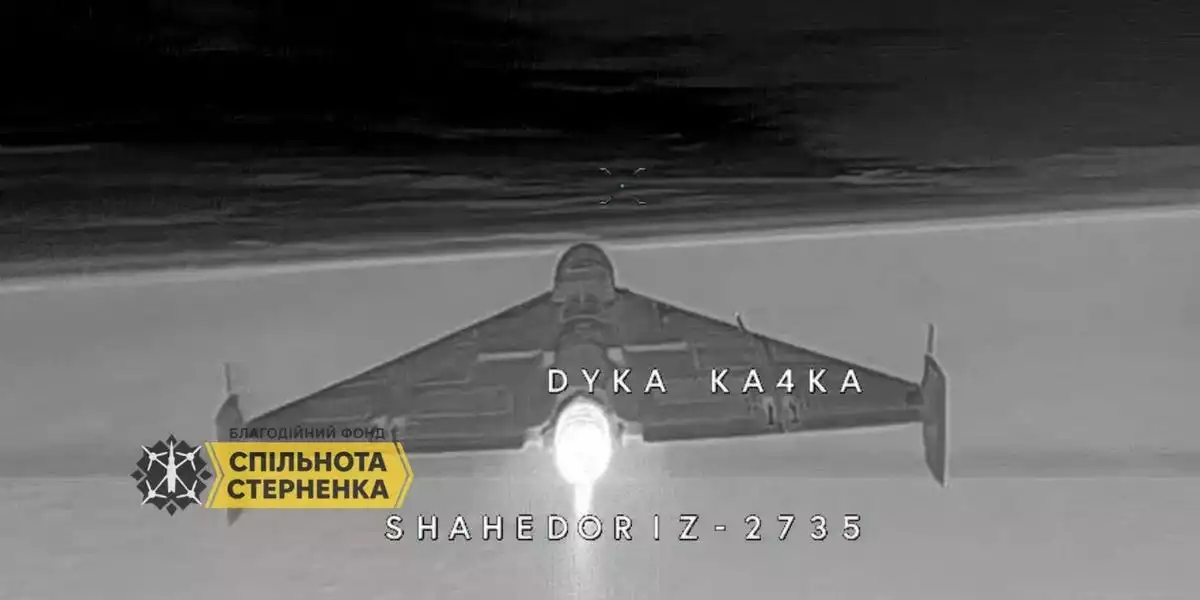
Ukraine’s military leadership is flagging what amounts to a doctrinal upgrade in Russia’s unmanned strike playbook: a pivot from propeller-driven Shahed-type drones toward turbojet-powered variants often referenced as “Geran-3” and “Geran-4.” If these jet-powered systems rise to roughly half of future long-range drone strikes, as warned, the operational environment shifts from a battle of volume and persistence to one increasingly defined by velocity, altitude, and compressed decision cycles.
The practical difference is stark. Prop-driven one-way attack drones have been dangerous largely because they are cheap, numerous, and hard to fully suppress. Turbojet variants add a new layer: higher speeds (reported around 205–300+ mph) and flight profiles that can reduce engagement windows and stress air-defense networks designed around slower targets. For defenders, seconds matter—not only for interceptors, but for sensor cueing, identification, deconfliction, and command authorization.
Ukraine’s May performance—reportedly downing around 3,500 strike and decoy drones using a layered mix of electronic warfare (EW), missiles, guns, and even small quadcopter interceptors—demonstrates resilience and adaptability. Yet the warning embedded in Kyiv’s messaging is clear: past success against prop-driven drones does not automatically translate to the jet-drone era, especially if Russia can scale production and integrate these systems into mixed swarms.
The technology race: sensors, jamming, and interceptors under jet-speed pressure
Turbojet drones change the physics of defense. Higher speed and altitude can degrade the effectiveness of short-range counter-UAS systems and complicate radar tracking—particularly when targets present small radar cross-sections and ambiguous signatures amid clutter. Even when detected, the engagement timeline tightens, pushing defenders toward more automated, fused, and resilient kill chains.
Key technical dynamics emerging from this shift include:
- Velocity and signature management
– Faster targets reduce the time available for classification and engagement.
– Flight at higher altitude can push targets into gaps between low-altitude gun solutions and higher-tier missile allocations.
– Smaller or less distinct signatures complicate discrimination, especially when mixed with decoys.
- Electronic warfare as a central battlefield
– As kinetic interception becomes harder, jamming, spoofing, and navigation disruption become more valuable—if they can keep pace with evolving guidance packages.
– This incentivizes investments in low-probability-of-intercept (LPI) radars, adaptive EW, and AI-driven signal analysis to detect and counter rapidly changing waveforms and tactics.
- Interceptor evolution and the limits of “pursuer drones”
– Ukraine’s reported use of small quadcopter interceptors highlights a powerful cost-asymmetric idea: cheap drones hunting expensive drones.
– But turbojet targets expose constraints: payload, endurance, and closing speed. Even if a quadcopter’s theoretical top speed is high, real-world performance drops under load and in contested EW conditions.
– The next generation of counter-UAS interceptors is likely to require miniaturized propulsion, improved seekers, hardened datalinks, and warhead designs optimized for high-speed proximity engagements.
For defense technologists, the direction of travel is toward multi-sensor fusion at the edge—combining radar, infrared, and electro-optical inputs—so that detection and tracking remain robust even when communications are degraded. The side that can sustain a reliable kill chain under EW pressure will shape the exchange ratio.
Industrial economics and supply chains: micro-turbines, materials, and the cost curve
A turbojet pivot is not merely a tactical adjustment; it is an industrial commitment. Micro-turbine engines, high-temperature components, and precision manufacturing introduce new dependencies and bottlenecks. Compared with prop-driven systems, jet-powered drones typically demand:
- High-temperature alloys and composites
- Reliable micro-turbine supply and quality control
- New inlet and airframe designs optimized for speed and thermal management
- More complex electronics for navigation, control, and mission execution
This reconfiguration has geopolitical and commercial implications. Iran’s historical role in Shahed lineage and China’s small-engine industrial base are frequently discussed in open-source assessments as potential enablers—whether through direct supply, dual-use components, or manufacturing know-how. At the same time, sanctions enforcement and export controls become a cat-and-mouse contest, where substitution, rerouting, and gray-market procurement can determine production tempo.
For Ukraine and its partners, the economic message is twofold. First, Kyiv’s emphasis on “make, not copy” signals a push to cultivate a domestic defense-tech sector capable of producing proprietary counter-drone solutions. That can attract venture funding and allied grants, but it also raises familiar risks: IP exposure, supply fragility, and the challenge of scaling from prototype to mass production under wartime constraints.
Second, the cost curve becomes decisive. Turbojet drones cost multiples of prop-driven variants, but if they achieve higher penetration rates, they may still be “worth it” operationally. Ukraine, meanwhile, must balance scarce resources across:
- Low-cost, high-volume defenses (EW, guns, expendable interceptors, decoys)
- High-end interceptors reserved for the most dangerous targets
- Longer-horizon bets such as directed-energy concepts, which promise low cost per shot but demand power, thermal management, and integration maturity
Strategic doctrine: from point defense to networked, swarm-aware air defense
Russia’s move toward faster long-range drones signals an intent to sustain attrition warfare against infrastructure, logistics, and morale, while forcing Ukraine to spend more per interception and to reveal air-defense positions. The likely operational pattern is not jet drones alone, but combined packages: turbojet strike platforms alongside prop-driven decoys and EW support designed to saturate sensors and fragment response.
That reality pushes Ukraine toward a more interconnected doctrine—less “defend each site” and more networked, layered defense that integrates kinetic, electronic, and cyber effects. It also intensifies alliance dynamics. Western suppliers will face renewed pressure to deliver counter-UAS suites, interceptors, sensors, and production support, while balancing inventories across multiple theaters.
The deeper signal is that unmanned warfare is entering a phase where advantage accrues to the side that can industrialize adaptation: rapid prototyping, testbeds, modular upgrades, and AI-enabled sensor fusion deployed at scale. If turbojet Shahed variants become routine, the contest will not be decided by any single interceptor or jammer, but by which ecosystem can iterate faster—turning learning cycles into battlefield resilience while keeping costs sustainable under prolonged pressure.

 By
By
 By
By
 By
By

 By
By


 By
By







