


A widening student-loan fault line meets a tightening policy clock
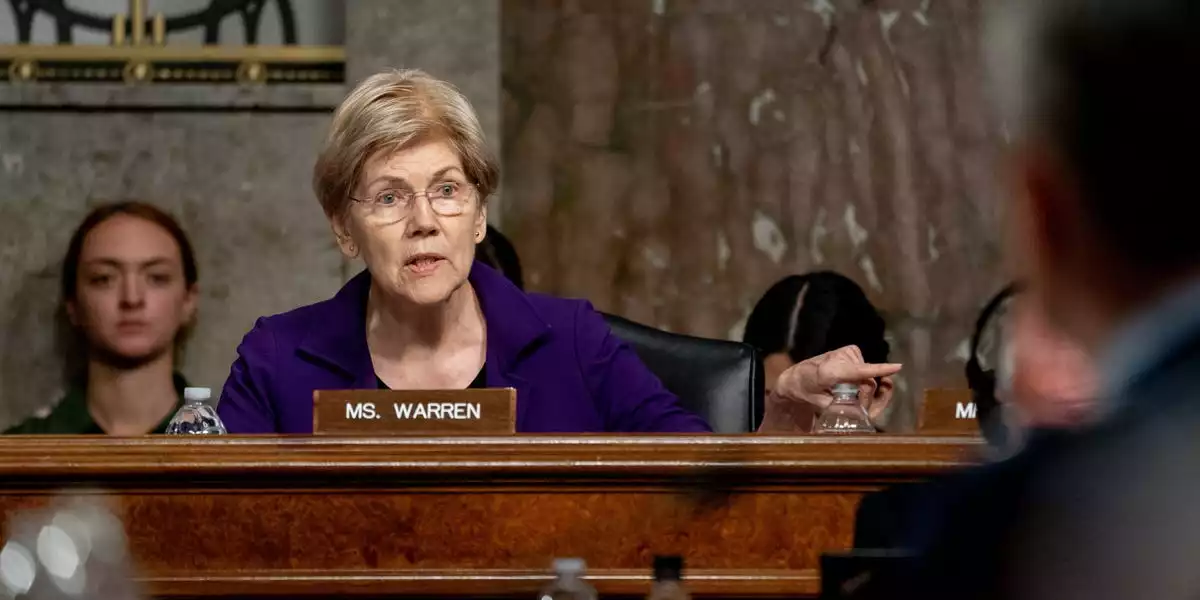
Democratic lawmakers led by Senator Elizabeth Warren are pressing the U.S. Department of Education to move faster on student-debt relief for borrowers already in distress—roughly 7.7 million in default and another 3 million delinquent. Their message is less about creating new authority than about using existing tools at scale: accelerate discharges and forgiveness already embedded in federal programs, clear administrative bottlenecks, and prevent a near-term escalation in involuntary collections as repayment rules shift again.
At the center of the lawmakers’ request is a practical concern: the system is carrying a large population of borrowers who are already financially impaired, while the policy environment is poised to raise payment obligations for many. With involuntary collections paused since January, the lawmakers want that pause extended through July 1, when revised repayment options are expected to take effect and the SAVE plan is eliminated—changes projected to increase monthly payments for many households. They also seek clarity from Education Secretary Miguel Cardona on when wage garnishment and benefit offsets might resume, and how quickly the Department can reduce backlogs in relief processing.
The letter’s critique of Trump-era policy shifts—including moving defaulted loans to the Treasury and introducing new repayment structures—reflects a broader argument: administrative and policy decisions can either dampen or amplify default cycles. If the next phase of repayment policy increases payment burdens while collections restart, the risk is not merely individual hardship but a feedback loop that pushes more borrowers into delinquency and default.
Debt relief as macroeconomic lever: household cash flow, credit access, and fiscal trade-offs
Student-loan delinquency is not just a personal finance issue; it is a consumer-credit and macro-demand variable. A sustained default rate above 20% of borrowers, as cited in the material, can weigh on household balance sheets and ripple outward into credit markets and consumption patterns—particularly among younger adults who disproportionately drive spending in housing formation, autos, and discretionary retail.
Key economic and financial implications include:
- Consumer balance sheets and spending power: Defaults can depress credit scores, raise borrowing costs, and constrain access to mortgages, auto loans, and small-business credit. That translates into reduced discretionary spending and slower growth in sectors dependent on early- and mid-career consumers.
- Credit-market signaling and underwriting behavior: If defaults remain elevated, lenders and credit-rating models may incorporate higher expected loss assumptions, tightening underwriting standards beyond student loans and increasing the cost of capital for some consumer segments.
- Federal budget dynamics: Accelerating relief under existing programs—Public Service Loan Forgiveness (PSLF), Total and Permanent Disability (TPD) discharge, and borrower defense to repayment—can create near-term fiscal costs. Yet it can also function as a form of targeted cash-flow stimulus, reducing monthly obligations and potentially supporting GDP through higher consumption.
- Treasury transfer timing and collections revenue: Delaying transfers of defaulted loans to the Treasury may defer certain revenue recognition and collection mechanisms, but it may also prevent deeper borrower impairment that reduces long-run recoveries.
For business and technology leaders, the most actionable takeaway is that student-loan policy volatility increasingly behaves like a macroprudential factor—a variable that can shift consumer credit performance and demand forecasts in a matter of quarters, not years.
The operational bottleneck: why IDR backlogs are now a technology story
The lawmakers’ focus on the backlog of income-driven repayment (IDR) applications underscores a less visible constraint: the federal student-loan system’s ability to execute policy is limited by data integration, workflow automation, and servicing capacity. When relief depends on eligibility verification, income documentation, employment certification, or adjudication of borrower-defense claims, administrative throughput becomes the gating factor.
From a technology and operations perspective, several themes stand out:
- Digital infrastructure and interoperability gaps: Persistent delays suggest friction in data exchange across the Department of Education (ED), the IRS, and potentially the Department of Labor (DOL). Modern, API-driven interoperability could reduce manual processing and accelerate determinations.
- Automation and machine-learning validation: Eligibility checks for IDR and discharge programs are well-suited to automation—document classification, anomaly detection, and rules-based decisioning—provided governance is rigorous and appeal pathways are preserved.
- Data privacy and compliance pressure: Faster relief requires faster data movement, which elevates risk around personally identifiable information (PII). Encryption, secure data environments, least-privilege access, and consent-driven sharing become non-negotiable as federal agencies and private servicers coordinate.
- Predictive analytics for default prevention: AI-driven risk scoring can identify borrowers likely to miss payments and trigger targeted interventions—repayment-plan recommendations, proactive outreach, or streamlined transitions into income-based options—before delinquency becomes default.
This is where legacy servicers face a strategic inflection point. Backlogs and borrower frustration create reputational and regulatory exposure, while opening the door for fintech and enterprise software firms offering modern servicing stacks, real-time borrower analytics, and automated income verification.
Political and regulatory crosscurrents shaping the next 12 months of student-loan risk
The lawmakers’ letter lands in a climate where student debt is both a policy priority and an electoral flashpoint. With major repayment-plan changes and the elimination of SAVE, the next year is likely to be defined by implementation risk: how quickly rules translate into functional borrower options, and whether collections restart before relief pipelines are cleared.
Several strategic dynamics are likely to shape outcomes:
- Policy volatility and legal sensitivity: Executive action through rulemaking or statutory interpretation can move quickly, but it is also vulnerable to litigation and reversal, complicating planning for borrowers, servicers, and credit markets.
- Public-sector workforce implications: Faster PSLF processing can materially affect recruitment and retention in government and nonprofit roles—teachers, healthcare workers, and first responders—where student debt influences career decisions and turnover.
- Regulatory scrutiny of servicing practices: Agencies such as the CFPB are increasingly attentive to student loans as a consumer-finance risk. That attention can translate into tighter supervisory expectations, new guidance, and enforcement risk for both banks and nonbank servicers.
For executives, the pragmatic posture is to treat student-loan policy as a live operational dependency: update credit stress tests for higher payment floors, invest in servicing modernization and compliance automation, and maintain real-time regulatory intelligence. The next phase will reward institutions that can translate shifting federal rules into reliable borrower experiences—because in student lending, execution is policy.

 By
By
 By
By
 By
By


 By
By
 By
By
 By
By







