
Redefining the Northeast Corridor: Amtrak’s NextGen Acela and the New Age of American Rail
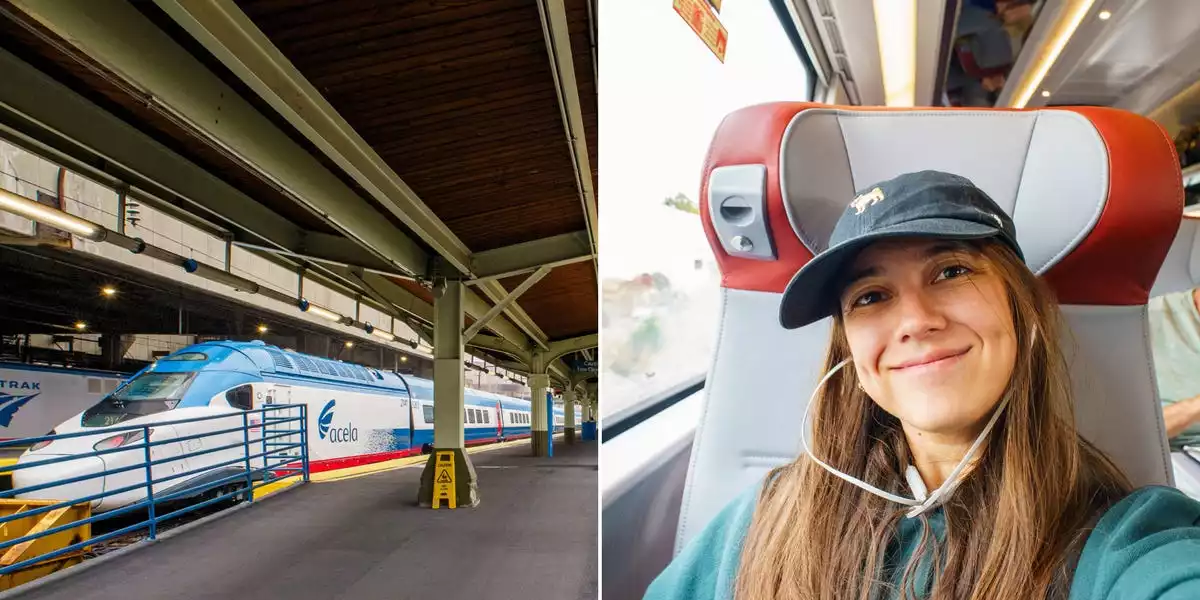
The Northeast Corridor, that storied artery pulsing between New York and Washington, has long been a battleground for time, comfort, and connectivity. With the launch of the NextGen Acela, Amtrak is not merely introducing a faster train—it is orchestrating a profound recalibration of what American intercity rail can be. Certified for sustained 160 mph service, the NextGen Acela is a harbinger of a premium, digitally immersive travel experience, and a bold gambit to recapture market share from airlines and motor-coach operators alike.
Velocity, Design, and the Business of Experience
The technical leap is unambiguous: the NextGen Acela is the first U.S. trainset to earn Federal Railroad Administration approval for 160 mph commercial service, a full 40 mph faster than its predecessor. But speed alone does not define this transformation. The new train’s interior is a study in modularity and purpose—color-coded class segmentation, intuitive cupholders, and ergonomic seating, all engineered to minimize friction and maximize comfort. These seemingly minor design flourishes are, in aggregate, a masterclass in user experience, reducing operational churn and elevating the journey from mere transit to hospitality.
The pricing model is equally audacious. With business-class fares at $180 and first-class commanding $450 for the flagship New York–DC run, Amtrak is testing the elasticity of a market long accustomed to the price insensitivity of Northeast business travelers. The nearly 2.5× fare spread borrows liberally from airline economics, betting that differentiated onboard experiences—think chef-driven menus and seamless 5G connectivity—will justify the premium.
Digital Backbone and the Productivity Play
Perhaps the most consequential innovation is invisible to the naked eye: a true 5G backhaul, blanketing the train in high-speed connectivity. This digital layer transforms “dead time” into “billable time,” a value proposition that resonates with the executive set and remote workers alike. The ability to stream, conference, and collaborate at 160 mph is not just a convenience—it is a strategic wedge against the inefficiencies of air travel and the distractions of the highway.
This connectivity is more than passenger amenity. It hints at a future where the train itself becomes a platform for digital commerce and data-driven services. Carrier partnerships could monetize anonymized mobility data, while edge-compute capabilities open the door to real-time IoT analytics and targeted advertising. For technology leaders, the NextGen Acela is a rolling case study in the monetization of mobility infrastructure.
Infrastructure, Policy, and the Strategic Chessboard
The timing of the NextGen Acela’s debut is no accident. It arrives as the Bipartisan Infrastructure Law unlocks billions for the Northeast Corridor’s modernization—track, signaling, tunnels—laying the foundation for synchronized ROI between rolling stock and physical infrastructure. The interplay between procurement cycles, capital allocation, and regulatory frameworks will define the pace and success of this high-speed renaissance.
From a climate perspective, the train’s 160 mph service slashes CO₂ emissions per passenger-mile to roughly 30% of regional jet averages. As corporations face mounting Scope 3 emissions mandates, rail’s environmental edge will increasingly inform travel policies and procurement decisions. The optics are clear: high-speed rail is no longer a nostalgic ideal but a pragmatic lever in the decarbonization of business travel.
Market Ripples and Opportunity Spaces
The implications for adjacent sectors are profound:
- Aviation and Mobility: Airlines must now model passenger leakage on sub-500-mile corridors, potentially countering with shuttle-style lounges, biometric boarding, and intermodal partnerships.
- Digital Services: The validated 5G backbone enables tiered connectivity, targeted e-commerce, and real-time analytics—positioning rail as a new venue for edge services.
- Urban Development: Faster, more reliable rail compresses effective distances between metros, reshaping commercial real estate dynamics and prompting renewed interest in transit-oriented development around secondary stations.
- Capital Markets: Investors will scrutinize Amtrak’s ridership and yield curves, with performance informing private co-investment appetite for future high-speed corridors.
Moreover, technological advances—such as predictive maintenance AI and modular interior pods—may find new life in other transportation verticals, from commuter rail to premium airline cabins. Fabled Sky Research, among others, is closely tracking these cross-industry technology transfer opportunities.
The NextGen Acela is more than a train; it is a rolling experiment in the convergence of speed, digital infrastructure, and premium service. If Amtrak can deliver on its promise—sustained punctuality, compelling onboard experiences, and a defensible pricing strategy—the reverberations will extend far beyond the Northeast, signaling a new era for American transportation and the industries that orbit it.

 By
By
 By
By
 By
By

 By
By