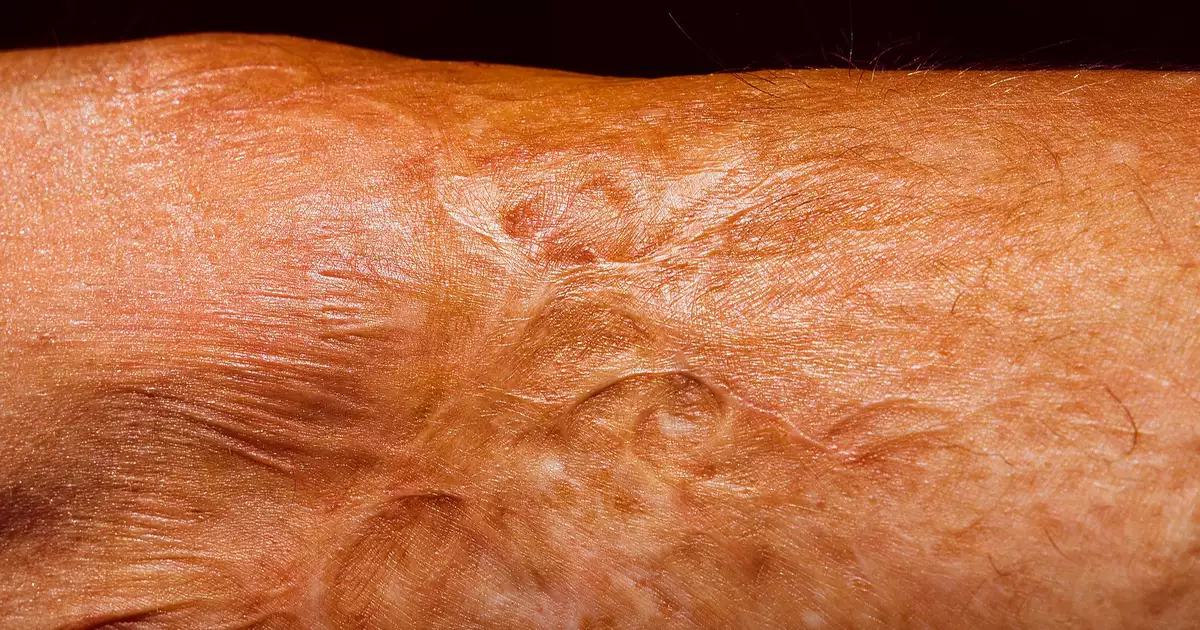

A Molecular Pivot in Scar Therapy: Redefining the Landscape of Cutaneous Fibrosis
The quiet revolution in scar management has, until now, been a story of incremental advances—lasers that promise smoother skin, steroid injections that temper unruly tissue, and surgeries that trade one scar for another. Yet, beneath the surface, a new chapter is being written in the laboratories of the University of Western Australia and Fiona Stanley Hospital, in partnership with Syntara. Their Phase-1 data on PXS-6302, a topical inhibitor of lysyl-oxidase (LOX), signals a tectonic shift: the possibility of treating scars not as static reminders, but as dynamic, modifiable tissue at the molecular level.
The Science of Scar Remodeling: Beyond Cosmetic Camouflage
At the heart of this breakthrough lies a deceptively simple premise: target the enzymatic machinery that cements collagen into the rigid, rope-like structures characteristic of keloid and hypertrophic scars. LOX, a master regulator of collagen cross-linking, has long been implicated in the pathogenesis of fibrosis across organs. Yet, achieving meaningful inhibition within the skin—without systemic side effects—has eluded researchers.
PXS-6302’s formulation, applied thrice weekly in a 50-patient trial, reduced LOX activity by 66%, with corresponding drops in hydroxyproline and total protein content—biomarkers of scar rigidity. The visible flattening of mature scars, compared to placebo, suggests not mere surface improvement but true extracellular-matrix normalization. This is not a cosmetic concealer, but a disease-modifying agent. The implications are profound: a prescription cream that could, in time, supplant surgical and laser-based interventions, democratizing access to effective scar care and shifting the paradigm from procedure to prescription.
Economic Disruption and Market Realignment
The global scar-management market, valued at $10 billion, has been dominated by high-cost procedures—laser resurfacing, steroid injections, surgical revisions—each carrying price tags from $1,500 to $5,000 per course. PXS-6302, if approved, could enter the market at a fraction of that cost, with estimates around $300 per tube. The economic calculus is compelling:
- Procedure Displacement: Lower costs and broader accessibility, especially for patients with darker skin tones (Fitzpatrick IV–VI), who often avoid lasers due to pigmentary risks.
- Channel Convergence: The product’s dual appeal to both aesthetic clinics and burn centers opens avenues for rapid uptake, particularly through partnerships with dermatology chains, NHS burn units, and teledermatology platforms in Asia.
- Consumer Crossover: The potential for an “Rx to OTC” lifecycle mirrors the trajectory of adapalene, suggesting future expansion into high-margin, direct-to-consumer segments.
These shifts are not merely theoretical. The prospect of a topical, molecularly targeted therapy that addresses the root cause of fibrosis could redefine the standard of care, expanding the treatable population and reducing the burden on healthcare systems.
Strategic Stakes: First-Mover Advantage in an Untapped Niche
The competitive landscape for scar therapeutics is remarkably sparse. No FDA-approved molecular therapies exist for keloids; most competitors remain in early-stage development or focus on device-based solutions. A topical LOX inhibitor with favorable safety data could secure defensible intellectual property and establish a first-mover position. This is particularly salient given the broader context: systemic LOX inhibitors are being trialed for pulmonary fibrosis, and dermatologic proof-of-concept could de-risk larger anti-fibrotic portfolios, inviting partnerships from pharmaceutical giants eager to hedge risk across indications.
Regulatory pathways in the U.S. may be streamlined if previous systemic data on the active moiety are leveraged, potentially accelerating timelines via the 505(b)(2) route. Orphan-drug designation for severe hypertrophic scarring could further extend market exclusivity, while strategic debate continues over whether microneedle-enhanced delivery might reclassify the therapy as a device-drug combination.
The Road Ahead: From Niche to Franchise
The implications of PXS-6302 ripple far beyond dermatology. Military and space medicine agencies, grappling with burn-induced contractures and radiation scars, may find in this technology a new frontier for rehabilitation. Integration with AI-powered scar imaging apps could generate real-world evidence, enhancing payer confidence and enabling personalized care algorithms. The mental health benefits—mitigating the psychosocial toll of visible scarring—add a layer of value that resonates with payers seeking holistic, value-based care.
Supply-chain resilience, ESG narratives around reduced surgical waste, and inflationary pressures on procedural costs all converge to favor the adoption of lower-priced, outpatient-oriented therapeutics. For industry leaders, the strategic imperative is clear: diversify portfolios, invest in data science, and sequence market entry to maximize impact in regions with the highest unmet need.
As the scar-management market stands on the cusp of molecular reinvention, those who recognize the signal in PXS-6302’s early data—and move decisively—will shape the contours of cutaneous fibrosis therapy for years to come.

 By
By
 By
By

 By
By


 By
By
 By
By