
Lacing the Future: Adidas’ 3D-Printed Climacool and the New Industrial Playbook
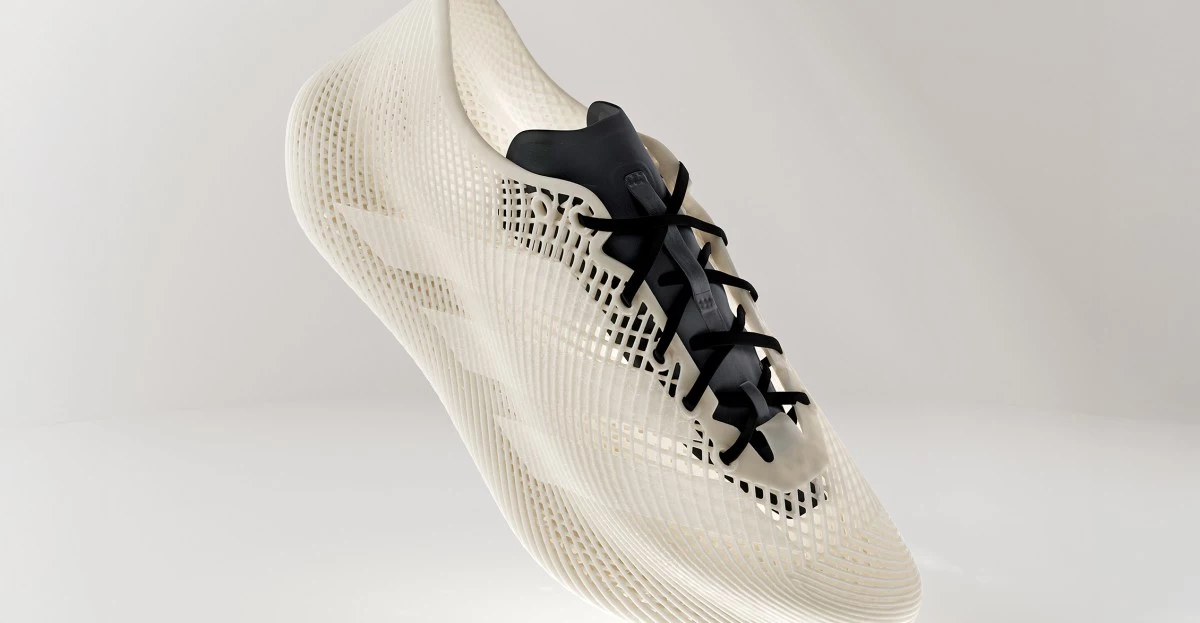
Adidas’ latest foray into additive manufacturing arrives not as a mere flourish of novelty, but as a calculated stride toward the industrial mainstream. The global launch of the laced Climacool—featuring a single-piece, 3D-printed lattice upper married to traditional tongue and lace elements—signals a pivotal moment in the evolution of both footwear and digital manufacturing. Priced at $160, this model is not simply a technical upgrade; it’s a harbinger of how data, design, and distribution are converging to reshape the economics and experience of performance footwear.
The Lattice Leap: Hybrid Construction and Data-Driven Design
The Climacool’s hybrid architecture is a masterclass in additive manufacturing pragmatism. By reserving complex, variable-fit geometry for the 3D printer—while leaving commoditized components like laces and tongues to established supply chains—Adidas demonstrates a nuanced understanding of where digital fabrication delivers true value. The 24-hour print–bake–compress cycle, though still long compared to injection molding, has reached a level of predictability that supports broader retail ambitions.
But the real innovation lies in the laced variant’s adjustability. Each pair becomes a node in a feedback loop: telemetry from return rates, lacing pressure, and wear patterns—collected through the Confirmed app and in-store RFID—feeds directly into Adidas’ digital last library. This data not only refines future parametric models but also paves the way for partial mass customization at scale. Imagine a near future where forefoot width or arch height is dialed in on demand, and the shoe is printed to fit within days—a scenario no longer confined to science fiction.
- Key Technological Advantages:
– Digital Tooling: Printed eyelets can be relocated or multiplied instantly, supporting rapid iteration without the burden of physical molds.
– Inventory Agility: Unsold SKUs become digital files, not physical write-offs, reducing inventory risk and improving working capital turns.
– Supply Chain Flexibility: Distributed print farms can be nearshored, compressing freight costs and mitigating tariff exposure.
Economic Calculus and Retail Reimagination
The $20 price premium over the original slip-on is less about cost recovery and more about value signaling. Consumers are being asked to pay for fit, performance, and the cachet of cutting-edge technology—a calculus that, in the current athleisure landscape, continues to hold. Additive manufacturing, with its shift from volume-driven to complexity-driven cost curves, allows Adidas to maintain gross-margin parity even as batch sizes shrink and customization rises.
Direct-to-consumer (DTC) channels, exemplified by the Confirmed platform, are central to this strategy. By controlling the retail narrative and capturing granular consumer data, Adidas can iterate faster and retain a larger share of the margin stack. Limited partner-retailer allocations create engineered scarcity, stoking hype economics reminiscent of streetwear drops, but without fully alienating wholesale partners.
- Market and Supply Chain Impacts:
– Nearshoring and Localization: Print farms colocated with major markets reduce shipping volatility and labor arbitrage risks.
– Labor Market Alignment: As Western economies grapple with manufacturing labor shortages, additive’s automation potential becomes increasingly attractive.
– Inflation Resilience: Consumers continue to pay premiums for tech-forward, performance-driven footwear, even in inflationary cycles.
Competitive Stakes and the Sustainability Mandate
The industrialization of 3D-printed footwear is now a contested battleground. Nike and New Balance are experimenting with printed midsoles, while On’s CleanCloud project with BASF injects a sustainability narrative into the mix. Adidas’ full-upper lattice, however, positions it uniquely around breathability and rapid drying—attributes that resonate deeply with performance-oriented communities.
The proprietary polymer blends and lattice algorithms, developed in partnership with advanced materials firms, serve as a formidable IP moat. In an era where open material ecosystems are gaining traction, Adidas’ vertically integrated approach may trade some flexibility for the ability to make strong, brand-specific performance claims.
Sustainability, too, is more than a talking point. Additive processes can reduce material waste by up to 30% compared to traditional cut-and-sew methods. While the energy intensity of 3D printing remains under scrutiny, the Climacool’s lineage aligns with Adidas’ broader climate-neutral ambitions—an alignment that will only become more valuable as regulatory pressures mount, particularly in the EU.
Industrial Additive’s Expanding Horizon
Adidas’ Climacool Laced is not just a product; it’s a strategic signal. The modular rollout of additive manufacturing—starting with high-visibility franchises and moving toward mainstream adoption—foreshadows a transformation in how footwear is designed, produced, and sold. In-store scanning and cloud-based lattice parametrization could soon make “fit-engineered within 48 hours” a retail reality, fundamentally resetting consumer expectations.
For decision-makers across the value chain, the lessons are clear:
- Modular adoption will define the next decade of footwear innovation.
- Retail experiences will become more personalized, data-driven, and rapid.
- Materials partnerships and M&A activity will intensify as brands seek to secure sustainable, high-performance inputs.
- Regulatory compliance around recyclability and emissions will emerge as a new arena for competitive differentiation.
The Climacool Laced stands as a case study in the convergence of digital design, localized manufacturing, and consumer-centric innovation—a convergence that, as Fabled Sky Research and other analysts observe, is poised to redefine not just the footwear industry, but the broader landscape of industrial production.

 By
By


 By
By
 By
By

 By
By
 By
By