
Aviation’s New Arena: Where Cabin Innovation, LEO Connectivity, and Sports Power Collide
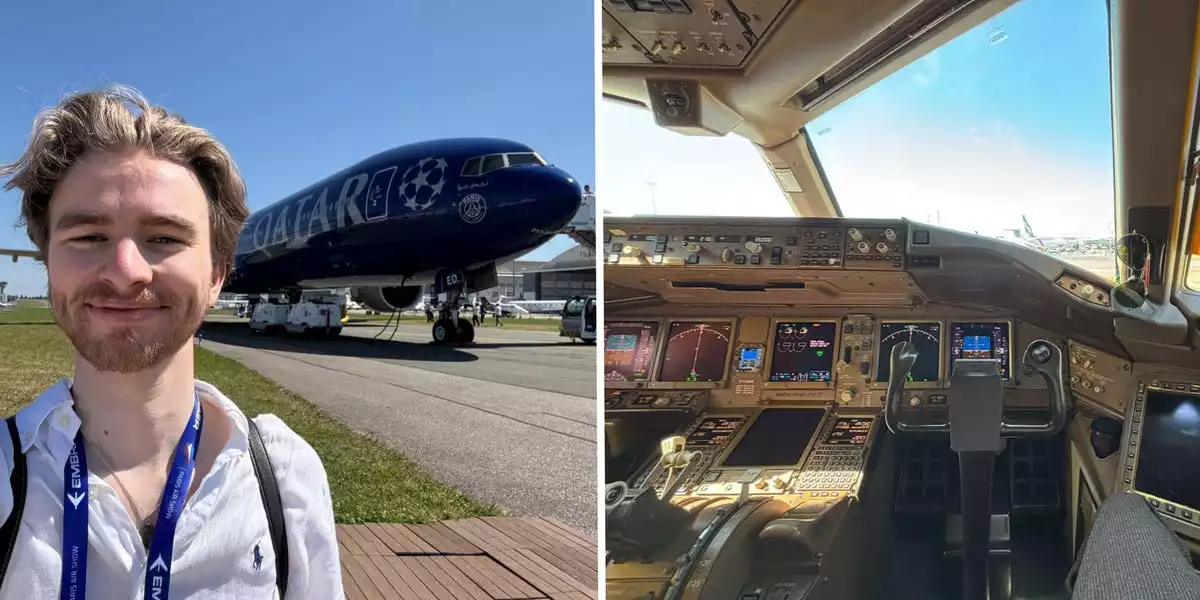
At the Paris Air Show, Qatar Airways orchestrated a spectacle that transcended the traditional boundaries of aviation marketing. A Boeing 777-300ER, resplendent in limited-edition livery emblazoned with UEFA Champions League and Paris Saint-Germain (PSG) iconography, became more than a static display—it was a mobile showroom, a statement of intent, and a harbinger of the industry’s next act. This convergence of cutting-edge inflight technology, premium passenger experience, and global sports branding signals a new era in the contest for the skies.
The Battle for Premium Travelers: Modular Luxury and the QSuite’s Ascendancy
The arms race among Gulf carriers is no longer fought solely with new aircraft or incremental service upgrades. Instead, it is the cabin itself—its architecture, flexibility, and intimacy—that has become the competitive moat. Qatar Airways’ QSuite, showcased on this flagship 777-300ER, exemplifies this paradigm shift. With forty-two suites configurable into quads or doubles, the product blurs the line between business and first class. Privacy doors, lie-flat beds, and customizable group seating speak directly to the post-pandemic traveler’s craving for both exclusivity and connection.
This is not mere opulence for opulence’s sake. The QSuite’s modularity appeals to the burgeoning “premium leisure family” segment—travelers who demand corporate-level comfort for group or family journeys and are willing to pay accordingly. By eschewing a dedicated premium-economy cabin, Qatar Airways positions the QSuite as both a revenue maximizer and a brand differentiator, capturing a lucrative middle ground without diluting its luxury cachet.
Starlink and the Digital Sky: LEO Broadband as Strategic Platform
Perhaps the most transformative development unveiled was the integration of Starlink’s low-Earth-orbit (LEO) satellite broadband—a leap that reframes inflight connectivity from a patchy amenity to a core utility. With low latency and high bandwidth, Starlink enables not just passenger streaming, but real-time business applications: cloud-based crew operations, telemedicine, predictive maintenance, and a host of data-driven services.
The implications for revenue and loyalty are profound:
- Live sports streaming and e-commerce become viable at 35,000 feet, opening new monetization layers.
- Personalization and analytics reach new heights, as airlines can harvest richer data on passenger preferences and behaviors.
- Early-mover advantage in LEO connectivity could allow Qatar Airways to negotiate favorable terms with providers like SpaceX and influence the direction of aviation-specific features.
Inflight WiFi is no longer a value-add; it is the backbone of a digital ecosystem that will define future airline profitability.
Sports Partnerships: The New Soft Power and Revenue Engine
The PSG-branded aircraft is not just a nod to fandom—it is a masterstroke in global sports marketing and geopolitical signaling. For Qatar Airways, the partnership with PSG and the UEFA Champions League unlocks a trove of proprietary content, co-branding assets, and exclusive charter opportunities. These alliances:
- Feed content ecosystems across social media, inflight entertainment, and loyalty programs.
- Serve national branding objectives, reinforcing Qatar’s post-World Cup narrative as a nexus of sport, culture, and connectivity.
- Drive ancillary revenue through charter traffic, VIP transport, and amplified brand exposure to elite audiences.
The aircraft’s deployment for PSG’s Club World Cup journey was a live demonstration of product excellence—turning athlete transport into a high-visibility case study for premium service and digital innovation.
Navigating the Future: Economic and Strategic Imperatives
The stakes in this new aviation theater are high. Mixed business-leisure travel is reshaping demand elasticity, with travelers seeking exclusivity and personalization. Yet, the economics of operating large twinjets like the 777-300ER—especially amid rising ESG scrutiny and carbon pricing—pose hard questions about sustainability and fleet strategy. The absence of a premium-economy cabin is a calculated risk, one that hinges on the QSuite’s ability to capture both business and high-yield leisure segments.
Meanwhile, the competitive landscape is shifting. Emirates is investing in premium-economy and next-generation first class; Etihad is revamping its narrow-body cabins. The real contest, however, is moving beyond physical fixtures to the orchestration of digital ecosystems and brand partnerships—where inflight connectivity, content, and data converge to create new value.
For industry executives, the path forward is clear:
- Prioritize modular, privacy-centric cabin retrofits to capture evolving premium demand.
- Treat LEO connectivity as a platform investment, enabling new digital revenue streams and operational efficiencies.
- Leverage sports partnerships not just for visibility, but as engines for proprietary content and high-ROI customer engagement.
- Integrate sustainability and carbon cost scenarios into fleet planning and investor communications.
Qatar Airways’ latest showcase is more than a marketing coup—it is a blueprint for the airline of the future, where product innovation, digital infrastructure, and strategic partnerships coalesce to transcend commoditized air travel. In this new era, the winners will be those who master the interplay of experience, technology, and brand—turning every flight into a platform for engagement, loyalty, and growth.


 By
By

 By
By


 By
By
 By
By