


Interstellar Intruders and the Expanding Frontier of Space Risk
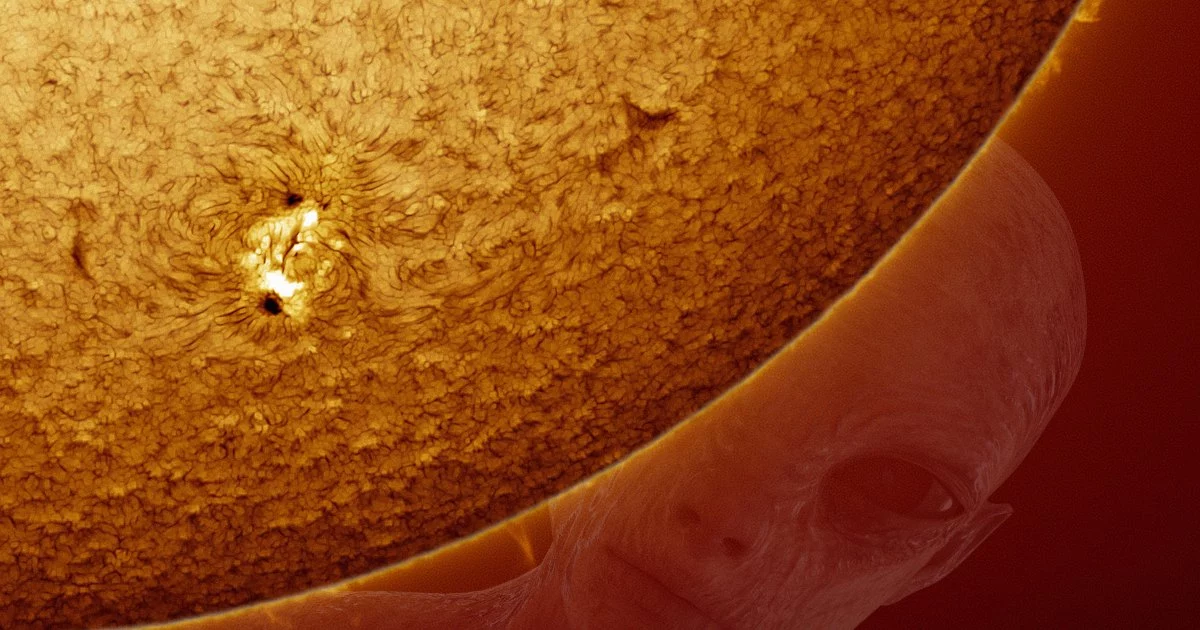
The imminent passage of 3I/ATLAS—a rare interstellar object making a hyperbolic dash through our solar system—has reignited a debate at the intersection of science, technology, and commerce. While the astronomical consensus pegs 3I/ATLAS as a carbon-dioxide–rich comet, the persistent voice of Harvard’s Avi Loeb, who posits the tantalizing possibility of an engineered “mothership” exploiting the Sun’s gravity for an Oberth-effect velocity boost, has ensured that the conversation is far from routine. Regardless of the object’s true nature, its arrival is a clarion call: our planetary defenses, detection networks, and economic frameworks are being tested—and transformed—by the accelerating influx of non-native celestial visitors.
Surveillance Gaps and the Race for Technological Supremacy
The arrival of 3I/ATLAS, only the third confirmed interstellar interloper after ‘Oumuamua and 2I/Borisov, has exposed the limitations of current space surveillance architectures. Despite advances in orbital tracking, our ability to rapidly characterize the composition and morphology of such objects remains rudimentary. This technological blind spot is not lost on industry leaders and policymakers. The solution, increasingly, points toward:
- Sensor Fusion and AI-Enabled Networks: The next generation of space situational awareness (SSA) will rely on a tapestry of multi-spectral, space-based sensors—distributed CubeSat constellations, synthetic-aperture optics, and real-time AI data fusion. These systems promise to flag anomalous trajectories and compositions within hours, not months.
- Propulsion Innovation and the Oberth Effect: Even if 3I/ATLAS is entirely natural, its trajectory through the Sun’s gravity well offers a live demonstration of the Oberth maneuver—a principle that could revolutionize human and robotic interstellar travel. Startups in the “fast-transit” subsector, such as Helicity Space and Pulsar Fusion, are already drawing inspiration from these cosmic case studies, refining heat-shield materials and guidance algorithms for solar-periapsis burns.
These advances are not merely academic. They are shaping a new class of commercial opportunities, from orbital refueling depots informed by CO₂-ice sublimation studies to the development of radiation-hardened neuromorphic chips for edge-compute in deep space.
Capital, Policy, and the Strategic Calculus of Uncertainty
The economic ripples of interstellar object detection are already visible in the shifting flows of capital and policy attention. Since 2021, global venture investment in dual-use SSA platforms has doubled, spurred by the narrative clarity that unexpected, potentially hazardous objects provide for both defense budgets and ESG-oriented “planetary stewardship” funds. Insurance markets, ever attuned to emergent risk, are crafting new riders for “orbital debris & NEO” coverage, with the prospect of a broader “interstellar risk” segment on the horizon.
Meanwhile, proprietary AI models trained on interstellar object data are becoming moat-forming assets. Expect to see telescope consortia and analytics providers ink data-licensing agreements reminiscent of the private-sector weather data revolution—a trend that Fabled Sky Research and its peers are quietly navigating.
On the policy front, the controversy around 3I/ATLAS is prompting a fresh look at the Outer Space Treaty’s underdeveloped clauses on “non-Earth-origin objects.” The prospect of a multilateral early-warning regime—a COSPAS-SARSAT for space—offers soft-power dividends for the nation that leads its development. At the same time, the dual-use nature of planetary-defense technologies is blurring the line between comet-deflection and anti-satellite (ASAT) capabilities, accelerating the arms race in space.
The Power of Narrative and the Architecture of Preparedness
Avi Loeb’s “mothership” hypothesis, however improbable, demonstrates how swiftly speculative memes can shape public imagination, drive funding, and influence strategic priorities. In an era where perception is often as valuable as reality, space agencies that master real-time, evidence-based communication will command both mindshare and budget. The lesson for industry: treat interstellar object detection as a real option—low probability, high consequence. A modest R&D hedge today buys flexibility against multiple futures, with payoffs spanning commercial, defense, and scientific domains.
Executives and investors should:
- Position for solicitations tied to next-generation survey missions and planetary-defense initiatives.
- Prioritize SSA and in-situ resource utilization plays that benefit regardless of an object’s ultimate classification.
- Institutionalize rapid triage protocols for anomalous space events, mirroring best practices from cybersecurity incident response.
The fleeting transit of 3I/ATLAS is more than a scientific curiosity; it is a stress test for the frameworks—technological, economic, and strategic—that will define the next decade of the space economy. Those who internalize the lessons of this moment, hedging smartly against tail-risk scenarios and leveraging the surge of public fascination, will secure a durable advantage as humanity’s sphere of influence expands beyond the familiar.

 By
By
 By
By

 By
By
 By
By


 By
By







