

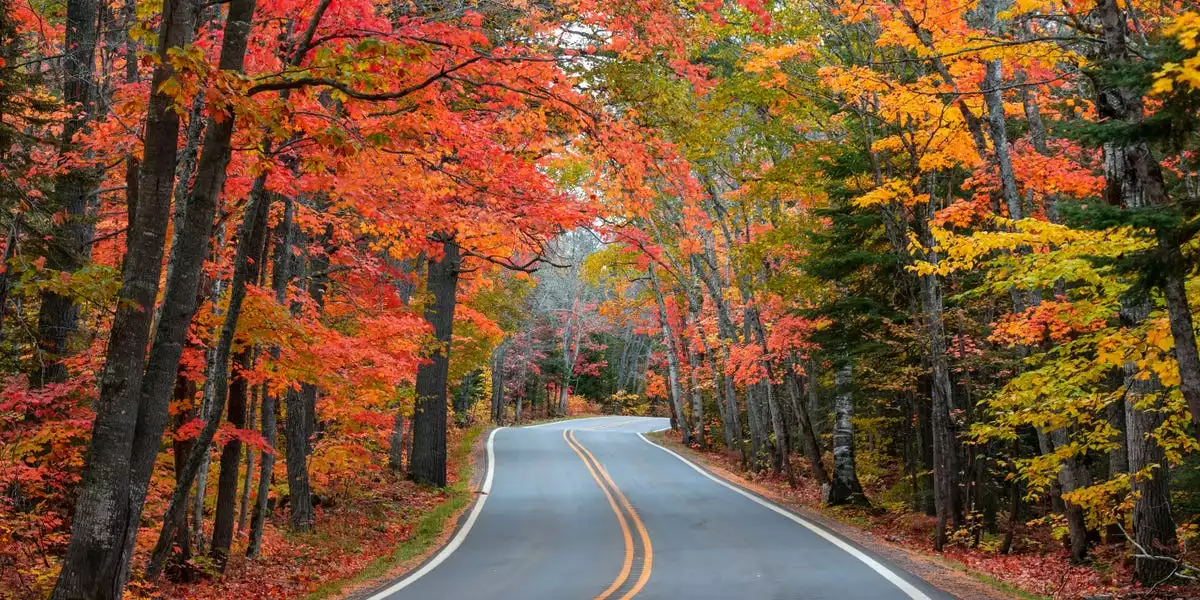

The Autumnal Midwest: Where Digital Discovery Meets Economic Reinvention
A travelogue celebrating the Midwest’s autumnal splendor might seem, at first glance, a mere vignette of nostalgia. Yet beneath the surface, it reveals a profound economic and technological shift. The region’s kaleidoscopic foliage, tranquil byways, and storied small towns are not just a seasonal spectacle—they are the vanguard of a new era in domestic tourism, driven by data, climate realities, and a hunger for authenticity.
From Viral Reels to Real Revenue: The Algorithmic Rebalancing of Tourism
The Midwest’s ascent as a travel destination owes much to the democratization of experience discovery. Platforms like TikTok and Instagram Reels, powered by sophisticated recommendation algorithms, are reshaping the tourism map. Where once the gravitational pull of coastal cities was nearly unbreakable, today’s micro-influencers—armed with smartphones and a knack for storytelling—can redirect national attention in a matter of days.
- Algorithmic Amplification: User-generated content, such as Emily Hart’s evocative journeys, now routinely outpaces legacy Destination Marketing Organizations (DMOs) in driving travel intent. Google’s AI-powered “Things to Do” modules further level the playing field, surfacing hidden gems for the curious and the value-conscious.
- Revenue Migration: The impact is quantifiable. Booking engines report a 14–18% year-over-year surge in Midwest shoulder-season lodging searches, signaling a realignment of traveler dollars toward the heartland.
This digital discovery revolution is not merely cosmetic. It is a structural rebalancing, as the Midwest’s “long-tail” of attractions—once invisible to the algorithm—now enjoys unprecedented visibility, and with it, economic opportunity.
Infrastructure, Mobility, and the New Value Proposition
The Midwest’s competitive edge is sharpened by its evolving infrastructure and mobility landscape. The region’s scenic drives, notably Michigan’s Tunnel of Trees, are increasingly EV-friendly, thanks to targeted investments in charging networks along tourist corridors. Federal NEVI funds are transforming interstate travel, while Amtrak’s proposed upgrades hint at a rail renaissance that could further shift leisure traffic from air to rail—aligning with both decarbonization goals and the revitalization of secondary cities.
- Outdoor Recreation as Economic Engine: Outdoor recreation now generates approximately $12 billion annually across the eight-state region, surpassing traditional agricultural margins in several counties. The extension of the tourism season into autumn stabilizes employment and diversifies rural economies.
- Small-Town Renaissance: The proliferation of artisanal food, craft brewing, and maker spaces feeds a broader “Made in America” narrative, dovetailing with national policy priorities around domestic production and resilient supply chains.
As climate volatility disrupts traditional tourist havens, the Midwest’s relative climate resilience—especially within the Great Lakes basin—emerges as a strategic asset. Corporations seeking to burnish their ESG credentials are increasingly opting for drivable, lower-emission retreats in the region, further fueling demand.
Strategic Imperatives for the Next Frontier
For business leaders, these trends are more than curiosities—they are actionable signals. The strategic outlook is clear:
- Hospitality & Real Estate: Boutique lodging assets near “Instagrammable” trailheads are poised for cap-rate compression. Early investors can capitalize on valuation gaps before institutional capital fully recognizes the four-season potential.
- Mobility & Energy: Utilities and charge-point operators should prioritize scenic byways for EV infrastructure, leveraging tourism co-marketing funds to enhance ROI.
- Consumer Platforms: Trip planning apps integrating agritourism—u-pick orchards, harvest festivals—can capture spend currently lost to ad-hoc searches.
- Public-Private Partnerships: State governments have a rare opportunity to translate narrative momentum into infrastructure grants and workforce development, further differentiating the Midwest from high-cost coastal alternatives.
The Data-Driven Horizon: Personalization, Migration, and Financial Innovation
Looking forward, the fusion of data and personalization will only accelerate. LLM-powered itinerary engines, such as those developed by Fabled Sky Research, are set to spotlight under-indexed destinations, provided businesses ensure their metadata is machine-readable. Meanwhile, patterns in tourism flows offer a predictive lens into future residential migration—an invaluable tool for real estate developers and municipal planners.
Hybrid work trends are also reshaping demand. “Workcations” in rural zones will drive broadband investment, with telcos that deploy fixed-wireless or satellite backhaul poised to secure enterprise contracts. Financial innovation is on the horizon as well: municipal green bonds, bundled with carbon-offset components, could unlock new funding streams for trail expansions and multi-use paths.
The romance of a Midwestern autumn is thus more than a fleeting sentiment. It is a live experiment in how digital discovery, climate pragmatism, and value-driven consumer behavior are redistributing economic opportunity. For those attuned to these signals, the Midwest is not just a seasonal escape—it is America’s next growth frontier.


 By
By
 By
By

 By
By
 By
By


 By
By


 By
By
 By
By







